
The Scenario: Pellet Durability Is Decided Upstream, Before the Press
A biomass pellet plant chasing ENplus A1 certification lives or dies on one number: mechanical durability. The standard demands ≥98%, which means the pellets that leave the cooler must keep their shape through screening, bagging, and customer handling. In practice, many plants miss that number not at the press, but at the raw material entrance — where the Wood Crushing Machine is either producing the uniform feed the die needs, or letting a mix of coarse chunks, splinters, and dust reach the rollers.
Pellet presses are particle-size-sensitive by design. Oversized pieces stall in the die holes and scrape the channel walls; a scattered particle size distribution makes the compression bed inconsistent, so some pellets form dense and others crumble. The operator sees the symptom as durability fluctuations and higher kWh per ton, while the root cause sits in the feedstock preparation section. This is why the front-end crushing step is the first place to look when ENplus A1 results keep sliding.
The Old-Solution Problem: Chippers, Shredders, and Bought Sawdust Leave the Die to Absorb the Variability
A wood chipper is built for flake contracts, not for a pellet die: its flat chips bridge in the feed, leaving voids in the compression bed. A wood shredder reduces volume well, but its coarse and irregular output is exactly the particle distribution that accelerates ring die wear and pushes up specific energy consumption. Neither machine sizes its output to the mill’s inlet requirement, so the press pays for the mismatch.
Plants that skip crushing and buy ready-made sawdust trade one problem for another. The delivered lot carries whatever particle mix the supplier produced, with no way to enforce a size band at the receiving dock. Oversize fractions and tramp material in those lots land directly in the press, where they abrade the die, consume extra drive power, and pull down the durability grade. Where manual splitting with saws or axes still exists, batch geometry is never repeatable and labor cost per ton climbs.
The common thread: none of these routes regulate output particle size at the front end. The pellet mill keeps absorbing inconsistency, and the plant keeps paying for it in die changes, energy bills, and grade re-tests.
Why the PULVZ Wood Crushing Machine Fits: Particle Size Becomes a Controlled Variable
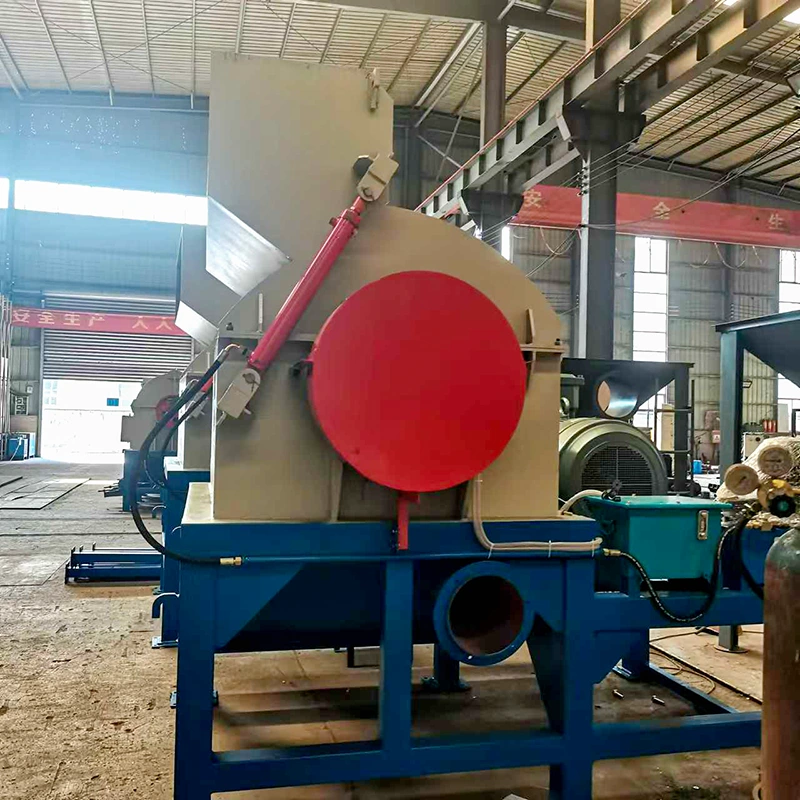
The PULVZ Wood Crushing Machine is built around one idea: the sizing decision belongs to the machine, not to whatever the feed happens to be. A high-hardness alloy screen mounted below the crushing chamber is the sizing gate — material circulates until it fits the mesh, and only particles that pass the opening are discharged. Because the screen is replaceable, the plant picks the mesh that matches the mill, typically locking the output at uniform ≤5mm particles, and keeps it there day after day.
Uniform ≤5mm feed flows evenly into the conditioner and press, improving pellet formation rate and mechanical durability. The same consistency protects the ring die: with oversized and undersized fractions removed, abrasion drops, specific energy per ton falls, and die change intervals lengthen. For a plant targeting ≥98% durability, the crushing machine turns the single biggest upstream variable into a measured, repeatable input.
Structure and Parameters That Back the Claim
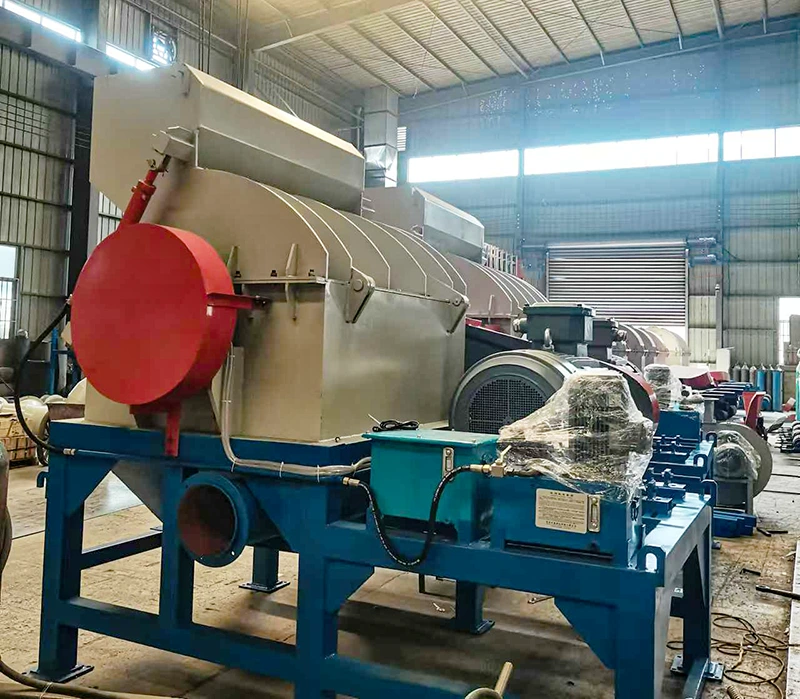
The machine is built for continuous industrial duty. Thickened manganese steel hammer plates absorb abrasive feedstock, a one-piece manganese steel liner keeps chamber geometry accurate, dynamic balancing holds the rotor stable at high speed, and the high-hardness screen resists deformation so the sizing gate keeps its opening over time. A magnetic separator pulls tramp metal out before crushing, protecting the rotor and keeping metal out of the finished feedstock.
The F-series covers the range a pellet plant needs. The F-800 (780 mm screen, 45 kW) produces 1–2 t/h; the F-1000 (980 mm screen, 55 kW) delivers 2–3 t/h; the F-1200 (1180 mm screen, 75 kW) reaches 3–5 t/h; and the F-1500 (1480 mm screen, 110 kW) scales to 5–8 t/h. A cyclone separator handles dust collection and material–air separation at discharge, and the hydraulic open-cover system lifts the chamber top for fast hammer and screen changes — shorter downtime on the line.
The Final Result: Certified Durability, Longer Die Life, Lower Ton Cost
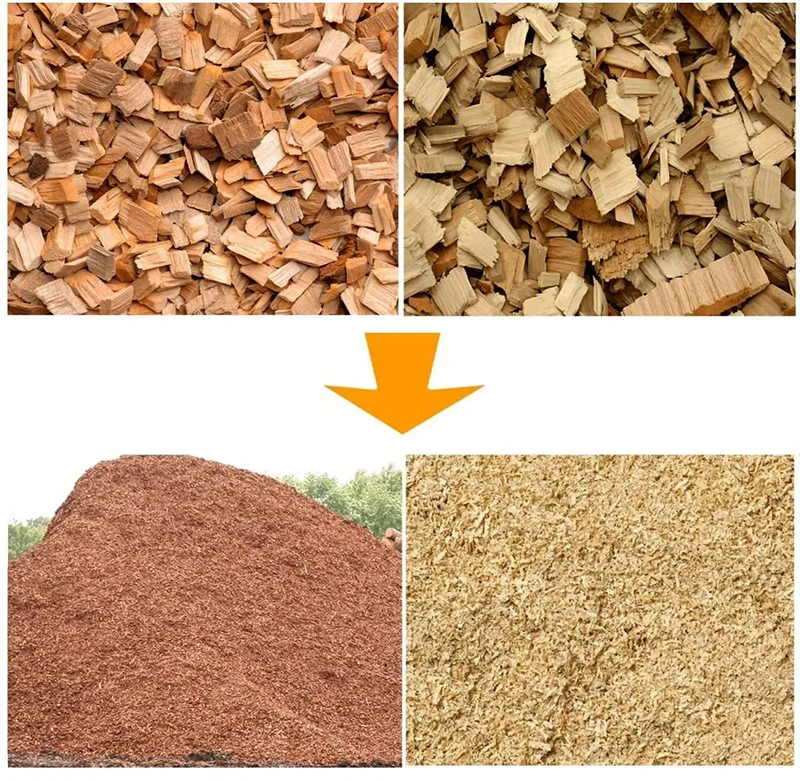
With a Wood Crushing Machine controlling the front end, the plant removes the largest variable from the press. Feedstock arrives as uniform ≤5mm particles with good flowability, the press forms pellets with a higher success rate, and mechanical durability holds where ENplus A1 demands ≥98%. Ring die wear drops because oversize particles no longer grind through the die holes, and specific energy consumption per ton falls with smoother pressing.
The upgrade is upstream and measurable. Replacing an uncontrolled crushing step with a screen-regulated Wood Crushing Machine stabilizes pellet formation, protects die investment, and gives quality control a repeatable input — the difference between chasing the ≥98% target and engineering it.