
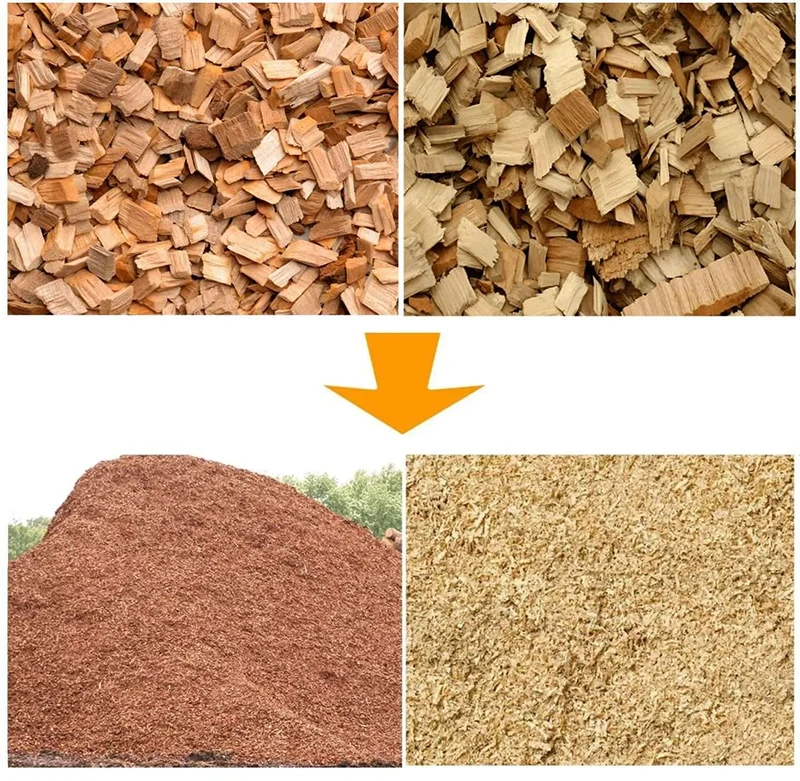
The Problem: Bulky Pallets, Rising Tipping Fees, and Fire Risk
A single retired wooden pallet weighs 15–30 kg and has almost no usable stack density. In distribution centers, repair shops, and pallet recycling yards, damaged units accumulate faster than they can move out. That bulky pile eats warehouse floor space, blocks loading lanes, and turns into a standing fire hazard. At the same time, landfill tipping fees keep climbing and wood-waste disposal regulations are tightening in most markets. Paying to haul and bury pallets is no longer a cheap default; it is a growing cost center.
Why One Discarded Pallet is More Expensive Than It Looks
The visible cost is the hauler invoice. The hidden costs are the square meters it occupies, the labor to restack it, the insurance premium for storing combustible material, and the lost value of wood fiber that could be reused. When the pile reaches hundreds of units, those costs compound every week.
Tipping Fees and Landfill Restrictions Keep Climbing
Commercial wood waste is being diverted from landfill in more regions every year. Where burial is still allowed, gate fees are rising. For high-volume pallet operations, the annual outflow is material.
Stacked Wood Waste is a Fire Liability
Dry, broken pallets burn fast. Dense outdoor stacks also complicate sprinkler coverage and emergency access. Reducing the physical volume of stored waste is one of the lowest-cost fire-risk controls available.
The Old Way: Pay to Haul, Store, and Bury
Many recycling yards still treat pallets as a disposal problem rather than a fiber source. The workflow is familiar: stack outside, wait for a full trailer, pay per load, and send the material to landfill or incineration. None of that recovers value. It only postpones the cost.
- Manual sorting and restacking consumes labor hours.
- Open-air stockpiles occupy premium yard space and attract moisture.
- Landfill or tipping fees grow linearly with volume.
- Fire risk increases as the stack grows taller and drier.
Why a Rotating Blade Wood Crusher Fits the Recycling Yard
The answer is on-site volume reduction. A Rotating Blade Wood Crusher is designed to take whole pallets, boards, and slab wood and break them into small, uniform particles in a single pass. Instead of moving bulky waste, the yard moves dense sawdust or chip fraction that is easier to store, cheaper to transport, and ready for downstream use in a molded wood pallet line or biomass pellet plant.
Placing the machine at the front of the recycling process changes the economics: the pile shrinks before it ever reaches a trailer. Less storage area, fewer hauls, lower tipping fees, and a cleaner, safer yard.
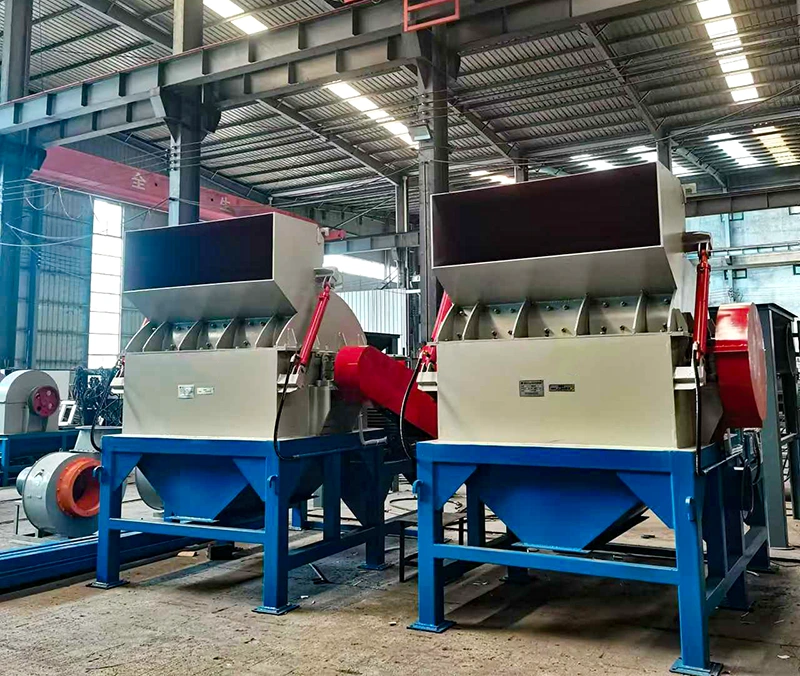
Structure and Performance Evidence
The Pulvz F-series units used in this layout combine a rotating blade / disc rotor, manganese steel hammers and liners, and a high-hardness alloy screen. Belt conveyor feeding keeps the infeed continuous, while the screen controls particle size.
Rotating Blade / Disc Rotor and Manganese Steel Wear Parts
The rotor runs with replaceable blades or hammer plates made from manganese steel. The liners are also manganese steel, so the areas that see the most abrasion can be replaced without replacing the whole housing. That matters in a recycling yard where feedstock is unpredictable and may include nails, staples, or embedded grit.
Screen-Controlled Output from 2 mm to 5 mm
Output size is set by the screen mesh, not guesswork. For pallet recycling, a 3–5 mm fraction is typical for boiler fuel or pellet feed; a finer 2–3 mm fraction suits molded pallet raw material. Swapping the screen takes minutes and lets one machine serve multiple outlets.
Belt Conveyor Feeding for Continuous Operation
Whole pallets can be fed by forklift or belt. Once the conveyor is running, the crusher processes continuously rather than in batches. Rated capacities range from 1 t/h to 8 t/h depending on rotor diameter, motor power, and screen choice.
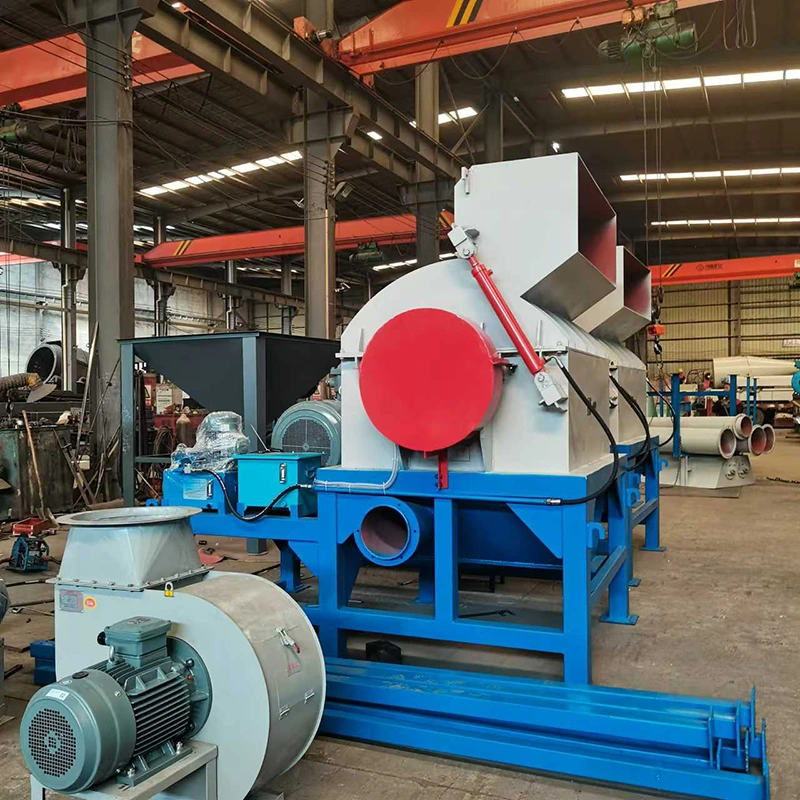
Optional magnetic separation can be added upstream to pull nails and staples out of the shredded material before it reaches storage or resale. That protects downstream equipment and raises the value of the recovered fiber.
The Result: From Cost Center to Reusable Feedstock
After the Rotating Blade Wood Crusher is installed at the recycling yard, the same pallets that used to leave as waste become a saleable or reusable fiber stream. The volume reduction is immediate: a full trailer of broken pallets compresses into a fraction of the space.
- Less yard space consumed by bulky waste stacks.
- Fewer hauls and lower landfill or tipping payments.
- Reduced fire risk from lower, denser stored material.
- Recovered wood fiber ready for molded pallet production or biomass pellet feed.
For pallet recycling yards, furniture manufacturers, and logistics hubs that generate a steady stream of damaged wooden packaging, on-site shredding is the simplest way to turn a disposal cost into a material stream.
Need a recycling-yard shredder layout for your pallet waste?
Tell us your average pallet volume and output target. We will size the right Rotating Blade Wood Crusher and feeding configuration.