
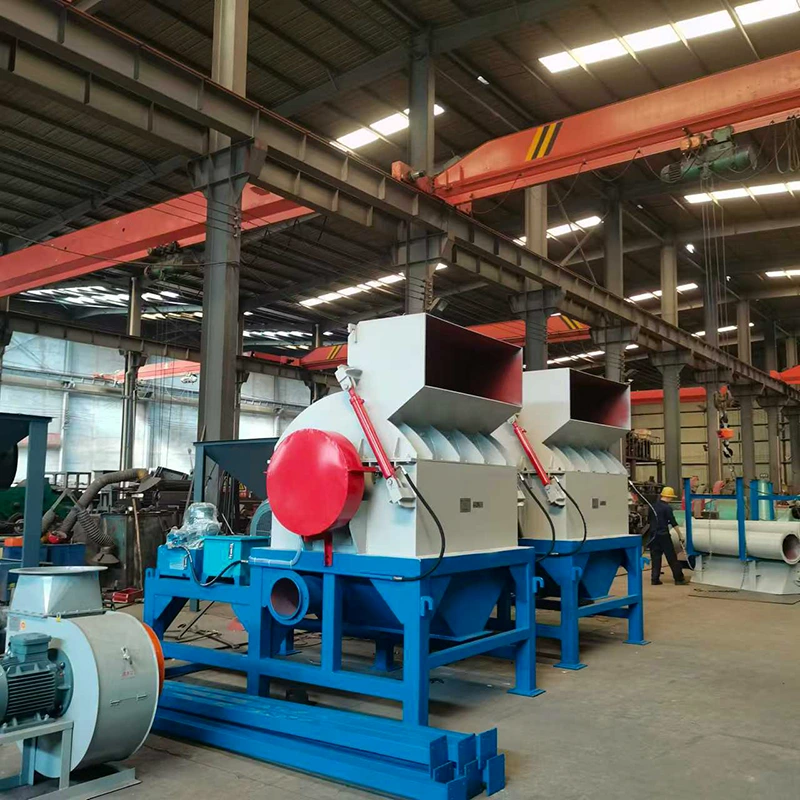
The Problem: Nails and Staples Hidden in Recycled Pallets
Recycled wooden pallets are rarely clean. They arrive with steel nails, U-staples, bolts, and banding clips still embedded in the boards. For a standard wood crusher, that metal is a silent blade-killer. One fastener can chip a cutting edge, gouge a screen, or wedge in the rotor housing, triggering unplanned downtime, expensive hammer replacement, and contaminated fiber that downstream buyers reject.
Blade and Hammer Damage is the Biggest Hidden Cost
Every chipped hammer changes the rotor balance and reduces output size consistency. Operators either stop production to replace it or keep running and accept uneven particles. Neither choice is cheap.
Metal Contamination Lowers Fiber Value
When nails and staples are shredded along with the wood, ferrous fragments mix into the sawdust. That limits resale options: boiler fuel buyers tolerate some contamination, but molded pallet plants and premium pellet buyers want cleaner feedstock.
Downtime Adds Up Faster Than the Tipping Fee
A single jam from a buried fastener can stop the line for an hour or more. For yards processing dozens of pallets per hour, those stops quickly erase the savings from recycling the wood in the first place.
The Old Way: Hope the Metal Misses the Hammers
Some pallet recyclers try to pull nails by hand before shredding. Others rely on gravity or magnets placed after the crusher. Both approaches have weak spots: manual sorting is slow, post-crush magnets catch only a fraction of the liberated metal, and hammers still take the first hit.
- Hand sorting cannot keep up with continuous infeed.
- Post-crush magnets leave hammers exposed during impact.
- Shredded metal fragments are harder to separate than whole fasteners.
- Wear parts are replaced more often than planned.
Why a Wood Crusher with Adjustable Screen and Magnetic Separation Fits
The right machine treats metal as a predictable contaminant, not a surprise. A Wood Crusher with Adjustable Screen controls particle size by swapping the screen mesh, while a magnetic separator captures ferrous fasteners before they reach the rotor. Combined with impact-resistant hammers and liners, the system converts nail-heavy pallet waste into a clean, controllable fiber stream without the constant blade damage.
The adjustable screen is the sizing gate: coarser mesh for boiler chip, finer mesh for molded pallet feed. The magnetic separator is the guard: it pulls nails and staples out of the infeed or out of the crushed stream, depending on placement, so the hammers cut wood instead of metal.
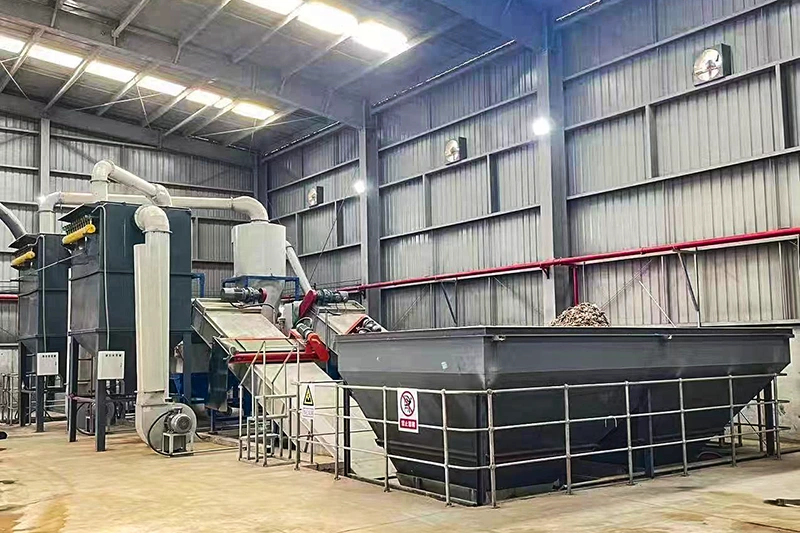
Structure and Performance Evidence
Pulvz F-series crushers used in this layout combine a rotating blade / disc rotor, thickened manganese steel hammer plates, and manganese steel liners formed as one piece. The screen is a high-hardness alloy mesh that can be changed in minutes to shift output from coarse chip to ≤5 mm sawdust.
Rotating Blade / Disc Rotor with Manganese Steel Hammers
The hammers are made from manganese steel and built thicker than standard plates to absorb the impact of occasional metal contact. When wear does occur, individual hammers can be replaced without removing the rotor, keeping maintenance short.
Manganese Steel Liner Formed as One Piece
The inner housing liner is also manganese steel, shaped as an integrated shell. It resists abrasion from dry, hard recycled wood and protects the main casing from the same impacts that wear the hammers. Replaceable liners extend housing life and lower rebuild costs.
Adjustable Screen Mesh for Particle Size Control
Screen openings from roughly 2 mm to 5 mm let the same machine produce different products. A 4–5 mm fraction is typical for biomass boiler fuel; a 2–3 mm fraction suits presswood pallet raw material. Screen widths up to 780–1480 mm match capacity targets from 1 t/h to 8 t/h.
Magnetic Separation Captures Ferrous Contamination
A magnetic separator placed on the infeed conveyor or discharge stream pulls nails, staples, and stray hardware out of the flow. Industry separators on similar lines routinely reach better than 95% ferrous removal efficiency, which is enough to protect hammers and clean the fiber. (Exact separator configuration should be confirmed with the supplier for each layout.)
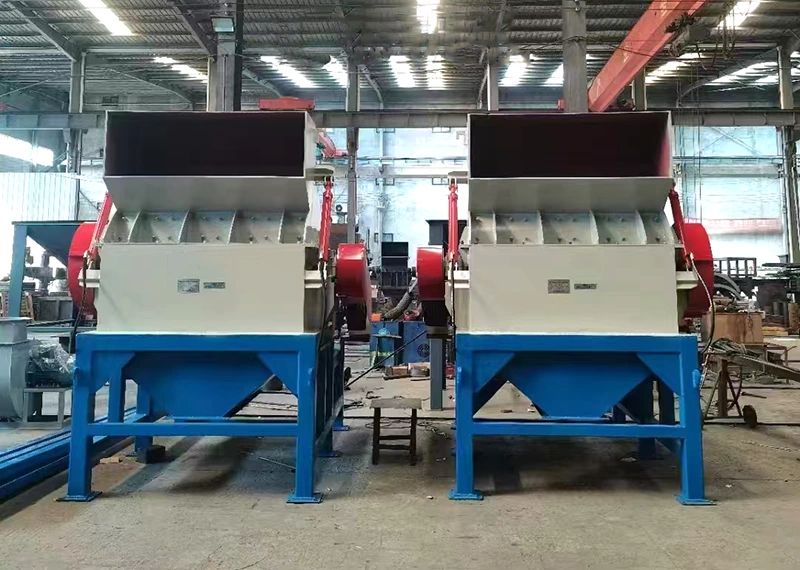
Optional belt conveyor feeding keeps the machine running continuously. Whole pallets or broken boards can be loaded by forklift onto the infeed belt, so the crusher processes a steady stream rather than batches.
The Result: Cleaner Fiber and Fewer Shutdowns
With a Wood Crusher with Adjustable Screen and Magnetic Separation, the pallet recycling line stops fighting its own feedstock. Nails and staples are intercepted before they strike the hammers, and the adjustable screen delivers the exact particle size the buyer wants.
- Hammers and screens last longer because metal is removed upstream or downstream before it can cause damage.
- Output size stays consistent across pallet, board, and slab feedstocks.
- Recovered fiber is cleaner, widening resale options to pellet plants and molded pallet lines.
- Planned maintenance replaces fewer unplanned emergency stops.
For pallet recyclers, furniture manufacturers, and sawmills handling post-use wooden packaging, this configuration turns the worst part of the waste stream—the hidden metal—into a managed process step.
Need to protect your crusher from nails and staples?
Tell us your feedstock and target output size. We will size a Wood Crusher with Adjustable Screen and Magnetic Separation for your line.