
Why a wood pellet plant’s feedstock is nothing like a sawmill’s
A wood pellet mill’s definition of “raw material” is far messier than a sawmill’s. The intake at a Southeast Asian SRF pellet producer, for example, can list wood offcuts, bark, rice straw, corn stover, sugarcane bagasse, rubber wood offcuts and oil-palm residue on the same procurement sheet — and the same line may also take end-of-life wooden pallets on a different day of the week. One Thai pellet plant’s homepage spells out the recipe plainly: wood offcuts, bark and crop residue sourced locally; a second plant page is built specifically around recycled wooden pallets pressed into BioSRF. That mixed stream is the reality of biomass pellet feedstock today.
The old failure mode: feed geometry and feed purity break the line
The downstream of any commercial wood chipper is a rotary drum dryer and a hammer mill, then a pellet die. Each of those stages is sensitive to two things: feed geometry (size, shape, moisture) and feed purity (stone, metal, fines). Mixed feedstock breaks both.
- Geometry drift. Crop residue compresses; branches spring back; pallet deck boards chip into slivers. A machine calibrated for one shape feeds the next in surges.
- Contaminant load. The same plant page that lists the recipe also lists the remediation step: Chipped to a uniform size, then screened for stone, metal and contaminants. Screening exists because the upstream supply brings that contamination in.
- Hidden cost when you skip that step. Metal reaching the pellet die lowers ash content quality and damages downstream boilers — the plant is selling a fuel, so every contaminant fraction is a margin leak.
- Seasonality compounds it. Rice straw season is wet and pithy; oil-palm season is fibrous and dry; the recipe rotates with the harvest calendar, and the chipper has to absorb the rotation.
Why drum geometry fits mixed feedstock better than disc geometry
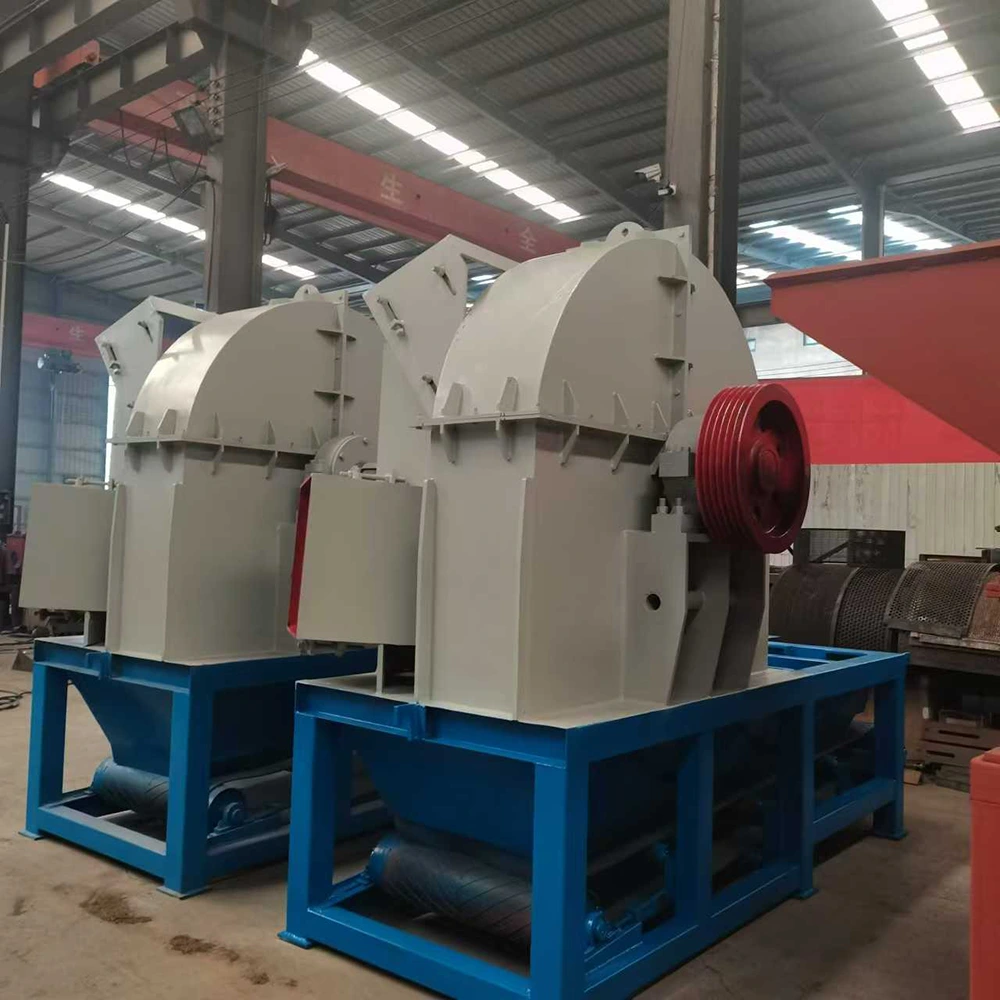
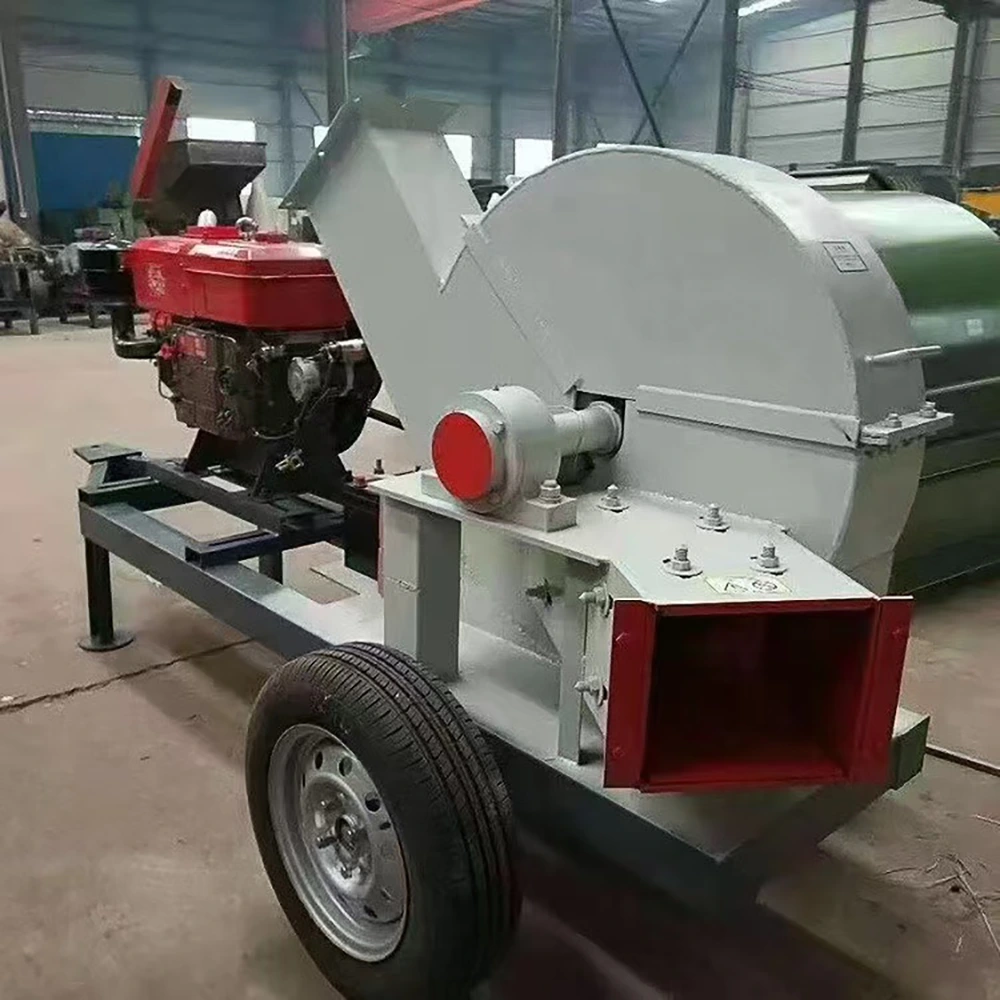
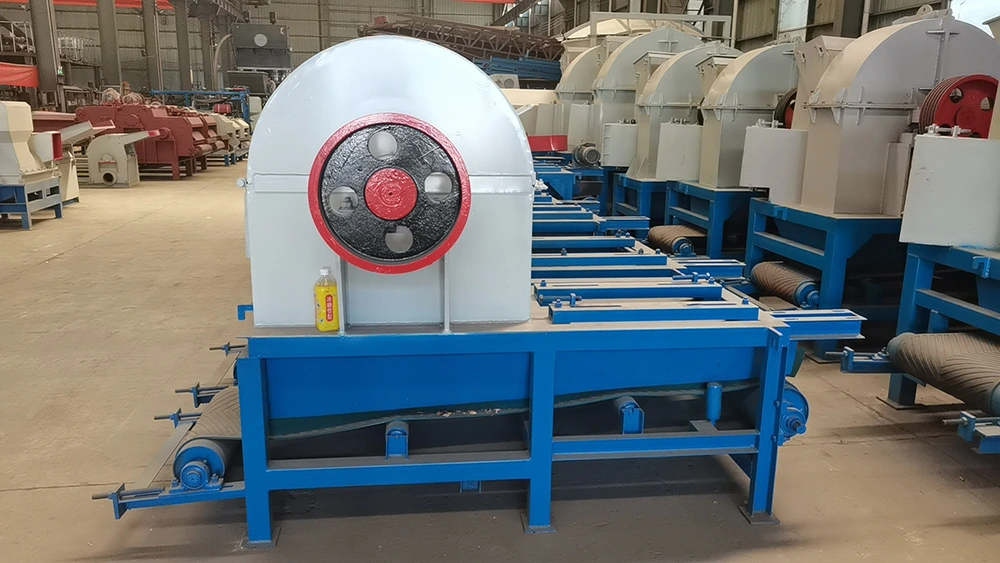
For a pellet line that has to take branches, slabs, pallet deck boards and crop stalks in the same week, the commercial wood chipper geometry matters. The EMP drum chipper (X-215 / X-216 / X-218, comparable to the BX215 / BX216 / BX218 class) puts the cut on a rotating knife roller against a fixed counter knife, fed by a hydraulic feeding system with adjustable chip length. Two structural consequences matter for mixed feedstock:
- Geometric tolerance. Irregular branches, knotty sections and pallet offcuts with embedded nails are accepted by the drum’s cutting angle — a configuration that doesn’t require a clean, square face on every infeed piece the way a disc geometry does.
- Uniform chip size output. The drum’s cut produces 30–35 mm chips across all the upstream material, which is the spec the downstream hammer mill and rotary drum dryer want for stable drying and stable pelletizing.
Upstream contaminant control: where metal and stone should be caught
A chipper alone is not a clean-feed solution. The pellet plant’s own process description puts screening before the dryer: chipping first, then screening for stone, metal and contaminants. For a commercial wood chipper installation that has to handle recycled pallets and crop residue, the right place to add protection is upstream of the chipper, not after it:
- Magnetic separation upstream. A simple ferrous-separation step ahead of the drum chipper catches nail heads and wire from recycled pallets before they enter the cutting chamber.
- Stone and oversized object screening. A coarse scalping screen on the feed conveyor rejects oversize and visible stone before they hit the infeed.
- Wood pulverizer line has it built in. If the downstream is an EMP wood pulverizer setup, the line itself is engineered with magnetic separation in the secondary stage; pairing that with upstream screening gives a two-stage net.
Three capacity tiers matched to the line
Pellet plants ramp. The drum chipper family is engineered in three motor sizes — 45 kW, 55 kW and 110 kW — producing 4–5 t/h, 6–8 t/h and 8–12 t/h respectively. That three-tier spread is what lets a pellet plant size the commercial wood chipper to its actual procurement reality instead of buying for a forecast:
- Start at 45–55 kW. 4–8 t/h chip output matches a 1,500–3,000-ton-per-month pellet plant’s first shift and leaves headroom for two-shift ramp.
- Move to 110 kW when the off-take contract demands it. 8–12 t/h matches a 5,000-ton-per-month target with a single drum chipper feeding the line.
- One architecture, three ratings. Same cutting geometry, same screen, same hydraulic feeding system — the difference is motor power and rotor mass, not a different machine philosophy.
Stable chip supply, stable pellet durability
The visible result is at the pellet press, not the chipper. With mixed wood offcuts, recycled pallets and crop residue all chopped to a uniform 30–35 mm chip, and with metal and stone screened out upstream, the rotary drum dryer holds a stable moisture window below 10% and the pellet die runs at a consistent feed. That is what shows up in the pellet plant’s KPIs as stable pellet durability and a lower reject rate at the cooler screen — the part of the operation the customer actually pays for.
Compliance framing for export pellet lines
For pellet lines exporting into the EU, the technical file, risk assessment and electrical documentation are prepared for the target market; CE marking itself is the responsibility of the party placing the machine on the EU market. The EU Machinery Directive 2006/42/EC is repealed on 2027-01-20 and replaced by Regulation (EU) 2023/1230; whether woodworking machinery falls in Part A (mandatory notified-body involvement) is still being finalised. Documentation is built to the framework that is current at the time of supply, not to an older assumption.
Send your feedstock mix, get a sized configuration
Tell us the share of wood offcuts, recycled pallets and crop residue you intend to run, and the monthly pellet output you are targeting. Our engineers return a drum chipper tier (45 / 55 / 110 kW) and the upstream magnetic / scalping arrangement that fits it.
Configure my commercial wood chipper line with EMP engineers