
What Is Missing Between Fibre and a Finished Pallet
A company that controls wood fibre already holds the part of the chain with the least specification attached to it. Its product is sold by weight or by volume, priced against other people’s by-products, and exposed to a transport radius. A molded pallet is sold to a drawing, in countable units. Closing that gap is not a matter of adding one forming machine to an existing yard; it is a matter of adding the operations that turn loose fibre into a part a buyer can order again.
Preparation before the press
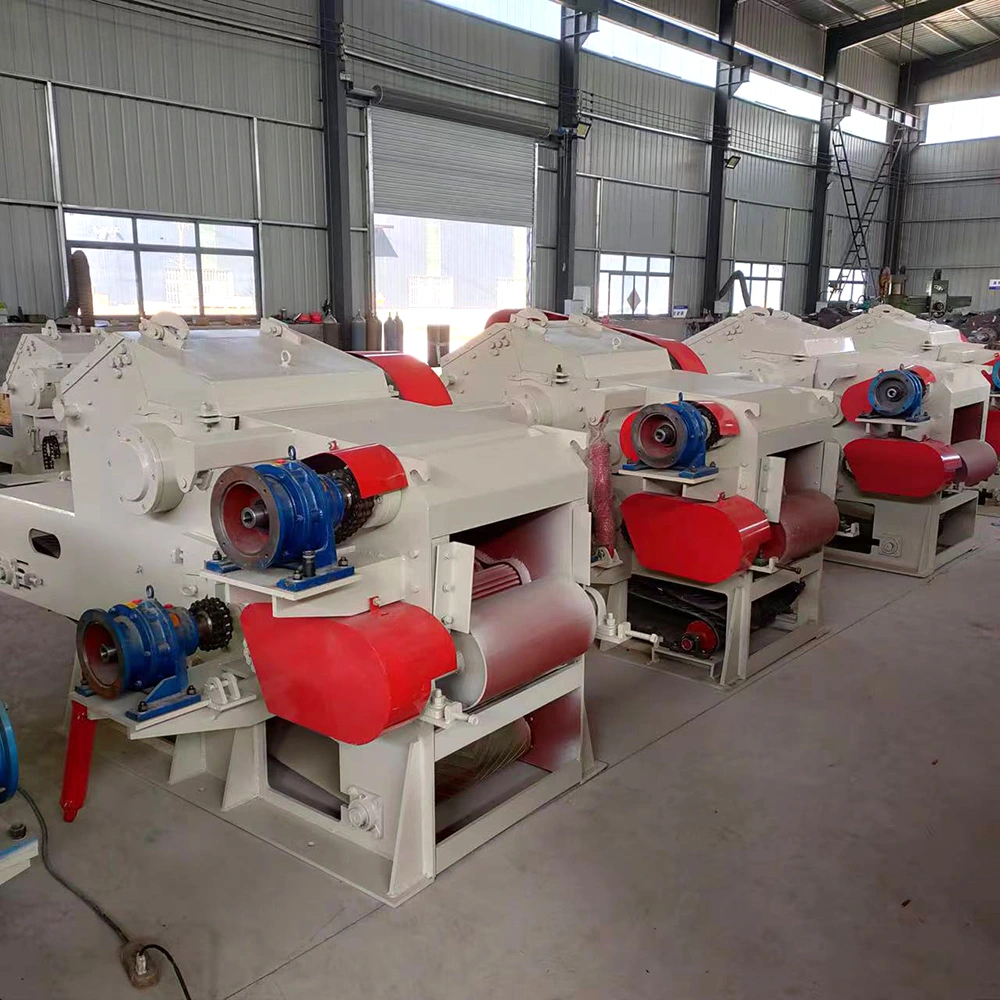
Fibre has to be brought to a defined geometry, freed of metal and inert material, and dried into the band the binder and mould require. These stages decide whether the material is a furnish or simply a pile of wood.
Metered blending and weighed spreading
Binder is dosed at a controlled ratio and mixed through the fibre; a spreading unit then weighs each charge and distributes it across the mould. These two stages are what make one pallet the same as the next. Without them the press is forming a variable input.
Forming, demoulding and stacking
The hydraulic press forms the pallet in a heated mould. Take-out and stacking then set the pace the whole line has to hold, and produce countable units that can be despatched. See the fully automatic line, the equipment overview and the presswood pallet machine page for how the stages are described as equipment.
Why It Is a Line Rather Than a Single Unit
The stages are coupled. A dryer that produces the right moisture but the wrong particle geometry still gives a poor fill. A press that runs a shorter cycle than the blending stage can feed it will wait. A take-out method that is unspecified at purchase gets improvised later next to a hot mould. When the units are bought separately, the interfaces between them become the customer’s project by default.
Discussing AutoML as a configurable line means those interfaces are decided once: the conveyor that actually reaches the mixer, the spreading unit matched to the mould, the control signal that releases the press, and the stacking method that fits the press opening. The cases page gives a sense of how configuration changes with site conditions.
Three Conditions That Have to Hold Together
Moving downstream is a business decision with three independent gates. All three have to be open at the same time:
- Raw material stability: consistent geometry, moisture, volume and freedom from contaminants, across the year rather than on one good week.
- Product market: an identified buyer or internal use with a defined pallet specification, an accepted test route and a volume that suits a line.
- Investment conditions: floor area and height, electrical capacity, dust extraction, operating crew, capital and the ability to carry the ramp-up period.
A project with abundant fibre but no buyer, or a firm order but a highly seasonal fibre supply, is not a line yet. These are the points to settle before a layout is drawn.
Where the Scope Has to Be Confirmed
Raw material stability, the product market and the investment conditions must all hold for the move downstream to make sense; equipment capability on its own does not establish profitability. Full automation is not a requirement either. Where capital is limited or labour is inexpensive, a semi-automatic configuration that keeps blending and pressing can be the more sensible first step, with the front end and automatic take-out added later. That trade-off should be written into the plan rather than discovered after commissioning.
Which stages are supplied, their degree of automation, the interfaces and the acceptance conditions are confirmed during technical review and set out in the agreed proposal and contract.
Next Step
If you hold fibre and are considering the finished product, the useful review is a stage-by-stage walk from your current material to the pallet your target buyer would order, with the three gates above answered in writing. That produces a configuration discussion with real boundaries.
FAQ
Is our existing chipping operation enough?
It is a useful starting point if its output meets the geometry, moisture and cleanliness the moulding stages need. Output consistency matters more than rated capacity, so sample the output over a representative period before writing existing equipment into a layout.
Do we need to start with a fully automatic line?
Not necessarily. Semi-automatic configurations are a legitimate first step where capital or labour economics point that way. The trade-off is greater dependence on manual work and a lower ceiling on repeatability.
What decides the pallet specification we can make?
The mould sets the geometry; the process and the charge set the consistency. Buyer requirements for footprint, fork entry, nesting and load rating have to be established first and then matched to tooling and tested.
How quickly would a line supply saleable pallets?
There is no fixed interval that applies across projects. Site preparation, services, tooling, material qualification and process tuning all sit between delivery and steady output, and the schedule should be planned around them rather than assumed away.
Can we make pallets for other companies on contract?
That is a commercial model rather than an equipment setting, but it raises the same questions: an agreed specification, a test route and a volume that suits the line. It is worth settling with the counterparty before tooling is ordered.