Biomass & Mulch Production
Who runs this line and why cost per ton decides everything
In mulch and biomass fuel lines, the margin lives in cost per ton processed, not in machine throughput. A stationary wood chipper built around a drum rotor shifts the cost structure by cutting kWh per ton and holding chip size uniform, so downstream grinding and screening stop eating the profit.
Where the cost per ton is actually lost
Most mulch and biomass fuel operations start the wrong way. Some outsource chips and sawdust from third-party suppliers, which locks in a margin ceiling because the supplier always wins on raw material pricing. Others run a mobile diesel chipper that follows the yard around, which sounds flexible but bills fuel, transport, and frequent blade changeovers against every ton. The third group skips the chipping stage entirely and pushes whole branches, slabs, and pallet scrap straight into a hammer mill. That single decision is where most of the cost per ton is lost: a hammer mill forced to do primary reduction burns roughly twice the kilowatt-hours per ton compared with a properly sized drum chipper ahead of it, blade and screen life collapses under dirty feed, and the chip size distribution that comes out is wide enough that downstream screening rejects a usable share back into the feed conveyor. Each rejected ton is material that has already been paid for in electricity, blade wear, and operator time. By the time the books are closed, the real cost per ton is sitting 20 to 40 percent above the original budget.
Why a stationary drum wood chipper matches this work
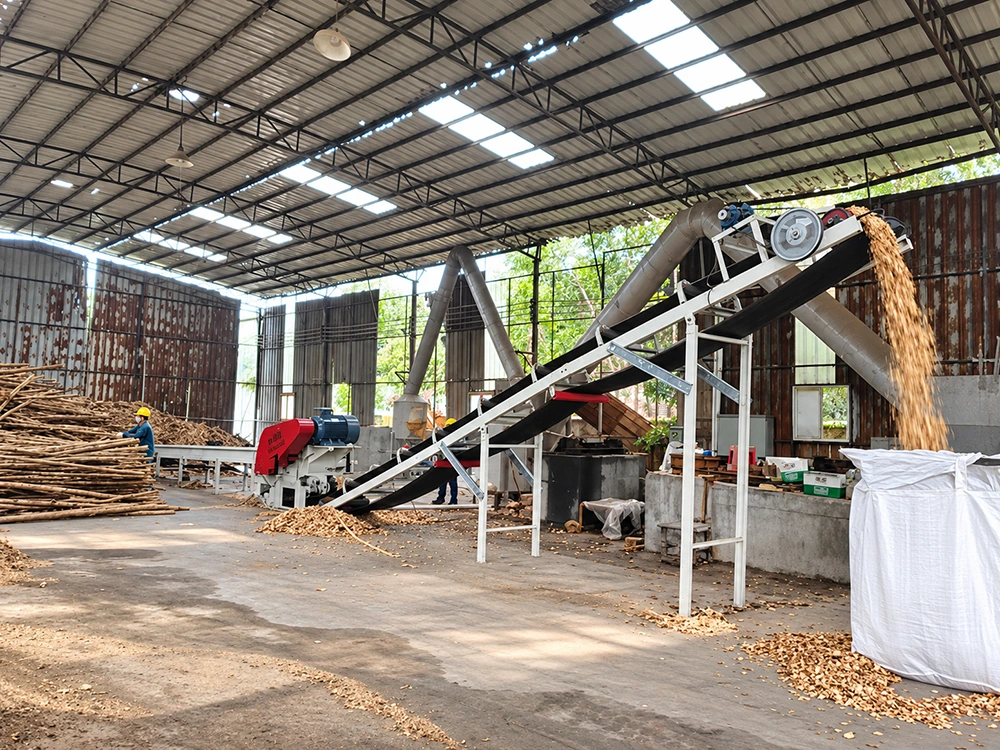
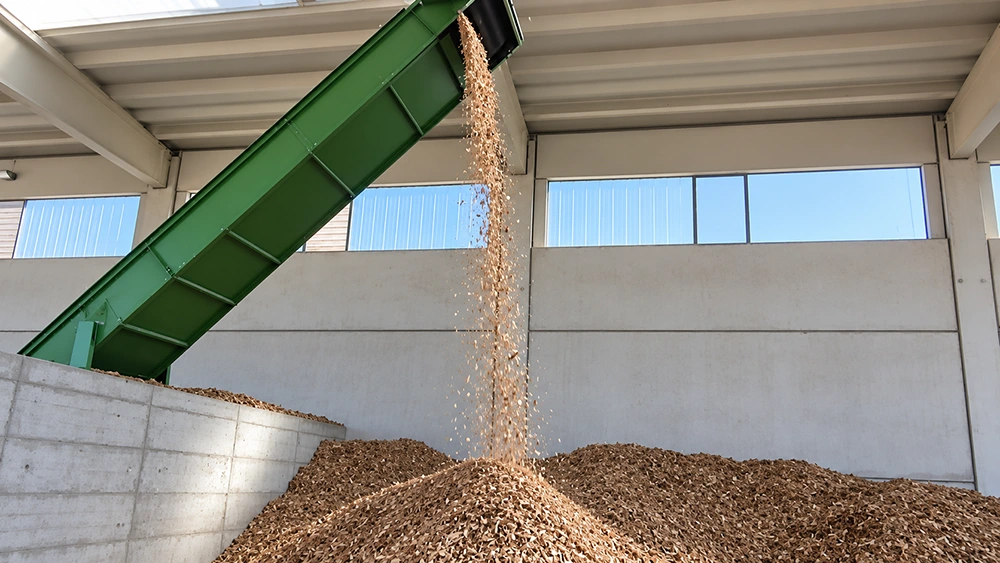
A drum wood chipper is the geometry that fits irregular, dirty, mixed feedstock ahead of a hammer mill. The horizontal knife roller carries multiple fly knives arranged around the drum, while a hydraulic feeding system with a lower pressing roller pulls logs, slabs, branches, and pallet scrap into the cutting circle at a controlled rate. Because the cut is continuous rather than per stroke, the motor draws steady current instead of spiking on every bite, and kWh per ton stays predictable shift after shift. The fly knives sit against a counter knife, and the cut length is set by the chip screen underneath, so the output is a uniform 30 to 35 millimeter chip that the hammer mill downstream can take in one pass. For recyclers running in the 6 to 8 ton per hour class, the EMP X-216 drum wood chipper pairs a 55 kilowatt main motor with this geometry and holds the cut width that downstream grinding expects. Because the rotor speed, screen aperture, and feed roller pressure are all adjustable on the machine, the same stationary drum chipper can be retuned from mulch-grade output to biomass fuel grade output without changing the rotor.
What the cost per ton looks like after the chipper is in
The cost per ton after a stationary wood chipper is installed moves in three places at once. First, kilowatt-hour per ton drops because the drum chipper does the primary size reduction and the hammer mill downstream only does finishing, which removes the largest single electricity load in the line. Second, blade wear per ton becomes a planned line item instead of an emergency: alloy steel fly knives and counter knives are replaceable in matched pairs, the chip screen is a slide-out part, and spare parts pricing out of Chinese manufacturing keeps the per-knife cost low enough that blade change is no longer the production-stopping event it used to be. Third, downtime per ton falls because hydraulic feeding prevents the stalls that a manually fed chipper takes when an oversize log lands on the rotor, and overseas engineer commissioning gets the line to its design cost per ton inside the first quarter of operation rather than over a year of tuning. For a typical 6 to 8 ton per hour mulch or biomass fuel line, the combination of lower power draw, predictable blade cost, and steadier uptime is what brings payback into a 12 to 18 month window, before any credit is taken for the disposal fee that the operation no longer pays to haul branches and pallet scrap off site.
- Lead with cost per ton as the decision metric, not throughput.
- Describe the drum rotor and continuous cutting, not per stroke geometry.
- Cite specific kilowatt and ton per hour figures tied to the EMP X-216.
- Close on a concrete 12 to 18 month payback window, not adjectives.