Wood-Based Panel Dust Compliance
MDF and Particleboard Plants Face a New Compliance Perimeter
For MDF and particleboard producers, dust generated at crushing, drying, conveying, and sanding has moved from a workshop nuisance to a permit and community-complaint risk. This piece shows how a sawdust dryer fitted with a conical cyclone dust collector, optional baghouse, and blower-pipeline cooling addresses compliance at the drying stage rather than at the stack.
Why Open-Air Drying, Hand-Welded Drum Machines, and Standalone Cyclones Fall Short
Plants running natural sun drying or open-air drying have no dust capture at all in the drying step; fines leave with the moisture. Plants running hand-welded low-end drum machines inherit a different problem: the drum body is round on the outside, but the seals, flanges, and discharge are improvised, so retrofitting a cyclone downstream only moves the leak point. A standalone cyclone added after the dryer cuts visible stack emissions, but it does not address fugitive dust around the dryer body, the infeed, or the conveyor transition. Operators end up chasing stack tests instead of source control, and the audit trail stays weak.
How a DRYR Sawdust Dryer Integrates Dust Compliance into the Drying Stage
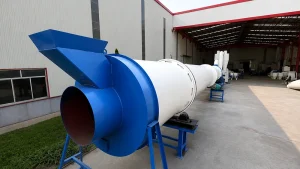
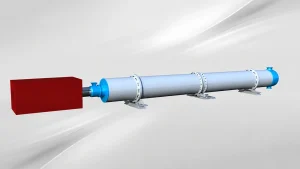
DRYR is a continuous rotary sawdust dryer built around a conical cyclone dust collector as standard equipment, with an optional baghouse filter for sites that need lower residual emission. The drum outlet is piped into the cyclone, so fines drop into a sealed hopper rather than venting into the hall. The same blower pipeline that pulls dust-laden air through the cyclone also moves cooling air across the dried material at the discharge, which lowers the exhaust temperature before the cyclone and reduces thermal load on downstream handling. Seal monitoring at the drum body and the cyclone flange gives operators a continuous check on fugitive release instead of a once-a-year stack test.
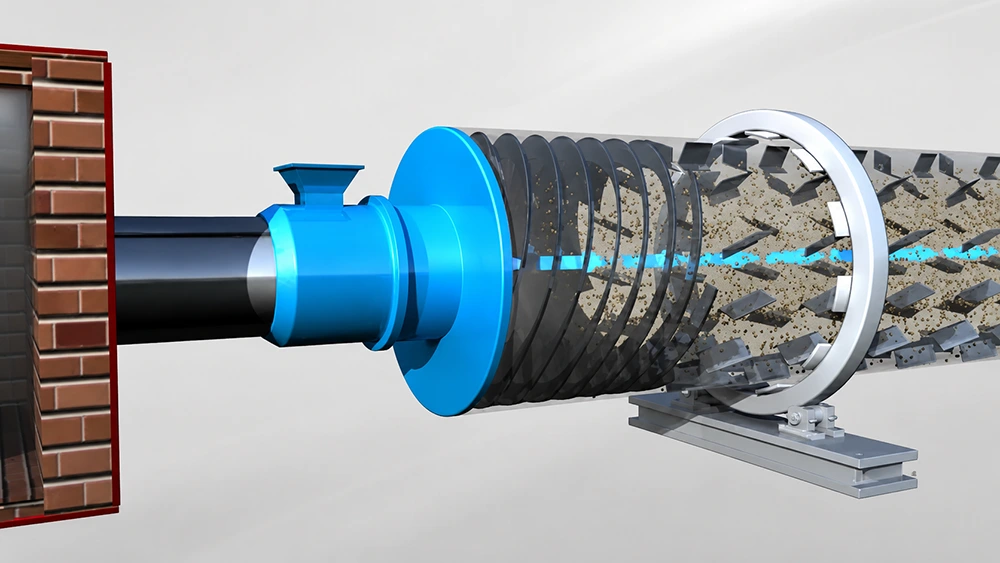
What the Configuration Looks Like and What Numbers It Targets
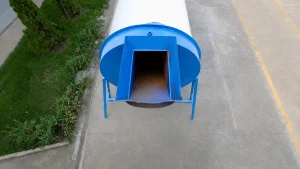
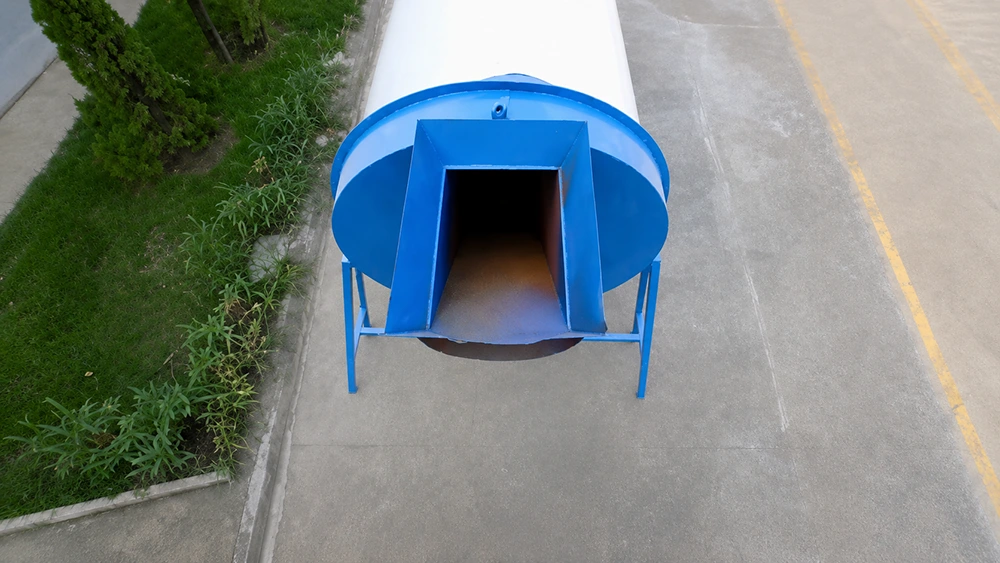
The DRYR dryer covers 0.8 to 2 t/h across four standard models, with drum diameters from 1000 mm on the H-1010 up to 1800 mm on the H-1815, and a drum that can be customized up to 17 to 18 m for plants that need more residence time on wet furnish. Material enters through a closed front chute with curved guard panels and steel support legs that limit the open handling area; inside the system, an enclosed helical rotor moves granular material through a sealed shell rather than across an open conveyor. The process target is dust-laden air routed drum outlet, cyclone, optional baghouse, blower, stack, with the blower also feeding a cooling airflow that drops the exhaust temperature before final discharge. The result is a drying stage that no longer relies on annual stack tests alone, where cyclone capture plus seal monitoring plus optional baghouse gives an audit trail environmental reviewers can trace back to the source.
- Each section is plain text without HTML tags, Markdown, or angle brackets.
- Title, intro, sections, and image alts all reference sawdust dryer, cyclone dust collector, and wood-based panel dust compliance.
- All four sections follow the customer pain, old-solution limit, product fit, and configuration evidence logic.
- Image alt text is taken from the Dryr image index document and matches the assigned source files.