Rotary Sawdust Dryer Sourcing for Pine and Eucalyptus Residue
East Africa residue and ambient humidity: why a standard drum spec misses the real inlet moisture
East Africa pine and eucalyptus residues arrive with high initial moisture and absorb ambient humidity fast during rainy seasons. A fixed-spec drum length that worked in a temperate climate will not hold the 10 percent binding window at a Mombasa or a Nairobi highland site in April. DRYR pre-sales protocol starts with on-site raw material moisture sampling, then sizes drum length and diameter for the actual evaporation load, so 0.8 to 2 tons per hour continuous output stays below 10 percent moisture all year round.
Pre-sales on-site moisture sampling: the first step before drum length is decided
DRYR pre-sales protocol starts with site sampling, not with a model number. The team visits the customer site and pulls raw material samples at three points: fresh chip from the chipper, aged chip from the yard, and a sample deliberately left in open air for 24 hours to capture re-absorption. Ambient temperature and relative humidity are logged at each pull. The samples are weighed, oven-dried at 105 degrees Celsius, and re-weighed to compute actual initial moisture. The multi-point sample is what tells DRYR whether a 12 meter standard drum will hold, or whether the same customer needs a 15 to 18 meter drum. Without that sample, the supplier is guessing. With it, DRYR sizes drum length, drum diameter across the 1000 to 1800 millimeter options, heat exchange area, hot air furnace output, and screw conveyor feed rate to the evaporation load actually present at the site.
Custom drum length and diameter: how 17 to 18 meters replaces the standard catalog for monsoon and East African climate
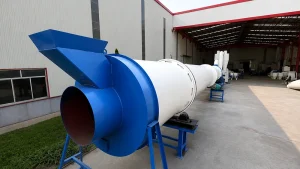
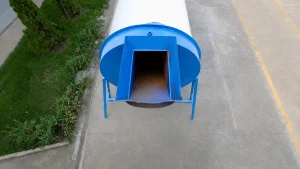
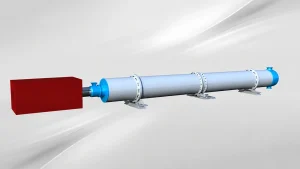
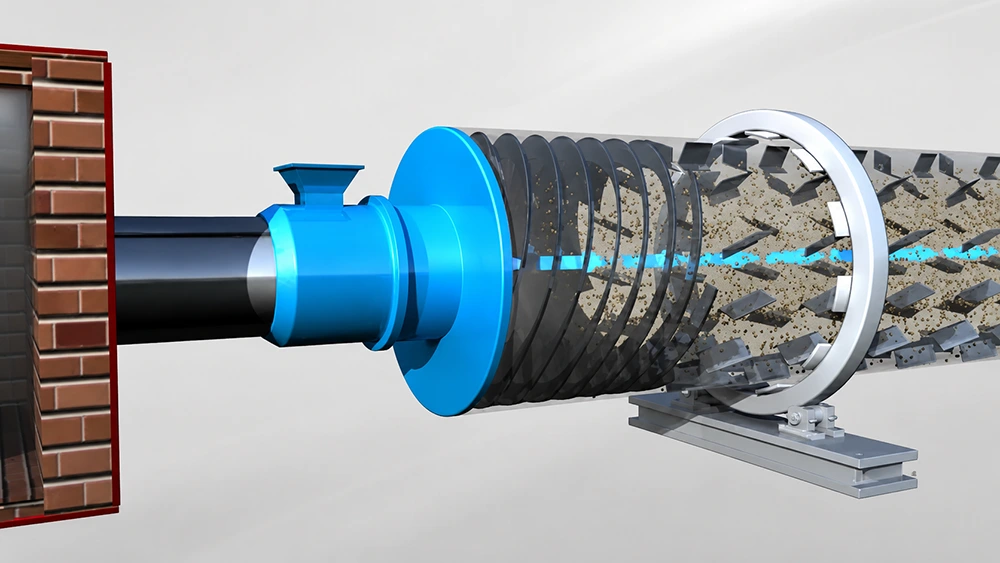
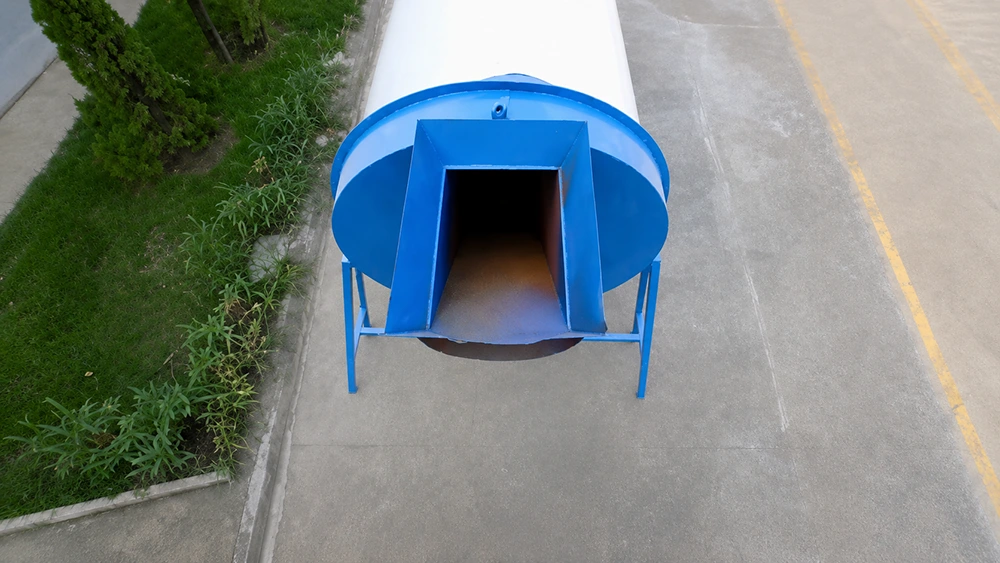
Once the moisture sample is in hand, the drum spec is built around it. The DRYR standard range covers H-1010 through H-1815 sawdust dryer models at 0.8 to 2 tons per hour, with diameters of 1000, 1200, 1500, and 1800 millimeter. For tropical monsoon sites, rainy-season East Africa, and any site where the inlet moisture is consistently above 55 percent or the ambient relative humidity is consistently above 80 percent, DRYR extends the drum from the standard 12 meters to 17 to 18 meters and scales the heat exchange area to match. The drum carries internal lifting plates for continuous sawdust drying, a self-insulation shell that holds heat inside the working zone, and a multi-fuel hot air furnace that burns coal, biomass powder, wood offcuts, oil, or natural gas. A conical cyclone dust collector, optional baghouse filter, screw conveyor feed, and PLC control close the loop on emissions, throughput, and operator load. The result is a rotary sawdust dryer that holds output moisture below 10 percent through both dry and rainy seasons at the same site.
From sample to commissioning: how DRYR delivers an oversized spec that actually closes the moisture gap
The sample-driven drum is delivered as a pre-assembled or split shipment, depending on whether the drum is under 12 meters (fits a standard container) or 17 to 18 meters (requires split shipment and on-site assembly). On inland East Africa sites where overland freight is the constraint, split shipment turns a logistics blocker into a working line. DRYR dispatches an installation and commissioning engineer to the site, supervises the field assembly of the drum, aligns the hot air furnace and cyclone dust collector, calibrates the PLC control, and runs a hot commissioning with the customer raw material. The handover record includes measured inlet moisture from the site sampling, the drum length and heat exchange area that was specified for that moisture, and the measured output moisture at the end of commissioning. The same protocol is what turns the tropical sawdust dryer sizing question into a documented engineering decision rather than a fixed-spec catalog number.
- East Africa pine and eucalyptus residue moisture sampling on site before rotary drum dryer drum length is sized
- Drum length extension from 12 meter standard to 17 to 18 meters for tropical monsoon and rainy season sites
- Multi-fuel hot air furnace with self-insulation shell, lifting plates, cyclone dust collector, optional baghouse filter, PLC control
- Split shipment and on-site installation and commissioning for inland East Africa sites with verified output moisture below 10 percent