Sawdust Dryer Module for MDF & Particleboard
Why mid-size MDF and particleboard producers source a single dryer module during expansion or retrofit
Mid-size MDF and particleboard producers hit the same wall during expansion or section-swap: a full-line replacement is not on the table. A DRYR assembled sawdust dryer ships as a stand-alone module with bolted-flange drum sections and standardized interfaces for the existing screw conveyor, multi-fuel hot-air furnace and cyclone dust collector, so a panel line can add or replace one drying stage in the 0.8 to 2 t/h working band without taking the line off the floor for months.
What changes when a sawdust dryer is added as a stand-alone module instead of a full-line replacement
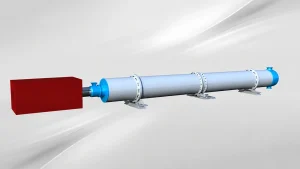
A full-line replacement usually means re-pouring the foundation, replacing conveyors, rebuilding the forming station, and re-engineering the dust collection ductwork around a new geometry. The cost line is not just the new equipment, it is the downtime and the re-engineering around it. A modular sawdust dryer flips that around: the dryer arrives as a stand-alone machine with bolted-flange drum sections, an external pinion and girth gear drive, and a self-insulation shell. The drum is sized to the line hourly feed, not to a turnkey spec sheet, so the upstream screw conveyor, the downstream forming bin and the existing cyclone or baghouse dust collector can connect through standard flanges. The line keeps running on its old dryer until the new module is on site, foundation is poured, and the cutover is a one-shift swap rather than a multi-month outage. The financial shape of the decision is different too: one dryer purchase, one foundation pad, one installation shift, one commissioning event.
How a DRYR assembled sawdust dryer matches an existing MDF or particleboard line interfaces and capacity step
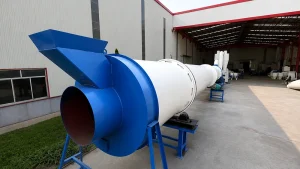
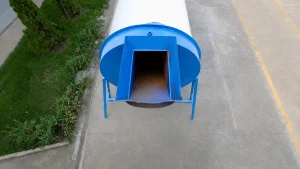
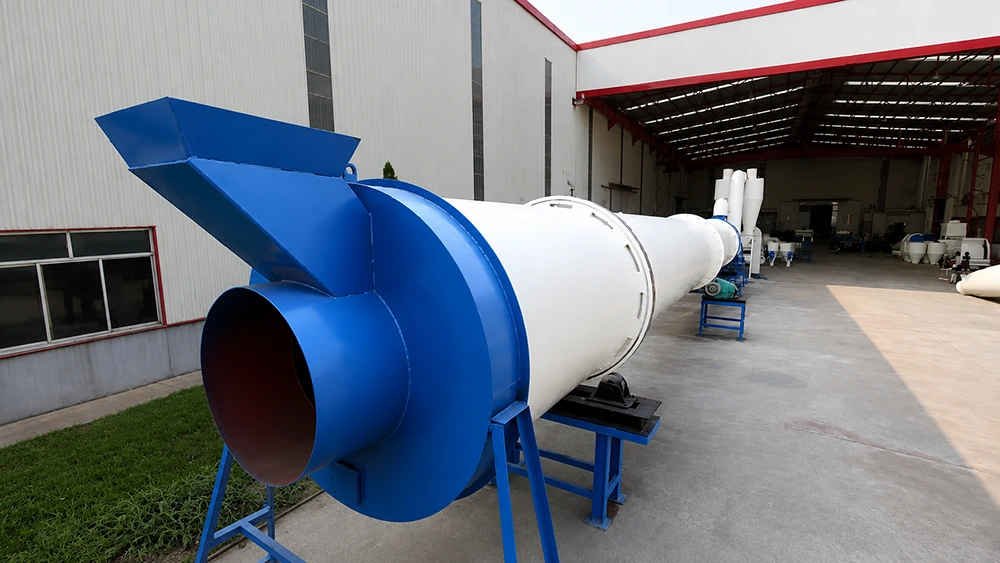
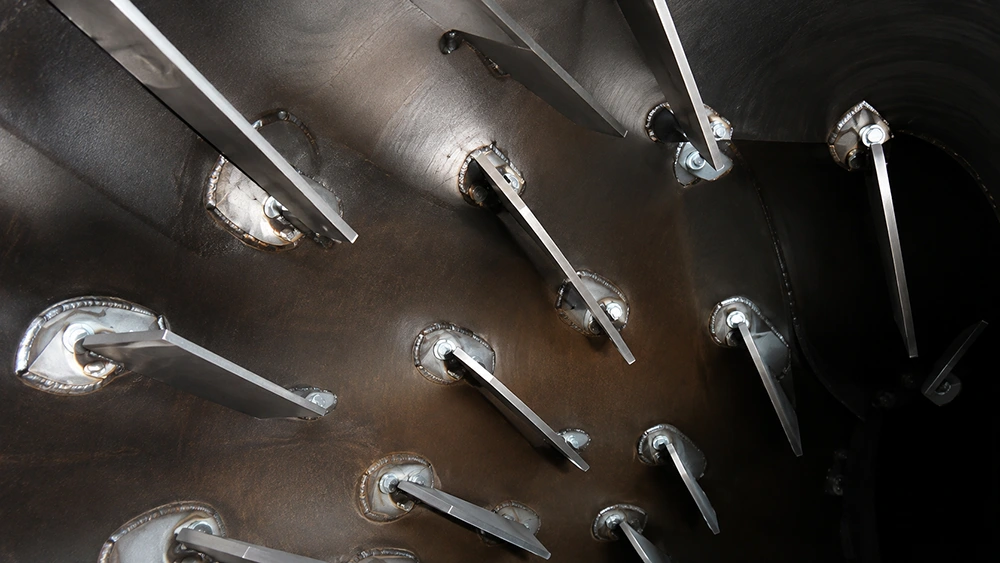
DRYR ships the dryer as bolted-flange drum sections that re-assemble on site, so the drum size and footprint fit through a standard container and through the plant gate without heavy civil. The four-model range covers the 0.8 to 2 t/h band that most mid-size panel producers run: H-1010 with a 1000 mm drum and 0.8 to 1 t/h, H-1212 with a 1200 mm drum and 1 to 1.2 t/h, H-1512 with a 1500 mm drum and 1.2 to 1.5 t/h, and H-1815 with an 1800 mm drum and 1.5 to 2 t/h. The standard hot-air furnace interface accepts coal, oil, natural gas or on-site biomass powder, so a plant switching from a coal-fired furnace or a gas-fired furnace keeps its fuel routing. The screw conveyor and the cyclone dust collector connect through standard flanges at both ends of the drum, so the existing infeed conveyor and the existing dust network land on the new dryer without bespoke ductwork. The PLC control panel monitors drum speed, hot-air temperature and discharge moisture, so the operator reads the new module on the same screen layout the line already uses. The assembled drum image shows a white shell with a blue feed hopper, lifted on roller supports, ready to receive the existing conveyor and discharge into the existing cyclone. The chamber interior image shows the staggered paddle-bar lifting flights that carry material through the drum and keep the moisture window stable across continuous feed.
What the operator sees after a DRYR sawdust dryer module lands: capacity, moisture window and capex line
After the new sawdust dryer module runs through its first 24 hours of commissioning, the operator reads three numbers. First, hourly feed on the line is back inside the 0.8 to 2 t/h band the four-model range was sized for, so the bottleneck at the dryer disappears. Second, output moisture at the dryer discharge holds below 10 percent under continuous feed, so the forming bin and the hot press see a stable moisture window for MDI or UF binder, and the press no longer throttles to protect the binder bond. Third, the capex line lands as one dryer purchase, one foundation pad and one installation shift, not as a multi-equipment re-engineering project, which keeps the project inside the capex envelope mid-size panel producers actually carry. For mid-size MDF and particleboard producers carrying capex pressure on expansion or on a worn-out dryer section, that financial shape is the difference between approving the project and parking it for another budget cycle.
- canonical_product_equals_Dryr
- body_uses_plain_text_no_html
- body_root_contains_required_classes
- focus_keyword_in_intro_and_sections