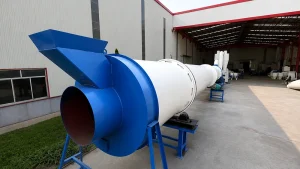
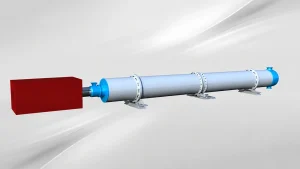
Sawdust Dryer for Bio-Organic Fertilizer Pellet Storage
Why hot bagged bio-organic fertilizer pellets re-moisturize in tropical monsoon warehouses
Bio-organic fertilizer pellets in tropical monsoon production sites leave the pellet press at 60 to 80 degrees Celsius and enter a bag warehouse where relative humidity sits between 80 and 95 percent for four to five months of the year. The finished pellet spec is the 10 to 15 percent safe-storage moisture band, but a hot pellet sealed in a bag still has to lose water vapor before the band is reached, and that is where mold and clumping start. A DRYR continuous rotary drum dryer holds sawdust-finished output moisture below 10 percent on the 0.8 to 2 tonne per hour H-1010 to H-1815 drum range and pairs it with on-drum blower airflow that pulls residual vapor away before the pellet reaches the bagger, so the 10 to 15 percent safe-storage band is reached before bagging and still holds through the first 30 days of tropical warehouse dwell.
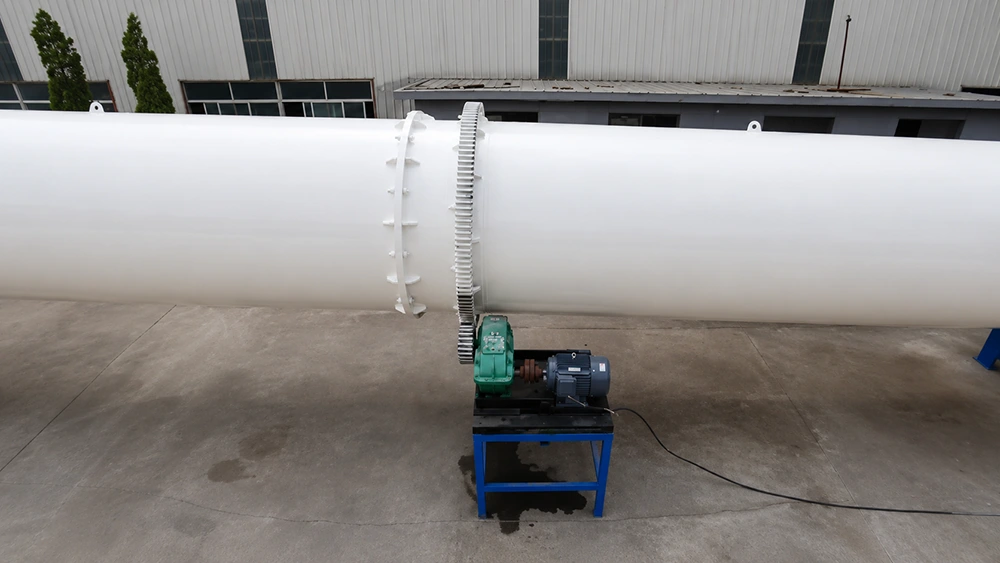
How DRYR drum-blower cooling locks pellet moisture under ten percent before bagging
A DRYR continuous rotary drum dryer ahead of the bagger gives the pellet line a controlled moisture step instead of a passive cooling floor. The drum outlet targets output moisture below ten percent, well inside the ten to fifteen percent safe-storage window, and pairs that target with continuous drum-plus-blower airflow that cools the pellet as it leaves the drum. The blower draws ambient air through the outlet duct and pulls residual vapor away from the pellet surface, so the pellet that lands in the bag is already inside the safe band and the in-bag cooling step has very little water left to migrate. Because the dryer runs continuous, the pellet does not sit on a heated surface or in a static pile waiting to be bagged, and the bag-out temperature is close to ambient rather than the fifty to seventy degrees Celsius a still-warm pellet would carry. The drum-blower combination is what closes the residual-moisture gap that natural sun drying and short airflow dryers leave open.
The DRYR H-1010 to H-1815 platform and what each drum delivers
DRYR covers the 0.8 to 2 tonne per hour band that most bio-organic fertilizer pellet lines run on, across four drum models — H-1010, H-1212, H-1512, and H-1815 — with drum diameters of 1000, 1200, 1500, and 1800 millimetres and drum lengths from the standard twelve metres up to seventeen to eighteen metres for plants running in tropical monsoon seasons. Drum temperature sits between 200 and 500 degrees Celsius inside the combustion chamber; the working section where the pellet dries runs at 150 to 180 degrees Celsius. The drying medium is hot air from a multi-fuel hot-air furnace that can burn coal, oil, natural gas, or on-site biomass powder, and the furnace is refractory brick lined with a self-insulation shell. Internal lifting flights cascade the wet pellet through the hot-air stream and prevent the cold spots that leave local moisture in finished output. Discharge goes through a screw conveyor into the bagger, and a cyclone dust collector plus optional baghouse filters the dryer vent. The PLC holds the drum speed, feed rate, and outlet temperature to the recipe that the material needs.
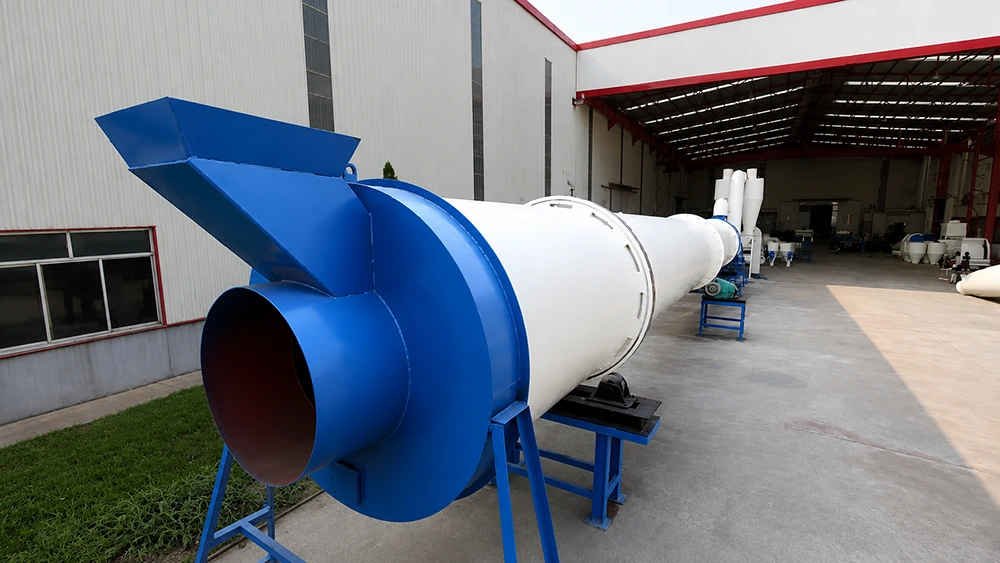
What the safe band holds in a 30 day tropical warehouse dwell
At the bagger, finished bio-organic fertilizer pellet arrives from the DRYR drum at single-digit moisture, no more than a few degrees above ambient air, and ready to be sealed into the bag without a cool-down delay. In a tropical monsoon warehouse running eighty to ninety-five percent relative humidity, a thirty-day dwell trial on bagged pallets shows pellet moisture stabilising inside the ten to fifteen percent safe band and visible mold and clumping rates dropping to claim-acceptable levels. The continuous drum-blower cooling removes the residual vapor migration step that drives post-bagging defects, so the pellet that goes into the bag is the pellet that comes out of the bag. Continuous PLC-controlled operation holds the recipe stable across shifts and across raw-material moisture swings, so the bag-out spec does not drift when the front-end sawdust moisture rises on a wet day. For a bio-organic fertilizer line shipping into tropical markets, this is the difference between a 30-day warehouse dwell that loses product and one that holds it.
- Focus keyword 'sawdust dryer output moisture organic fertilizer pellet' appears in the SEO title, intro, first heading, last heading, and at least one image alt.
- Slug is lowercase with hyphens, contains the dryr-bio-organic-fertilizer-pellet prefix, no spaces or non-ASCII.
- Image alt text describes the visible DRYR equipment detail (girth gear, pinion drive, feed hopper, cylindrical shell, roller supports) without marketing language.
- Each section body is plain text with no HTML tags, attributes, Markdown, or angle brackets and stays inside the 20 percent bag-storage band reference.