Pallet pool asset loss
Which lanes actually bleed the pool
A pallet pool does not lose money when a pallet is damaged, it loses money when a high-value blue block pallet leaves on a one-way export lane and never comes back, and the replacement has to be bought out of new capital. This page follows that loss to the machine that changes the arithmetic: a molded pallet hydraulic press machine forms a nail-free, ISPM-15 exempt pallet out of recovered wood waste, so the low-cost molded category takes the lanes that will not be recovered while the high-value asset stays on the routes where it actually returns.
Why re-buying high-value pallets keeps the leak open
The reflex answer is to buy more of the same. A pool that loses a share of its units every year re-orders the same high-value specification, so replacement capital tracks loss volume instead of growth, and the large operators have said publicly that new pallet capital cost still sits above pre-pandemic levels. Heat-treated nailed pallets do not close the gap either. They carry an ISPM-15 treatment record that has to be kept per destination market, they are rebuilt from boards and fasteners, so a repair bench and a nail-and-board inventory sit behind every unit, and a lifted nail at the deckboard is a damage claim as well as a rejection at the receiving dock. Neither route changes the figure that matters: how much capital is sitting inside a pallet that is unlikely to be scanned back into the pool at all.
Why the molded category belongs on the non-returning flow
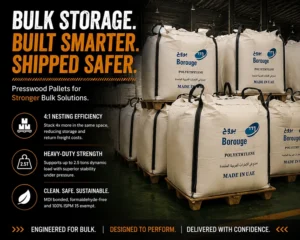
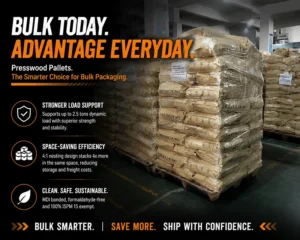
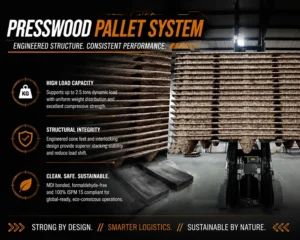
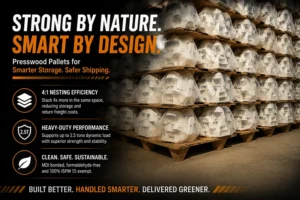
The decision that changes the number is not a better recovery programme on those lanes, it is a cheaper object on them. A molded pallet hydraulic press machine forms a one-piece pallet from 100 percent recovered wood waste and MDI adhesive, with the fibre crushed to about 5 mm, dried to 8 to 12 percent moisture and hot pressed at 150 to 180 C, so the material side of the pallet is something the plant already handles and often already pays to dispose of. That is where unit cost lands well below a premium nailed block pallet. Put that pallet into the export, end-retail and dispersed-customer lanes and keep the high-value blue asset inside the flows where recovery is economic. Where a unit does disappear, the replacement ordered against it is a molded pallet on a recovered wood intake, not another block pallet at full new-build cost. The pallet is also nail-free, so no splinter claim and no fastener inventory, nestable at roughly four to one by the packed ratio confirmed for the size, which cuts the empty return freight on the lanes that do run back, and it is exempt from ISPM-15 as a processed wood product rather than a treated raw wood package.
The press behind that pallet, and the result at the pool gate
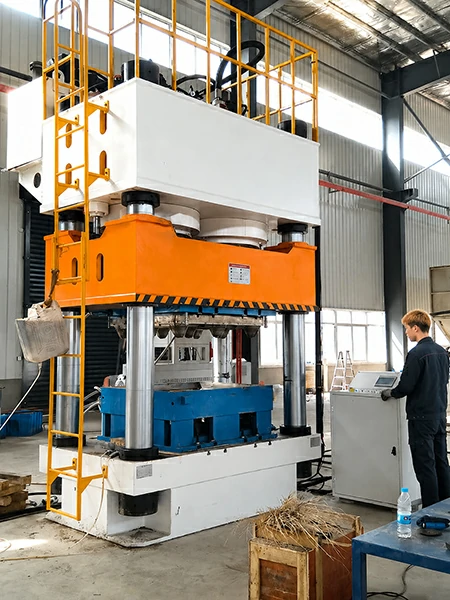
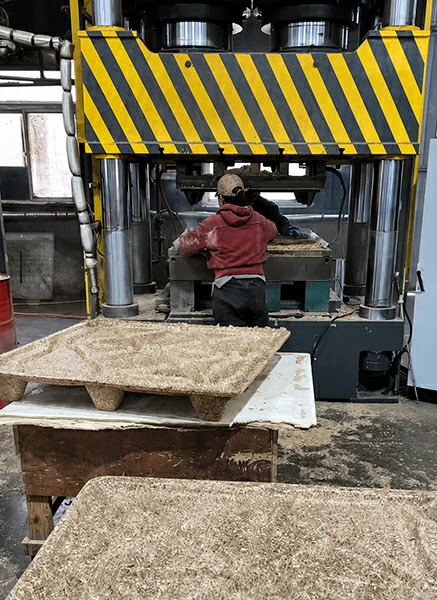
The machine is the Y32 three-beam four-column platform, offered at Y-1250, Y-1600, Y-2000 and Y-2500 ton tiers so a pool, a rental operator or a pallet maker can convert the book one lane group at a time instead of re-fleeting at once. The platen runs to 2500 x 1700 mm and forms one finished pallet per cycle at 150 to 180 C, with formed density around 900 kg per cubic metre, in single or double station layout. The images above show the plant evidence: the top beam, slide, worktable and four solid columns standing over an independent control cabinet and safety ladder, and the guarded molding workstation where the pallet is formed. The frame ships as container-loadable pieces and re-assembles on site, so a second unit lands on an inland yard without an oversized cargo project. The boundary is stated plainly: the press is not sold as a stand-alone machine, crushing to about 5 mm, drying to 8 to 12 percent moisture and even MDI mixing have to be in place first, and formed thickness, nest ratio and cycle time are confirmed per project. Read across the fleet, the result is narrower loss exposure on the lanes that will not return and a replacement order written at molded pallet economics instead of block pallet capital cost.
- Product word molded pallet hydraulic press machine appears in title, H1, first-screen summary and both image alts
- Traffic profile terms used naturally: one-way export pallet, end retail, dispersed customers, ISPM-15 exempt, nail-free, nestable pallet, warehouse and racking flow
- Logic follows customer scenario, old solution problem, product fit, structure and parameter evidence with two plant images, then final result
- Boundary stated plainly: press not stand-alone, about 5 mm fibre, 8 to 12 percent moisture and even MDI mixing upstream, figures confirmed per project