For any business owner or operations manager, the periodic review of expenses is a familiar ritual. You scan the line items, questioning every cost, looking for areas to optimize. Among them, certain expenses stand out not for their size, but for their persistence. For a wood processing plant, it’s the nagging cost of waste disposal. For a high-volume exporter, it’s the recurring purchase of single-use presswood pallets. These costs can feel like an inevitable part of doing business. But what if they are merely symptoms of a deeper strategic vulnerability: a lack of control over a critical link in your value chain?
The conventional view sees industrial equipment as a capital expense—a tool purchased to perform a function. We propose a different perspective. A modern compressed wood pallet machine, when analyzed correctly, is not simply a tool. It is a powerful financial instrument, a central hub that can fundamentally restructure your costs and become the strategic core of your company’s financial management. This isn’t about simply making a product; it’s about fundamentally changing your economic reality.
Master Your Inputs: Gain Control Over Raw Material Costs
The first step in any cost control strategy is to manage your inputs. When you buy finished pallets or pay for waste removal, you are at the mercy of market forces and supplier pricing. A molding machine inverts this dynamic entirely. Its primary function is to transform low-value, scattered materials into high-value, consolidated products. By installing this machine, you are effectively building a firewall against raw material price volatility.
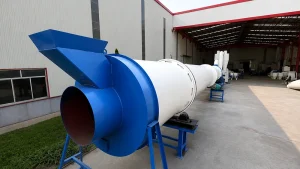
The raw materials are not exotic or expensive; on the contrary, they are often a cost liability you are already dealing with. This versatile “digester” is capable of processing an astonishingly wide array of feedstocks, including:
- Waste wood & dead branches
- Sawdust, shavings & wood chips
- Agricultural byproducts like cotton stalks, crop straw, bamboo, and coconut shells
Your input cost is no longer a variable dictated by the market; it becomes a fixed, near-zero figure sourced directly from your own operations or from low-cost local suppliers. The conversation shifts from “How much do we have to pay for pallets this month?” to “How do we most efficiently collect the free raw material we already possess?” This is the first, and perhaps most profound, strategic shift the machine enables.
Engineer Your OPEX: How Smart Design Lowers Monthly Bills
A strategic asset must be efficient to operate. True value lies in specific, measurable engineering choices that directly impact your operational expenses. The design of our compressed wood pallet machine is focused on reliability and efficiency to maximize your return on investment.
| Feature | Impact on Your Bottom Line |
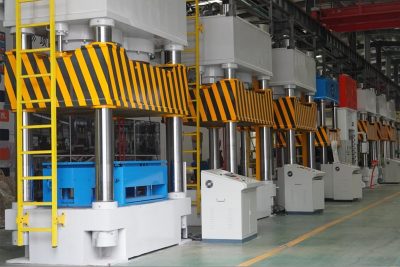
| Servo Control System | Operates like a modern hybrid engine, delivering maximum power only at the moment of compression. This results in a documented energy saving of 25%-55%, directly cutting electricity costs and boosting profits. |
| Three-Beam, Four-Column Structure | Provides superior rigidity and ensures pressure is distributed with absolute uniformity. This leads to a higher rate of sellable, high-quality products and a significantly longer operational life for the asset. |
| Plug-in Valve Integrated Hydraulic System | Minimizes hydraulic shock and internal connection points, which extends the life of the components and improves operational reliability. |
Unlock Predictability: Turn Production into a Financial Model
The final piece of the strategic puzzle is predictability. A business thrives when its variables are controlled. This molding machine is designed to turn the variable of production into a constant you can rely on. With a documented output of over a dozen pallets per hour, you can precisely forecast your production capacity. This allows for just-in-time inventory management, eliminating the costs associated with holding excess stock or paying premiums for emergency rush orders from suppliers like Uline or Global Industrial.
Furthermore, the machine offers granular control. The working pressure, speed, and stroke of the main slider are all fully adjustable to suit your specific process needs. This means you can fine-tune the machine’s performance to optimize the cycle time and energy use for your specific raw material and mold design. You are no longer just an operator; you are a process optimizer, with direct control over the efficiency and cost-effectiveness of your production.
Your Strategic Asset for a Self-Sufficient Business
When you combine near-zero raw material costs, a 25-55% reduction in energy expenses, and a predictable, high-volume output, the financial equation changes entirely. The long-term cost of purchasing pallets or disposing of waste, which can easily run into tens of thousands of dollars annually, will almost certainly be far higher than the cost of investing in and operating this machine. You move from a position of reactive spending to one of proactive investment management. The question is no longer “What is this month’s expense?” but rather, “How is our strategic asset performing?” This machine is not just a tool to make pallets; it is the engine at the core of a more resilient, profitable, and self-sufficient business model.