The compressed wood pallet machine is the powerful heart of your production operation—the place where raw fiber is forged into a valuable asset. But for a heart to function at its peak, it needs a circulatory system: a seamless, efficient flow of materials from their raw state to the final, finished product. Achieving true operational excellence and maximizing your return on investment comes from integrating the molding machine into a complete, automated production line.
Many potential investors are experts in their own fields but may be unfamiliar with the step-by-step process of pallet production. It can seem daunting. The purpose of this guide is to demystify this process entirely. Let’s take a journey through a modern, automated production line to see how a pile of raw wood waste is transformed into a stack of uniform, export-ready pallets.
Step 1: Material Preparation – Laying the Foundation for Quality
The quality of your final pallet is determined long before the material ever reaches the press. It begins with creating a consistent, properly-sized fiber.
- Coarse Crushing: The process often starts with irregular raw materials. A heavy-duty Wood Crusher serves as the first entry point. Its job is to take large, awkward inputs—like discarded construction timber from a project in Houston, old pallets (even those with nails), or thick tree branches—and break them down into a rough, manageable size for further processing.
- Fine Crushing/Pulverizing: Once broken down, the material moves to a Wood Pulverizer or a similar fine crusher. This machine’s critical task is to reduce the wood pieces into the final, consistent fiber size required for molding. This uniformity is not optional; it is essential for ensuring the final pallet has a high density and even strength distribution throughout its structure.
Step 2: Material Conditioning – Perfecting the Ingredients
With properly sized fibers, the next stage is to condition them for the molding process. This involves two critical steps: drying and mixing.
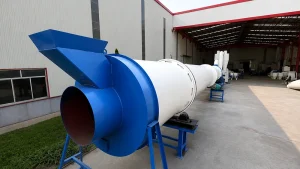
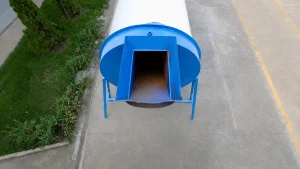
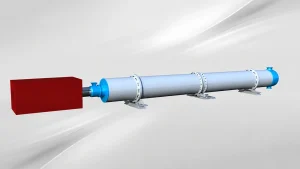
- Drying: Raw wood fiber contains significant moisture. If this moisture is not removed, it will turn into superheated steam inside the high-pressure mold, creating pockets of weakness and compromising the pallet’s structural integrity. A Sawdust Dryer is used to bring the moisture content down to the optimal level (typically 8-10%). This ensures that the final product is solid, stable, and free from internal defects.
- Glue Mixing: The dried fibers are then transported to a Mixing Machine. Here, a precise amount of binding resin (like MDI glue) is evenly distributed, coating each individual fiber. A modern automated mixer can perform this task with quantitative precision, guaranteeing that every part of the material mix has the correct ratio of fiber to resin, which is crucial for a strong, reliable bond.
Step 3: The Core Process – Automated Forming and Pressing
This is where the magic happens, and where automation truly shines.
- Automated Paving/Leveling: Manually loading the mold is slow, inconsistent, and labor-intensive. An Automatic Wood Chip Leveling Machine solves this problem. This intelligent device receives the mixed material and automatically lays a perfectly even and precisely weighed mat of fiber into the bottom mold. This single step dramatically improves product consistency, reduces waste, and increases the overall speed of the production cycle.
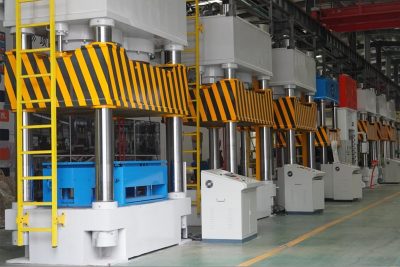
- High-Pressure Molding: Once the mat is laid, it moves into the core of the system: the compressed wood pallet machine. The press applies immense pressure (up to 25MPa or about 3600 PSI) and high heat, activating the resin and forging the loose fibers into a single, dense, and incredibly durable pallet.
Step 4: Finalizing the Line – Automated Handling
The final step is to remove the newly formed pallet and prepare for the next cycle, a task perfectly suited for automation.
- Automated Retrieval: As the press opens, an Automatic Take-up Manipulator, or a robotic arm, swings into action. It securely grips the hot pallet, extracts it from the mold, and places it onto a cooling line or stacking area. This not only makes the process almost entirely hands-free, but it also enhances operator safety by keeping them away from the hot press area.
Production Line Summary
| Step | Key Machinery | Purpose |
|---|---|---|
| 1. Material Preparation | Wood Crusher & Pulverizer | Reduces raw material to a uniform fiber size. |
| 2. Material Conditioning | Sawdust Dryer & Glue Mixer | Optimizes moisture content and applies binding resin. |
| 3. Core Process | Leveling Machine & Hydraulic Press | Forms and presses the fiber into a solid pallet. |
| 4. Automated Handling | Robotic Arm / Manipulator | Safely removes the finished pallet from the press. |
A Complete, Achievable System
From a chaotic pile of waste to a neat stack of finished goods, the entire journey can be a seamless, automated flow. While the compressed wood pallet machine is the star of the show, its true potential is unlocked when it is supported by a well-designed, integrated system.
Viewing the process step-by-step reveals that setting up a production line is not an insurmountable challenge. It is a logical sequence of proven technologies, each with a specific role in creating a high-quality final product. Whether you are starting with a single machine or are ready to implement a complete turnkey solution, understanding this process is the first step toward building your own efficient, profitable production hub.