Moving from strategic consideration to the practicalities of a major equipment purchase involves a new set of crucial questions. You’ve established the “why”—the powerful ROI and operational efficiencies. Now, it’s time for the “how.” This guide provides clear, direct answers to the 10 most critical questions from business owners and plant managers to help you make a well-informed, manageable, and profitable investment.
1. What are the site and foundation requirements?
The requirements are often simpler than expected. The machine is self-contained and we recommend a concrete floor at least 6 inches (15cm) thick. A press in the 1000-1200 ton range does not transfer its pressing force to the ground; the foundation only needs to bear the machine’s static weight (around 37 tons). No special pits are typically required.
2. Can one machine produce different pallet sizes?
Absolutely. A single molding machine is highly versatile and can use different-sized molds to produce various pallet dimensions. Molds are also downward-compatible; for example, a machine equipped for a 1200x1000mm mold can also use any smaller mold size.
3. Can we customize pallets with our company logo?
Yes. We can design the pallet mold to include your company’s unique logo or branding, turning your pallets into a marketing tool that enhances brand visibility throughout the supply chain.
4. Is the machine difficult to operate?
The machine is designed for straightforward, user-friendly operation with a centralized button control panel. To ensure a smooth start, every machine is fully adjusted and tested before delivery, allowing your team to begin work immediately upon receipt.
5. What does routine maintenance involve?
Maintenance is simple and preventative. A typical schedule includes daily system checks, weekly lubrication checks, and the periodic replacement of standard wear parts like hydraulic seals to ensure long-term, stable operation.
6. Can the entire production line be fully automated?
Yes, full automation is a key advantage. A complete line can automate the entire process, from raw material feeding and glue mixing to the pressing cycle and robotic retrieval of the finished pallet, all managed by an integrated control system.
7. What is the realistic production capacity?
A typical production cycle takes a minimum of five minutes to produce one pallet. Based on this, a single machine can reliably produce over a dozen pallets per hour, allowing for significant output over a standard shift.
8. What kind of after-sales support is available?
We provide comprehensive support, including a 24-hour timely response service for troubleshooting. Should any non-human-caused damage occur to parts within the first 12 months, we provide free replacements, with lifelong paid maintenance services also available.
9. Which raw materials can be used?
The machine is exceptionally flexible. A wide range of biomass can be used, including waste wood, sawdust, shavings, wood chips, cotton stalks, crop straws, coconut shells, and bamboo.
10. Should I choose a frame-type or three-beam, four-column press?
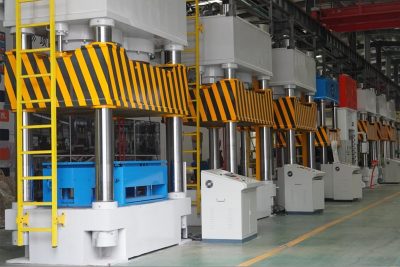
The three-beam, four-column design is increasingly preferred in modern applications. It offers higher downward speed and greater precision, which can significantly increase production efficiency. Frame-type presses can be more susceptible to deformation under immense, cyclical pressures.
Case Study: How a Furniture Factory Turned Waste into Profit
For years, a mid-sized furniture factory, “Artisan Woodworks,” faced a paradox: as orders grew, so did their mountain of sawdust and offcuts. This byproduct had become their single biggest operational headache, incurring disposal fees and occupying over 500 square feet of valuable factory space. The strategic shift came when they invested in a compressed wood pallet machine, choosing a model perfectly scaled for their operation and engineered for efficiency with a servo motor.
The integration of the production line transformed the factory. The “Waste Management” expense was erased from their reports and replaced by “Molded Pallet Sales Revenue.” Within 18 months, the investment paid for itself. They eliminated disposal costs, reclaimed factory space, and created a new, high-margin business vertical by selling surplus pallets. This technology was the engine that powered their transformation from a linear to a circular manufacturing process.