If you’ve ever worked in a warehouse or managed export logistics, you know the feeling. The workflow is humming, containers are being loaded, and everything is on schedule. Then, a call comes in from the freight forwarder, or a supervisor rushes over with a problem, and you hear those dreaded words: “It’s an issue with the pallets again.”
It’s a phrase that triggers a familiar wave of frustration.
This isn’t an article about high-level financial strategy. This is about the daily, on-the-ground reality. It’s for the logistics coordinators, warehouse managers, and merchandisers who are tired of their days being derailed by what should be the simplest part of the supply chain. These aren’t catastrophic failures; they are the small, recurring, energy-draining problems that make the job harder than it needs to be. While the initial compressed wood pallet price might seem low, these hidden issues add up.
Does any of this sound familiar?
Headache #1: The Anxious Paperwork Chase
It’s 4 PM on a Friday. The container cut-off is in three hours. Your freight forwarder is on the phone, sounding stressed. “The fumigation certificate for this batch hasn’t come through yet,” they say. “Or the stamp on pallet #47 is blurred and customs might reject it.” Suddenly, your whole afternoon is consumed by this one piece of paper. You’re chasing the treatment vendor, scanning documents, and hoping a customs officer in a port halfway across the world won’t flag your shipment for a tiny clerical error. This isn’t logistics; it’s crisis management. The stress of managing this compliance layer—a layer that exists solely because of the wood your pallets are made from—is a constant, low-grade anxiety we’ve all been forced to accept as “part of the job.” But is it?
Headache #2: The Warehouse Obstacle Course
A clean, safe warehouse is an efficient warehouse. Now look at the floor around your pallet staging area. Do you see a permanent litter of wood chips, splinters, and the occasional rogue nail? Every time a traditional wooden pallet is dropped or dragged, it sheds debris. This isn’t just an untidy nuisance; it’s a genuine operational hazard. Splinters pose a risk to your team’s hands. Nails can puncture product packaging or even forklift tires, causing downtime. Your team has to spend valuable time on cleanup that could be spent on picking and packing. We’ve trained ourselves to see this mess as normal, but it’s a direct symptom of using a flawed and outdated tool.
Headache #3: The Game of Storage Tetris We Always Lose
Walk into your warehouse or yard. Look at the mountains of empty pallets. Because traditional wood and plastic pallets don’t nest, they form solid, air-filled cubes of wasted space. You’re paying rent, heating, and lighting for square footage that is doing nothing but storing empty platforms. This inefficiency cascades into your shipping containers. When you need to ship empty pallets to another facility, you are paying top dollar to transport mostly air. In a world where every square meter of industrial space is at a premium, dedicating so much of it to inefficiently stacked pallets feels like a constant, unsolved puzzle.
Headache #4: The Dread of a Rainy Day
There’s nothing worse than seeing a stack of wooden pallets left outside during an unexpected downpour. You know exactly what’s happening: they are soaking up water like sponges. A wet pallet is a heavy pallet, which can throw off your declared shipping weights. More dangerously, it’s a weak pallet. Moisture compromises the structural integrity of the wood and glue, increasing the risk of collapse during transit. It also creates a perfect breeding ground for mold, which can damage sensitive goods and lead to a rejected shipment. This constant worry forces your team to dedicate precious indoor space to empty pallets, tying up resources and complicating workflows simply to avoid the weather.
This Isn’t Just “Part of the Job”—It’s a Solvable Problem
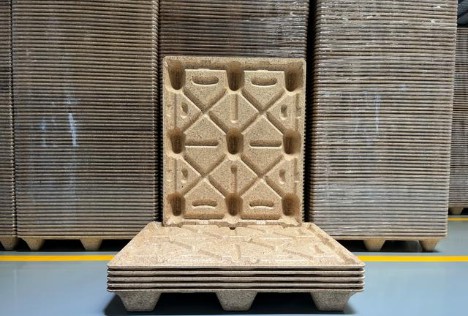
We’ve become so accustomed to these daily frustrations that we’ve started to believe they are unavoidable. We accept them as the cost of doing business. But take a step back and ask: What if these problems simply didn’t exist? Imagine a workflow where compliance is built-in, not bolted on. A different pallet choice can offer a better long-term value than the lowest upfront compressed wood pallet price.
Imagine a pallet that requires no certificates, no stamps, and no last-minute paperwork chases. Imagine a warehouse floor that stays clean, free of splinters and nails, making it safer and more efficient. Imagine reclaiming half of your pallet storage space overnight because your pallets are now nestable. Imagine not having to worry if a pallet gets wet, because it’s engineered to be water-resistant.
Ending these daily headaches isn’t a fantasy. It begins by recognizing that these small, recurring problems are not just minor annoyances. They are symptoms of a foundational inefficiency in our logistics chain. By addressing the root cause, we can give our teams the most valuable resources of all: time, safety, and peace of mind.