In logistics and manufacturing, consistency is the bedrock of trust. When considering a component as fundamental as a shipping pallet, a critical question arises: how can a product made from recycled materials achieve a higher degree of precision and consistency than one crafted from solid timber? The answer lies in a sophisticated, multi-stage manufacturing process that transforms humble wood fibers into a high-performance engineering product.
To understand the reliability of a modern molded pallet, let’s take a look behind the curtain at the precise, controlled process that creates it.
Step 1: The Foundation – Material Preparation
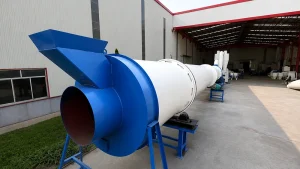
The process begins not with new timber, but with carefully selected recycled wood materials. To ensure a high-quality output, these raw materials are meticulously crushed, screened to a uniform fiber size, and passed through a high-temperature dryer to remove virtually all moisture. This preparation is crucial for the final product’s density and structural integrity.
Step 2: The Core – Intelligent Resin Application
This is where basic material becomes an engineered composite. The dry, uniform fibers are transferred to a mixer where a specialized binding resin is applied using a fully automatic and intelligent system. Advanced polymer resins like MDI (Isocyanate) are used to create exceptionally strong and moisture-resistant bonds, far superior to older-generation glues.
Step 3: The Transformation – High-Heat, High-Pressure Molding
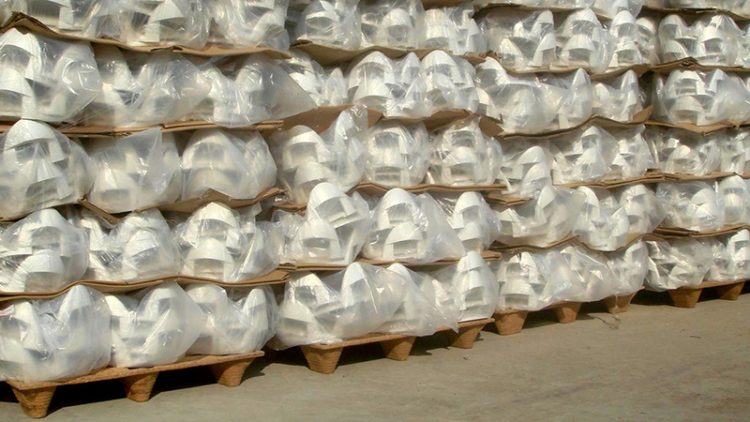
This is the heart of the manufacturing process. The resin-coated fiber mix is placed into a precision-engineered steel mold. Intense heat activates the resin to form a powerful, permanent bond while sterilizing the material completely. This is why molded wood pallets are inherently exempt from ISPM15 regulations. Simultaneously, extreme pressure compresses the mix into a single, solid block, creating an incredibly dense and uniform composite material free from the inconsistencies found in natural timber. An attractive compressed wood pallet price is often linked to the efficiency of this process.
Step 4: The Guarantee – Rigorous Quality Control
A high-quality product isn’t just well-made; it’s well-tested. Before a pallet can be approved for shipment, it must pass a series of stringent quality control checks based on established national production standards. These checks include visual inspection for defects, tight dimensional tolerance (±3mm), weight consistency (±0.8kg), and density verification (≥0.85 g/cm³). This ensures every pallet meets exact specifications, a key factor in the overall value proposition beyond the initial compressed wood pallet price.
Trust Through Transparency
The exceptional strength, precise consistency, and built-in compliance of a modern molded pallet are not accidents. They are the predictable outcomes of a sophisticated engineering and quality assurance process. You are not simply buying a pallet made from recycled wood; you are investing in a precision-molded logistics component, engineered for a world that demands reliability, safety, and performance.