In logistics and manufacturing, consistency is the bedrock of trust. We value products and partners that deliver the same reliable performance time and time again. When considering a component as fundamental as a shipping pallet, a critical question arises: how can a compressed wood pallet made from recycled materials achieve a higher degree of precision and consistency than one crafted from solid timber?
The answer lies not in the raw material alone, but in a sophisticated, multi-stage manufacturing process that transforms humble wood fibers into a high-performance engineering product. It’s a journey from reclaimed fiber to a resilient foundation.
To understand the reliability of a modern molded pallet, let’s take a look behind the curtain at the precise, controlled process that creates it.
Step 1: The Foundation – Material Preparation
The process begins not with new timber, but with carefully selected recycled wood materials, such as reclaimed wood shavings and other wood byproducts. This commitment to sustainability is the first step. However, to ensure a high-quality output, these raw materials must be meticulously prepared.
- Crushing and Screening: The raw material is first crushed and screened to ensure a uniform fiber size. This consistency is crucial for the final product’s density and structural integrity.
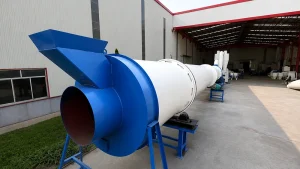
- High-Temperature Drying: The screened fibers are then passed through a high-temperature dryer. This step removes virtually all moisture, preventing weaknesses and ensuring that the subsequent resin bond is as strong as possible.
Step 2: The Core – Intelligent Resin Application
This is where basic material becomes an engineered composite. The dry, uniform fibers are transferred to a mixer where a specialized binding resin is applied. This is a critical technological step that defines the pallet’s ultimate performance. Modern facilities operate in what is known as the “MDI 3.0” era, utilizing a fully automatic and intelligent system. MDI (Isocyanate) is an advanced polymer resin known for creating exceptionally strong and moisture-resistant bonds, far superior to the older-generation glues used in traditional presswood.
Step 3: The Transformation – High-Heat, High-Pressure Molding
This is the heart of the manufacturing process. The resin-coated fiber mix is placed into a precision-engineered steel mold. Then, two forces are applied simultaneously:
- Intense Heat: The mold is heated to an extremely high temperature. This heat serves two purposes. First, it activates the MDI resin, causing it to cross-link and form a powerful, permanent thermoset bond. Second, it sterilizes the material completely, killing any pests or microorganisms. This is the very reason why molded wood pallets are inherently exempt from ISPM15 regulations and require no additional fumigation or heat treatment.
- Extreme Pressure: Simultaneously, immense pressure is applied, compressing the fiber and resin mix into a single, solid block. This process creates an incredibly dense and uniform composite material, free from the knots, cracks, and inconsistencies found in natural timber.
The pallet emerges from this step as a single, sterile, precisely shaped piece.
Step 4: The Guarantee – Rigorous Quality Control
A high-quality product isn’t just well-made; it’s well-tested. Before a pallet can be approved for shipment, it must pass a series of stringent quality control checks that are based on established national production standards (e.g., GB/T 17657—2013). This ensures every pallet that leaves the factory meets exact specifications.
These checks include:
- Visual Inspection: Each pallet is checked for any visual defects, such as significant burrs or cracks, to ensure a smooth, safe finish.
- Dimensional Tolerance: The pallet’s dimensions must be precise. The acceptable tolerance is extremely tight, at just ±3mm. This level of consistency is critical for use in automated conveyor and racking systems.
- Weight Consistency: Pallets of the same model must have a uniform weight, with a permissible variance of only ±0.8kg.
- Density Verification: The material density is checked to ensure it meets or exceeds the required standard of 0.85 g/cm³. This density is directly correlated with the pallet’s strength and durability.
Trust Through Transparency
The exceptional strength, precise consistency, and built-in compliance of a modern compressed wood pallet are not accidents. They are the predictable outcomes of a sophisticated engineering and quality assurance process. By transforming a variable raw material into a uniform, high-density composite, the manufacturing process eliminates the guesswork and inconsistency associated with traditional wood.
Understanding this process reveals that you are not simply buying a pallet made from recycled wood. You are investing in a precision-molded logistics component, engineered for a world that demands reliability, safety, and performance. This transparency is the foundation of trust.