If you’re in the export business, have you ever been asked by a customer, “Are your pallets environmentally friendly?” A friend of mine, Mr. Roberts, who exports toys, recently faced this exact question. A major European client specifically requested “green pallets” as a condition for their order. Mr. Roberts was initially puzzled, thinking, “It’s just a pallet, why be so particular?” He soon realized, however, that market expectations for environmental responsibility are rising fast. He scrambled to find a compliant solution and nearly lost the contract.
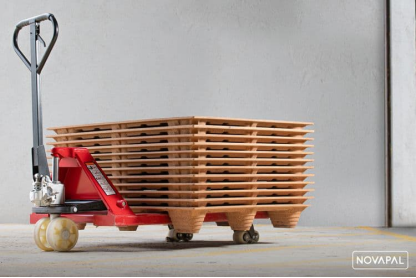
Does this pressure sound familiar? Customers are increasingly focused on sustainability, and government regulations are tightening. Traditional wooden pallets are starting to feel like a liability. After looking into this myself and speaking with others in the industry, I’ve found a forward-thinking solution that aligns with this green trend: the compressed wood pallets. Today, I’ll explain why this choice can help your business stay ahead in an eco-conscious market.
Understanding Today’s High Environmental Demands
Before jumping to a solution, it’s crucial to understand the environmental pressures facing exporters. Based on my research and conversations with Mr. Roberts, the key drivers are:
- Customer Expectations: Markets in Europe and North America are heavily scrutinizing the “carbon footprint” of supply chains. Mr. Roberts’s client required recyclable pallets to meet their supply chain scoring criteria—fail to comply, and the order is lost.
- Strict Regulations: Legislation like the EU’s Timber Regulation (EUTR) demands that wood sources be legal and sustainable. Traditional wooden pallets, made from felled trees, require extensive documentation and can lead to fines if non-compliant.
- Competitive Pressure: Competitors are already using “green packaging” as a selling point. If you don’t offer an eco-friendly option, customers may look elsewhere. Mr. Roberts lost 5% of his market share to a rival who leveraged their environmental credentials.
Mr. Roberts calculated that for his 5,000 pallets a year, using traditional wood not only contributed to deforestation but also added over $1,500 in labor costs just to manage documentation and customer inquiries about sustainability. “The environmental standards are so high, I didn’t know where to begin,” he admitted.
The Smart, Sustainable Choice for Modern Exporters
I later spoke with Mr. Chen, a crafts exporter from San Diego who embraced sustainable practices years ago. “Customer questions about environmental impact used to be a major headache,” he said. “Then I switched to compressed wood pallets, and I realized they were perfectly aligned with the future of the industry.” He highlighted several key benefits:
- Made from Recycled Materials: These pallets don’t require cutting down new trees. They are manufactured from reclaimed wood shavings, making them a truly circular solution. When Mr. Chen’s clients learned about this process, they increased their order quantity by 10%.
- Regulatory Compliance Made Easy: Since the raw material is recycled, it naturally meets sustainability standards, eliminating the need for cumbersome documentation. During a customs check on wood sourcing, Mr. Chen’s shipment of compressed wood pallets passed without delay, saving him a full week compared to his previous experiences with wooden pallets.
- A Powerful Marketing Tool: Mr. Chen brands his shipments with a “100% Sustainable” label. This simple but effective marketing has attracted three new long-term clients in the last year, boosting his business by 15%.
Mr. Chen’s switch saved him over $1,500 annually in documentation and labor costs. More importantly, his commitment to sustainability earned him an additional $3,000 in new business. “It’s not just about saving money,” he explained. “It’s about keeping the business aligned with market trends. That brings peace of mind.”
The Logic Behind Green Pallets
So, what makes compressed wood pallets such an environmentally sound choice? The logic is clear:
- Sustainable Raw Materials: Traditional pallets require felling dozens of trees for a shipment of 5,000. Compressed wood pallets use factory wood waste, achieving zero deforestation. “When customers ask about my wood source now, I can finally answer with confidence,” Mr. Roberts said after making the switch.
- Designed for Recyclability: These pallets can be fully recycled and re-manufactured after use, boasting a high recovery rate. When a client asked Mr. Chen for proof of recyclability, he presented the data, and the client signed the order on the spot.
- Eliminates Hidden Costs: The administrative burden of regulatory paperwork and customer certifications for traditional pallets can cost thousands a year. This cost is nearly zero with compressed wood pallets. “I reinvested those savings into advertising, which has boosted our brand image,” said Mr. Chen.
- First-Mover Advantage: Sustainability is no longer a niche concern; it’s a global trend. Soon, all customers may demand green pallets. By adopting them early, Mr. Chen earned an extra $3,000 last year and expects even more this year. “This was the right move,” he affirmed.
Comparison of Pallet Environmental Impact
| Feature | Traditional Wood Pallet | Compressed Wood Pallet |
|---|---|---|
| Raw Material | Felled Trees | Recycled Wood Shavings |
| Sustainability | Low (Contributes to deforestation) | High (Recycled and recyclable) |
| Regulatory Burden | High (Requires extensive documentation) | Low (Inherently compliant) |
| Market Perception | Outdated | Forward-Thinking, Eco-Friendly |
Can Traditional Wooden Pallets Survive?
You might think traditional wooden pallets are still a viable option. However, their reliance on deforestation and the heavy paperwork involved can cost over $1,500 a year for 5,000 pallets, not to mention the risk of losing environmentally conscious customers. While a compressed wood pallet may have a slightly higher initial cost at $15 compared to a wooden pallet’s $12, the savings on administrative fees and the long-term business gains make it a more profitable choice. As Mr. Roberts concluded, “Wooden pallets won’t be viable for much longer. As customer demands grow, we’ll all have to make a change.”
Stay Ahead of the Curve
This isn’t about forcing a change but about recognizing a trend that can secure your business’s future. Ask yourself: How often are customers inquiring about your environmental practices? How much time and money are you spending on compliance? Could an eco-friendly pallet improve your brand and open new opportunities? Mr. Roberts’s experience says it all: “If I had known how important sustainability was, I would have switched years ago.” Mr. Chen adds with a smile, “Green pallets don’t just save you trouble—they’re your ticket to the future.”
If you have any questions or want to buy can contact us, our professional and technical team will answer for you!