
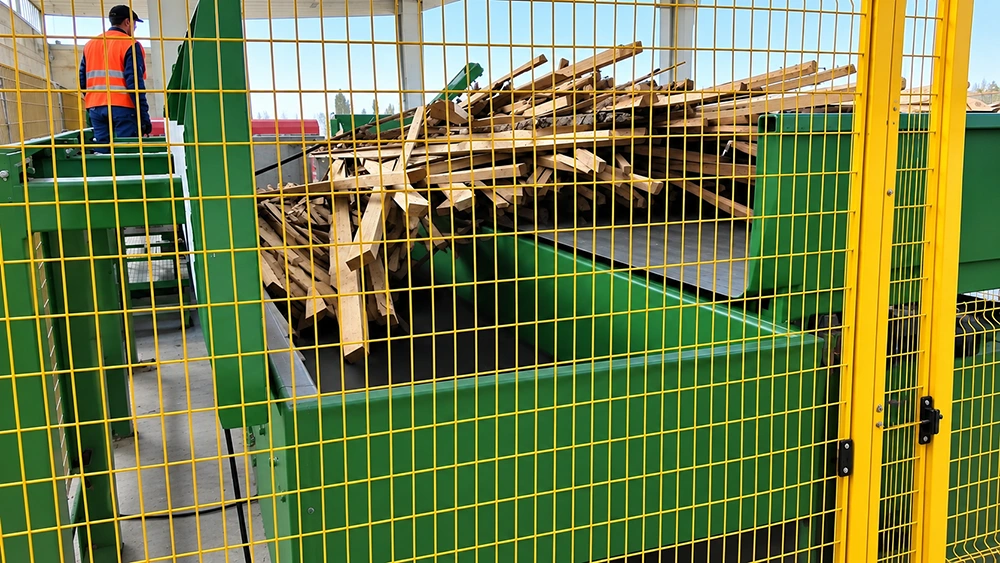
The New Presswood Pallet Plant That Still Buys Its Chips
A first pallet plant usually starts in the same place: a presswood pallet press in the centre of the floor, a dryer and hammer mill on order, and chips delivered by a regional sawmill or pellet-mill neighbour. Outsourcing the chipping step looks like the only sensible decision at that stage — the press is the capex that justifies the plant, the dryer is the capex that justifies the press, and a chipper is “later.” The first pallet orders go out, the first ISPM 15 exempt shipments clear customs, the plant survives year one.
This is the customer profile a drum type wood chipper is designed to serve — not the European turnkey plant, not the 30 t/h biomass project, but the small-to-mid presswood pallet plant that has already validated its sales pipeline and is now bumping against the cost and reliability of its chip supplier. Outsourcing chips is the right first answer. Keeping chips outsourced for the second year is where the math stops working.
Why Outsourced Chips Become a Year-Two Ceiling
Three things break at roughly the same time once a new presswood pallet plant passes year-one volume:
- Chip price follows the pellet mill. The same chipper output that feeds your line also feeds biomass pellet plants, particleboard lines, and export wood-chip markets. The supplier you are buying from is arbitraging between those buyers, and your small volume does not set the price. Every cost increase in the regional wood market passes through to you within one quote cycle.
- Moisture you cannot control. Presswood pallet presses want a tight moisture window before hot pressing; oversized chips, fines, and over-wet loads all generate hot-press defects. Outsourced chips arrive at whatever moisture the supplier decided to ship that week, and you absorb the dryer penalty every time.
- Capacity you cannot ride. Your supplier also serves biomass buyers in the same market. When pellet demand spikes, your chip allocation shrinks. A presswood pallet plant cannot run an on-time export programme on an allocation that someone else’s contract can override.
The combined effect is a margin and capacity ceiling at the worst possible moment — right when the plant is finally winning export orders. The fix is bringing chip preparation in-house. The hard question is doing it without paying for a machine that turns into idle capex in year one.
Why a Drum Type Wood Chipper Is the Fit for This Specific Switch
The chipping geometry a presswood pallet plant actually needs is a horizontal knife roller that cuts against a stationary counter knife, with a sizing screen underneath that drops 30–35 mm chips onto a discharge conveyor. That geometry — what the category calls a drum type wood chipper — is built for irregular feedstock: branches, slab edges, used formwork, planer shavings once a downstream hammer mill is added. The hydraulic feed roller pulls crooked or partial-forked logs through the feed chute without the rotor jamming, which is why almost every presswood pallet plant that switches to in-house chipping ends up specifying drum geometry rather than disc.
Two structural points matter for a plant making the switch:
- Tolerates the feedstock you can actually get. Branches, slab edges, planer shavings, used pallets and demolition formwork are the cheapest raw-material inputs available to a new plant in most regions. A drum type wood chipper is rated for this irregular geometry; a disc chipper wants clean logs and a hammer-only setup wants smaller pieces. The drum sits in the middle for a reason.
- Knife service is mechanical, not proprietary. Fly knives bolt onto the rotor in pairs and the counter knife is adjustable for chip length. Spare-part lead time, knife-pair change interval, and on-site commissioning are real, measurable items — they are the items that decide whether a new plant keeps its chipping section running at 90% utilisation or fights downtime.
The honest limit on this geometry: a drum type wood chipper does not include a built-in metal detector. Feedstock that contains nails from used pallets or demolition formwork needs pre-sort upstream of the feed chute — that is the upstream design decision a new plant has to make before specifying the chipper.
Three Capacity Tiers Instead of One Big Quote
Bringing chip preparation in-house does not mean buying a 30 t/h turnkey line. The drum type wood chipper is offered in three capacity tiers so a new presswood pallet plant can match motor power and capacity to its first-year pallet output, not to a European reference plant:
- X-215 drum type wood chipper — 45 kW, 4–5 t/h. The entry tier. Sized for a single presswood pallet press in its first 12–18 months when the dryer and hammer mill are not yet on the floor. Same drum geometry as the bigger units, just a shorter rotor and a smaller drive.
- X-216 drum type wood chipper — 55 kW, 6–8 t/h. The mid tier. Covers the most common switch: one press plus a downstream hammer mill, with enough spare capacity for a second shift on the press within 24 months. Equivalent in spec class to the BX216 drum chipper widely referenced in international bids.
- X-218 drum type wood chipper — 110 kW, 8–12 t/h. The expansion tier. Specified when a second pallet press is being added inside the first year, or when the chipping section has to feed a dryer, hammer mill, and storage bin in one continuous run.
The three tiers share chip geometry (30–35 mm nominal length set by the same fly knife / bed knife gap), share the hydraulic feed principle, and share the same feed-inlet dimension family. That cross-tier consistency is what lets a plant step from X-215 to X-216 without re-engineering the downstream sieve, dryer feed, or storage layout — the chip spec stays compatible, and the capex stays in proportion to the year of the plant you are actually building.
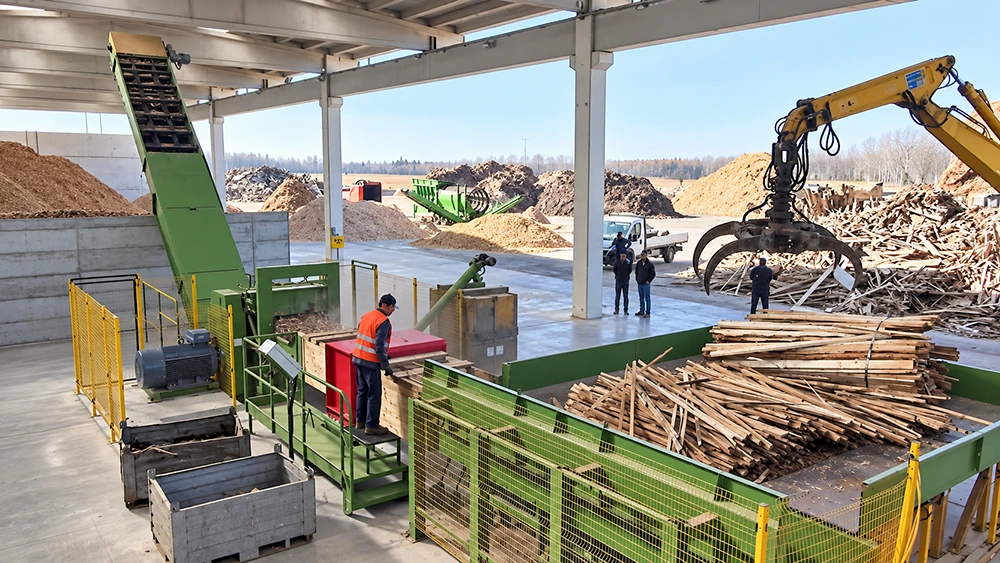
Single Chipping Section or Full Line — Match the Capex to the Year of the Plant
For a new plant making the switch from outsourced chips, there are two reasonable orderings, and the answer depends on which year of the plant you are actually building:
- Single chipping section first. A 45 kW drum type wood chipper plus a short discharge conveyor into a floor pile. Smallest sensible footprint, lets the plant prove chip supply against real press demand, and leaves every downstream decision open until sales volume justifies it. This is the right starting order for a plant that has only validated one ISPM 15 customer.
- Turnkey drum chipping line from day one. A 55 or 110 kW drum type wood chipper plus discharge conveyor, hammer mill, dryer feed bin, and dust extraction, all from one supplier. Higher capex, but every interface is pre-engineered and the plant skips a year of trial-and-error on chip-spec mismatches. Right for a plant that has firm orders from multiple export customers and needs to lock chip supply before the next shipping window.
The middle path is the most common one we see in working projects: start with the chipping section at the right tier (X-215 for a single press, X-216 once a real sales forecast exists), then add the dryer and hammer mill inside months 6–14 once the press line is paying for itself. That staged investment is the structural reason a three-tier drum type wood chipper lineup exists at all — a single model would force buyers into one of the two failure modes described above.
What to Confirm Before You Switch From Outsourced Chips to a Drum Type Wood Chipper
Four checks decide whether the switch is the right move and which tier to order:
- First-year pallet output forecast. Convert the realistic year-one pallet count into a t/h chip figure using your planned moisture and chip spec. If the figure is below 4 t/h, an X-215 drum type wood chipper is the right starting point. Between 4 and 8 t/h, plan to start at X-215 and specify X-216 as the year-two upgrade. Above 8 t/h, an X-218 drum type wood chipper from day one is justified.
- Local chip price against in-house cost. The payback question on in-house chip prep is whether the per-ton cost you can hit with your own timber scrap and the X-tier you have selected is below the per-ton price your regional supplier is currently quoting. That comparison is plant-specific; the numbers depend on local chip price, raw-material cost, electricity tariff, and shift pattern. Run it before signing the chipper PO.
- Feedstock form, not just feedstock species. Branches, slab edges, and used formwork all run on the same drum machine — but a plant taking predominantly used pallets with nails needs a feed pre-sort to keep metal out of the rotor. Confirm the upstream feed design before specifying the chipper.
- Civil works and installation envelope. A drum type wood chipper at 45 / 55 / 110 kW is a rotating heavy machine and needs a concrete foundation and vibration isolation per the installation drawing. On-site commissioning and overseas engineer installation are part of the standard delivery scope and should be scheduled early enough not to delay the chipping section arrival.
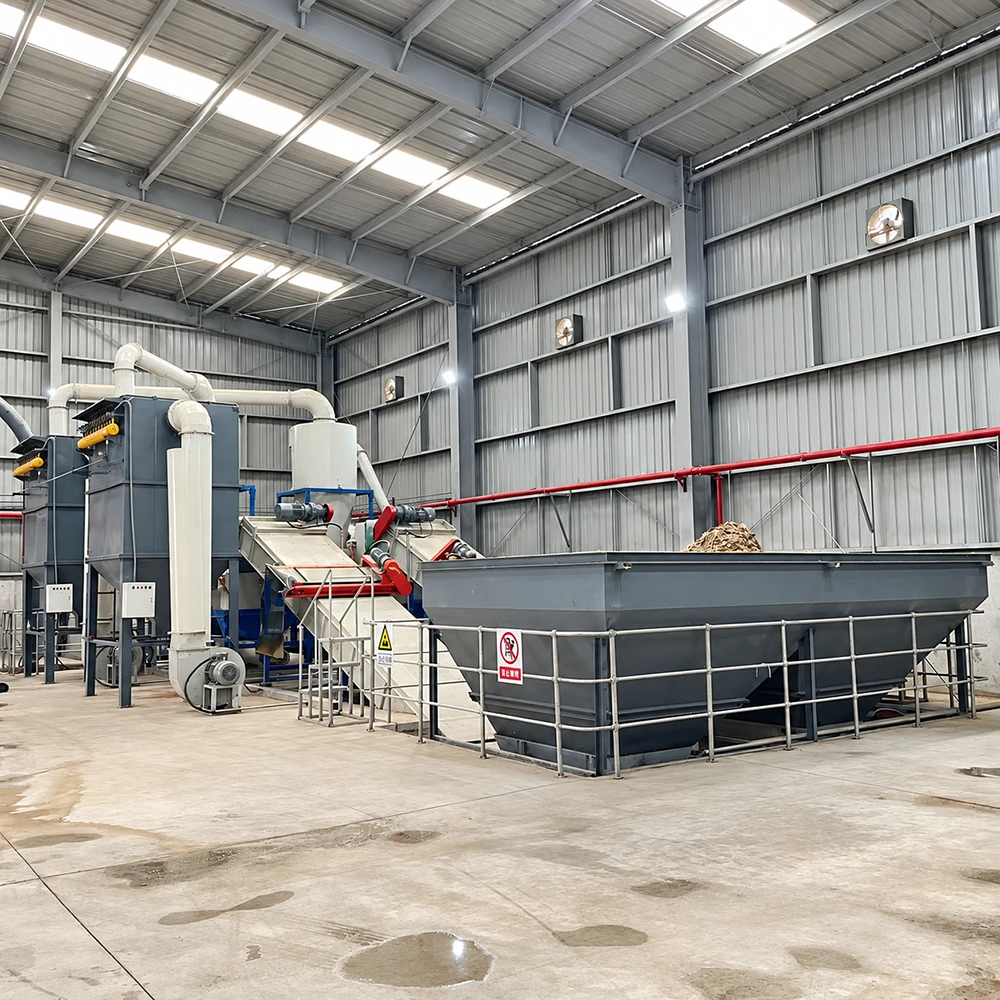
The Result: A Switch From Outsourced Chips to Owned Chip Preparation
A new presswood pallet plant that switches from outsourced chips to in-house chip preparation with a drum type wood chipper in the X-215 / X-216 / X-218 tier set moves three things at once: chip price becomes plant-controlled instead of supplier-controlled, moisture lands inside the dryer window by default, and capacity headroom opens up to ride export volume the moment a stable ISPM 15 customer places a repeat order. The three-tier drum type wood chipper lineup, paired with the staged purchase of single-section-first or turnkey-line-first, is what lets a year-one plant keep capex proportional while a year-three plant keeps volume unconstrained. The whole exercise is bringing the chipping step inside the same fence as the press, sized to the year of the plant you are actually building.
Talk Through Your Chip Supply Switch
If you are weighing whether to bring chip preparation in-house, and you want to walk through which drum type wood chipper tier (X-215 / X-216 / X-218) fits your first-year pallet output and your local chip price, send us your planned pallet output and the current per-ton chip quote from your regional supplier. We will spec the drum type wood chipper tier and the chipping-section scope against your actual numbers, not a generic quote.