
What the Product Literature Says, and What It Does Not
Export packaging carries a compliance burden that solid wood pallets can add to: quarantine requirements, treatment steps and the paperwork that goes with them. Our existing product material describes molded pallets as a fumigation-free, ISPM 15-exempt product route. That is a description of a product category and of how it is generally positioned in the market.
It is not a clearance outcome for a specific shipment, and it is not a promise that a consignment will be accepted at a particular port. Regulations, the way an authority classifies a given product, and the documents required at the destination are all outside a machine supplier’s control. Reading the claim accurately means keeping those two levels separate from the start.
What High-Temperature Molding Actually Changes
The material is not solid-wood packaging in plank form
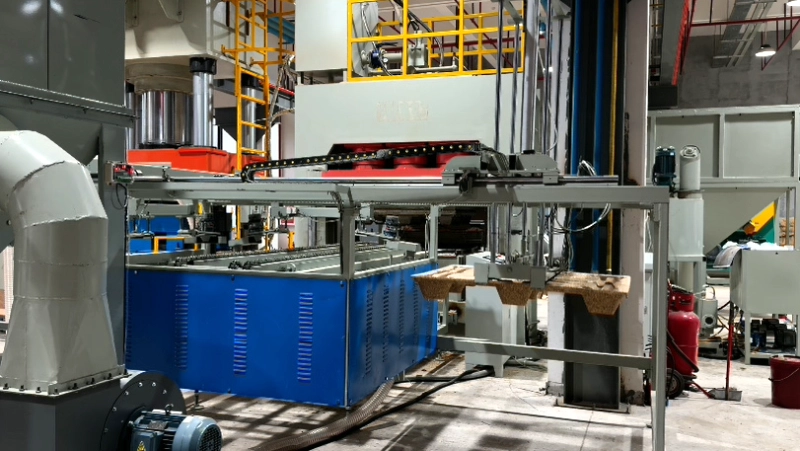
AutoML forms a pallet from wood fibre mixed with binder, pressed in one piece in a heated steel mould. There are no boards to assemble, no nails and no separate heat-treatment step applied to a finished wooden assembly. That difference in material form is the basis on which molded pallets are discussed as a distinct packaging route.
Heat and pressure are process conditions, not a treatment certificate
The mould is held at elevated temperature under pressure for a defined dwell so the binder cures. Our process documentation records forming conditions in the range of 150-180°C with a dwell measured in minutes, but those are manufacturing parameters for producing a part. They are not a phytosanitary treatment certificate and should not be presented as one. A process record and a compliance document are different things, issued by different parties.
Where the real compliance work sits
Whether a shipment needs treatment, marking or supporting documents is decided by the destination’s rules, the product’s classification in that market, the buyer’s own requirements and the carrier’s acceptance. Those checks sit with the exporter, the importer and their compliance adviser. Our ISPM 15 compliance and quality certification pages set out the product-level information we can supply; they do not replace a market-specific determination.
A Documentation Checklist for an Export Lane
For any destination you intend to ship to, these are the points to establish in writing before a pallet type is written into a packing specification:
- The destination country or region’s current rules for wood packaging and how they classify pressed wood fibre products.
- Which certificates, markings or declarations are required, and whether they must accompany each lot.
- Whether the specific product and production site are covered by the documents you hold, and whether those documents are current.
- The importer’s own packaging specification, which may be stricter than the local regulation.
- The carrier’s or freight forwarder’s acceptance requirements and any port-of-entry practice.
- Who is responsible for keeping the file current when a rule or a product scope changes.
The molded wood pallet page describes the product itself; the compliance determination belongs with the parties named in the answers above.
Where the Scope Has to Be Confirmed
Applicable regulations, destination requirements and the status of certifications and documents must be verified for each specific market. Nothing here should be read as a general commitment that molded pallets are exempt from treatment or inspection everywhere, or that a particular certificate applies to a particular shipment. Rules and their interpretation change, and they differ between destinations.
What a line supplier can provide is product and process information, samples for testing and the documentation it holds for its own products. It cannot obtain market access on a customer’s behalf or confirm a classification for a destination authority. Have the importer or the exporter’s compliance adviser confirm the position with the relevant authority before the pallet is written into a shipping specification, and keep that confirmation in the project file.
Next Step
If the goal is to reduce the number of packaging steps in an export lane, start with the lane itself: the destination, the product being shipped and the documents the importer already requires. With that list in hand, the conversation can cover what the molded pallet route offers and where a market-specific confirmation is still needed.
FAQ
Are molded pallets always exempt from fumigation requirements?
Our product literature describes them as a fumigation-free, ISPM 15-exempt route, but that is a description of the product category, not a universal outcome. The rules of the destination market and the documents held for the specific product decide the position for a shipment. Verify it per market.
Does the high molding temperature count as an official treatment?
No. Mould temperature and dwell are process conditions used to cure the binder and form the part. They are manufacturing parameters, not a phytosanitary treatment certificate issued under a regulation.
What documents should we ask for?
Ask what the destination and the importer require, then check that the documents you hold cover that product, that production site and the period of shipment. A general product description is not a substitute for a market-specific document.
Can you confirm acceptance for a particular country?
A line supplier can share the product and certification information it holds, but the determination belongs with the importer, the exporter’s compliance adviser and the authority in that market. We would rather say that plainly than give an answer that fails at the port gate.
Will buying AutoML equipment include the compliance paperwork?
Equipment supply and product certification are separate matters. What documentation is available for a specific product and project is confirmed during technical and commercial review and set out in the agreed proposal, not assumed from the equipment order.