
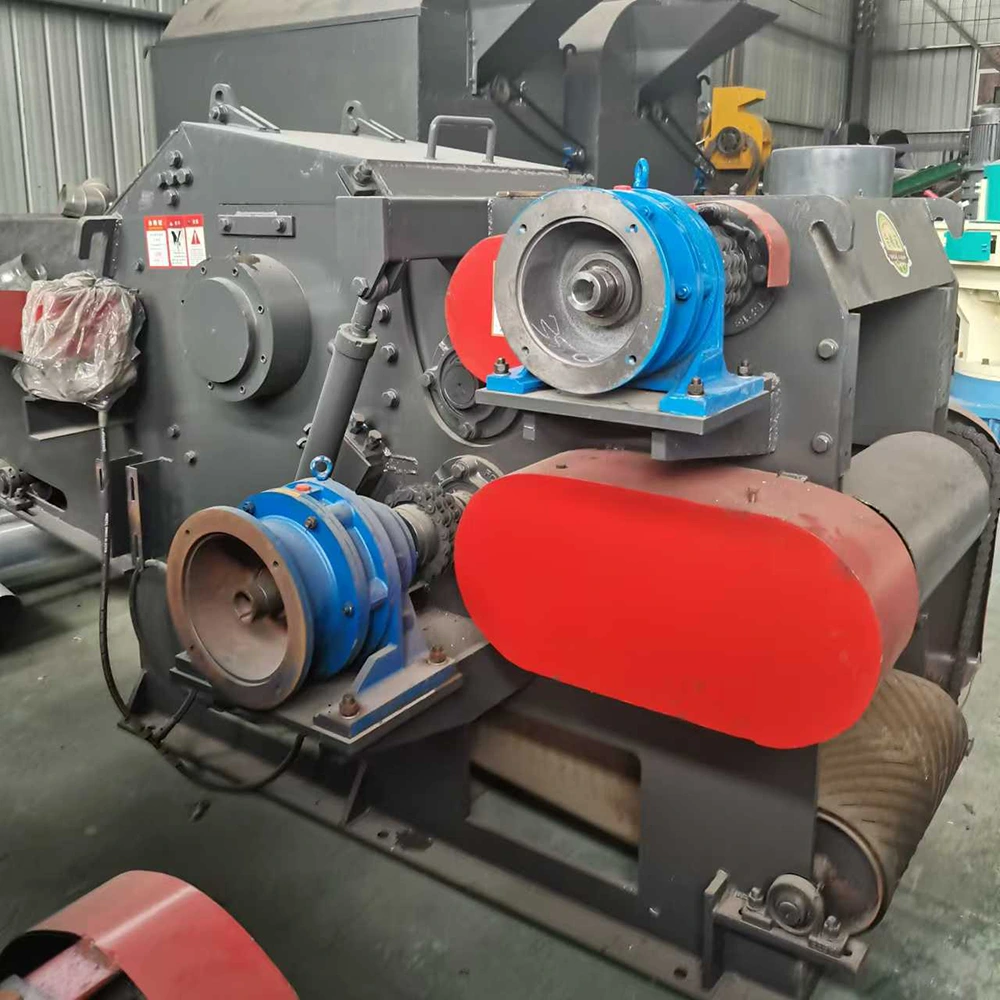
The first capital decision on a presswood pallet line is the industrial wood chipper
For any new presswood pallet plant, the industrial wood chipper is the machine that turns branches, slabs and used formwork into uniform 30–35 mm chips — and the first capital decision that locks in your cost structure for years. Get the capacity wrong and you either sink cash into iron you cannot fill, or you quietly cap your own growth at the rating you were too cautious to exceed. This is the buy-big-or-buy-small dilemma that decides whether a plant compounds or stalls.
Why new entrants and expanders keep mis-sizing capacity
The trap has two walls. Buy larger than your volume and capital sits idle, depreciating while you wait for orders that may not come. Buy smaller and you hit a ceiling: every extra pallet order needs capacity you never installed. Neither wall is comfortable, and both are common.
- Large European turnkey lines set the wrong baseline. Suppliers such as Andritz and Bruks engineer lines for tens-of-tonnes-per-hour plants and quote on request rather than list prices. For a plant ramping from a few hundred thousand dollars of annual revenue, that scale and that commercial model are simply a mismatch.
- The over-buy-or-cap-out pattern is visible in the market. One 2024 presswood entrant we tracked was already showing a 3-million-unit nominal capacity and running two major trade shows while its actual revenue sat in the $0.5–1M range. The only moves left were to over-buy and bet on growth (cash-flow risk) or stay conservative near ~1M/yr and accept the ceiling.
- Outsourcing wood chips is the quiet alternative — and the quiet leak. Buying chips instead of making them avoids the capex debate entirely, but it hands your margin and your supply stability to someone else’s plant.
A drum wood chipper you can size to today, not to tomorrow’s hopes
EMP capex sits well below the large European turnkey lines. Those suppliers target a larger scale and do not publish prices — a matter of public record — which is precisely why they are a poor fit for a plant still proving its volume.
- Three tiers, one architecture. The X-215 / X-216 / X-218 drum chippers (BX215 / BX216 / BX218 class) run 45 / 55 / 110 kW and deliver 4–5 / 6–8 / 8–12 t/h. Start at the tier that matches current output, then add the next when orders justify it.
- Two purchase granularities. Buy the chipper as a single machine, or buy the full line. Match the granularity to the stage: bring a wood chipper machine in first to validate feedstock and output, then extend to a complete wood chip production line — or go all-in from day one. The point is that capacity is a decision you control, not a bet you are forced to make once.
What the machine actually delivers: structure and parameters
Inside a rotary drum chipper, a knife roller carries fly knives against a counter knife, while a hydraulic feeding system meters the infeed and a chip screen sets the cut length. The result is uniform chip size output in the 30–35 mm range — the spec the downstream hammer mill wants.
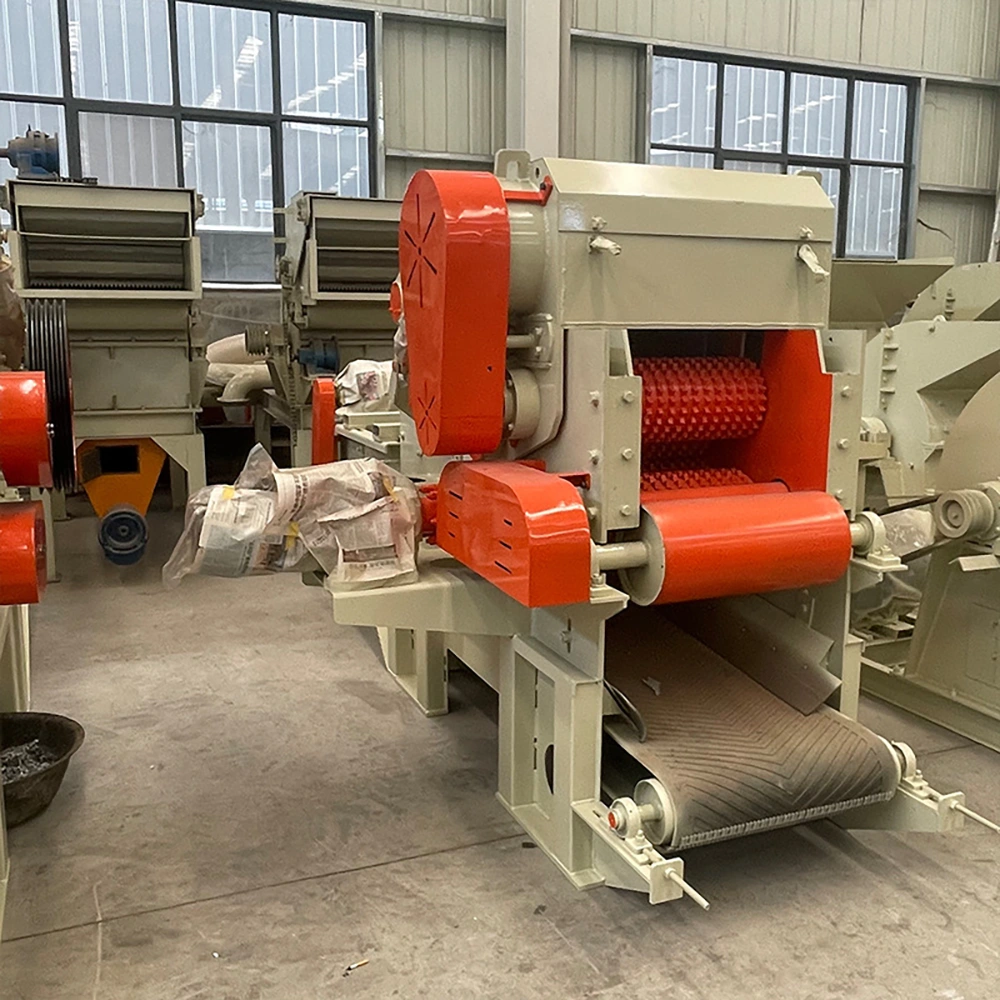
- Uniform chips reduce downstream grinding load. Consistent 30–35 mm feed lets the hammer mill and pallet press run steadier, which stabilizes line throughput instead of fighting variable particle size.
- Three capacity steps. 45 / 55 / 110 kW and 4–5 / 6–8 / 8–12 t/h let a plant size the first machine to its real volume and treat the next tier as a planned upgrade, not a rescue.

Turning bulky waste into owned raw material
The strategic win is not the machine alone but the shift it enables. Branches, slabs and used formwork become chips inside your own gate, so a presswood pallet plant can self-supply chip and cut raw material purchase cost. High-volume wood reduction also lowers yard space requirements. The real metric is the wood chipper ROI payback period — the point where making chips in-house overtakes buying them, on your own volume and your own wood cost.
Compliance without the paperwork guesswork
We prepare the technical file, risk assessment and electrical documentation for the target market. CE marking remains the responsibility of the party placing the machine on the EU market. For European-bound lines, note the timeline: the EU Machinery Directive 2006/42/EC is repealed as of 2027-01-20 and replaced by Regulation (EU) 2023/1230; whether woodworking machinery lands in Part A (mandatory notified-body involvement) is still being finalised. We track that classification and build documentation to the current framework rather than guessing.
Size the first machine before you size the line
Send your target output, feedstock type and floor plan. Our engineers return a right-sized configuration and a feasibility view — chipper first, or full line, matched to the volume you actually run today.