
Why a Mixed Stream Cannot Go Straight to the Press
A load of mixed waste wood contains boards, offcuts, chips, fines, fasteners and often material that is not wood at all. Its moisture depends on where it was stored and for how long. Its size distribution changes from one delivery to the next. None of that is unusual for a collection or recycling operation; it is the normal condition of the incoming material.
A pressing stage works on the opposite assumption. It needs a charge of known weight, a fibre geometry that fills the mould evenly, and moisture inside a controlled band. When those conditions vary, the variation appears in the finished part: density differences, surface defects, and batches that cannot be sold against one specification. The press cannot average an inconsistent input.
The Four Jobs of Front-End Processing
Front-end equipment is sometimes described as preparation, which makes it sound optional. Each stage actually removes a specific source of variation, and removing it is what allows the moulding stage to run steadily.
Size reduction
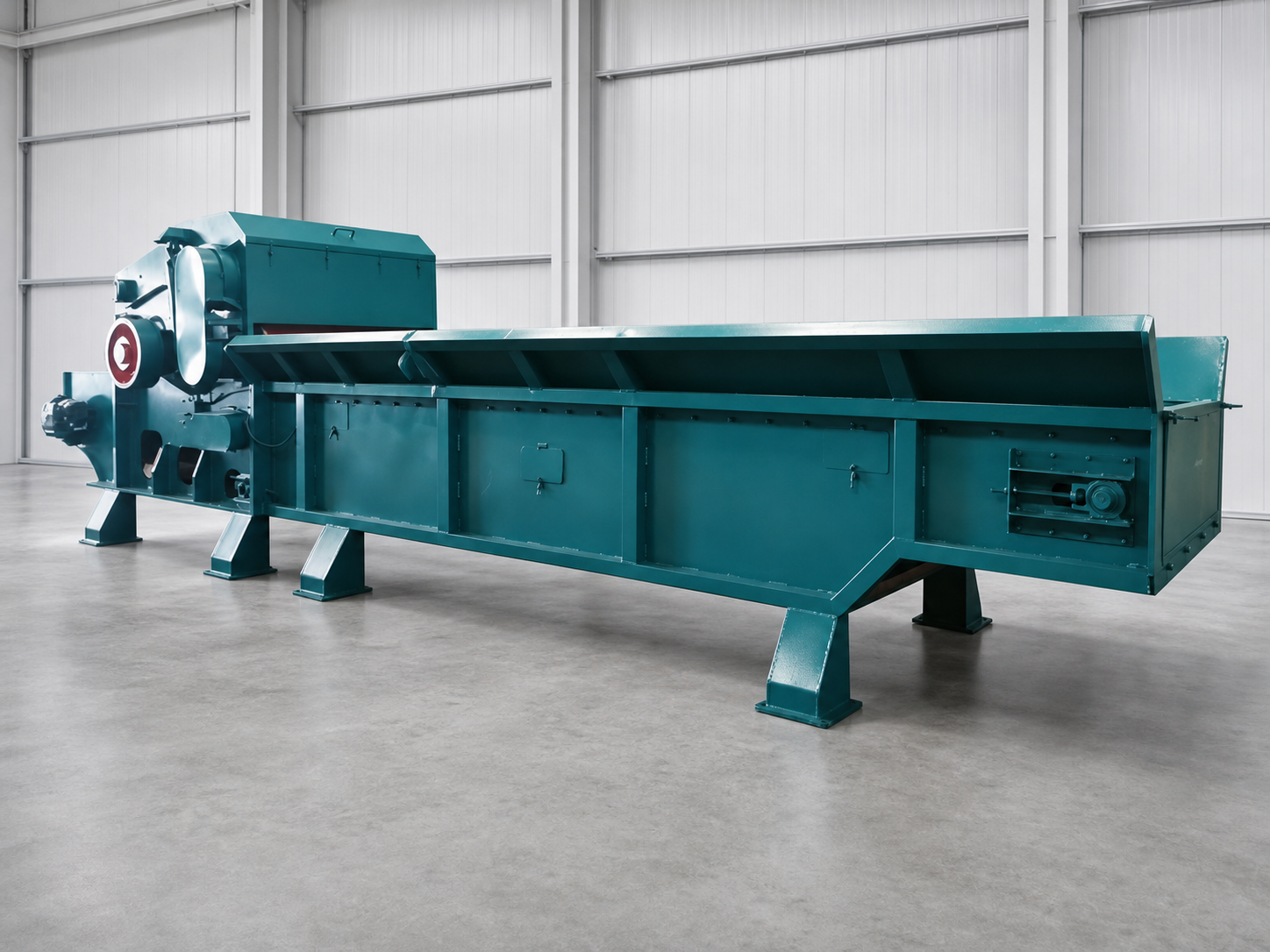
A crusher or pulveriser converts mixed shapes into a stream with a defined particle size distribution. Screening then keeps oversized pieces and excess fines out of the material heading downstream. The wood crusher page describes the equipment role; the acceptance window itself belongs to the process specification.
Tramp metal and contaminant separation
Magnetic separation removes nails, screws and staples; screening and sorting address stone, plastic and other non-wood material. This stage protects the crusher and the mould, and it determines how much of each incoming load is eligible rather than rejected.
Drying to a controlled band
Moisture is the input variable with the largest effect on hot pressing. A dryer brings prepared fibre into the target band, so that water left in the charge does not turn into steam during the cycle. Drying capacity has to be matched to the wettest expected feed, not to the average.
Buffering and metering
A buffer silo decouples the irregular arrival of material from the steady consumption of the press. From there, metered binder dosing, blending and a weighed spreading unit produce a consistent charge. The blending stage and spreading unit are where the process stops reacting to the incoming load and starts controlling it.
How a Buffer Decouples Supply From Moulding
This is the least visible and most useful part of the front end. Without a buffer, every interruption upstream is an interruption at the press, and every change in feed moisture travels straight into the mould. With a characterised buffer, the moulding stage draws from a material that has already been checked, and the preparation stages can run on their own rhythm.
It also makes accountability easier. If the material in the buffer meets specification and the finished parts drift, the problem is downstream. If the buffer varies, the problem is in preparation. A line without that boundary is difficult to troubleshoot because both sides change at once.
Sampling Before the Line Is Specified
Different waste sources behave differently under the same equipment. Offcuts from a furniture plant, demolition timber, agricultural residues and dismantled pallets each carry their own size distribution, contamination profile and moisture range. Suitability has to be established by sampling and technical confirmation against the actual streams a project will receive, including the worst delivery of the season rather than a clean sample.
Configuration follows from that evidence. A stream with heavy fastener content needs more separation; a stream with high moisture needs more drying capacity; a stream dominated by fines may not be usable at all. Specifying the press first and characterising the feed later reverses the order that the process requires.
Next Step
Collect a representative set of incoming loads, record size distribution, moisture and contamination for each, and identify the usable fraction. Those measurements are the input to a front-end configuration that can actually hold a steady charge at the mould.
FAQ
Can we accept any wood waste if the crusher is large enough?
No. Crushing changes size, not moisture, contamination or the proportion of fines. Some streams need additional separation, and some are not suitable for this process at all.
Which incoming variable causes the most trouble?
Moisture, because it directly affects what happens inside a heated mould. It is also the variable most affected by outdoor storage, so receiving and covered buffering matter as much as dryer capacity.
Do we need a buffer silo?
For a mixed or irregular supply it is what lets preparation and moulding run at different rhythms. Without it, upstream variation reaches the press directly.
How is the acceptable contamination level decided?
By sample testing against the configured separation stages and the requirements of the mould and finished product. It is a project-specific technical limit, not a general figure.
Can front-end capacity be added later?
Usually, but dryer capacity, dust extraction, space and power provision should be reserved at the layout stage. Adding them after the press is installed is more constrained.