
The Problem: Coarse Chips and Low-Value Mulch
Wood recyclers and pallet repair yards know the story. After a chipper or rough shredder processes broken pallets, the result is an irregular pile of coarse flakes, bark strips, and oversized chunks. That material can only be sold as garden mulch, boiler fuel at the bottom of the price range, or landfill cover. The market is saturated and the margin is thin, so a yard can move a lot of tons without making much money.
Why Chipper Output Stays Stuck at the Low End
Wood chippers are built to reduce volume, not to control particle size. Their blades deliver flakes of random shape and thickness. Buyers who pay premium prices — particleboard plants, premium biomass buyers, and animal-bedding producers — reject that inconsistency. The recycler is left with commodity mulch markets where price per ton is dictated by whoever has the cheapest haul.
The Hidden Cost of Selling Waste as Mulch
Mulch markets are seasonal, bulky to transport, and heavily competed. Every trailer that leaves the gate carries a high volume-to-value ratio. When tipping fees and diesel are factored in, the net return can be close to zero or even negative. The material is not the problem; the particle size is.
The Old Way: Chop, Pile, and Hope for a Buyer
The traditional workflow treats pallets as a disposal stream. Operators feed them into whatever chipper is available, stack the chips, and call a broker when the pile is large enough. There is no sizing step, no quality grade, and no premium outlet.
- Irregular chips limit buyers to low-grade mulch or landfill cover.
- Seasonal demand creates cash-flow gaps.
- High transport cost per unit of value destroys thin margins.
- Material that could be higher-value fiber is downgraded by default.
Why a Replaceable Mesh Wood Pulverizer Fits This Upgrade
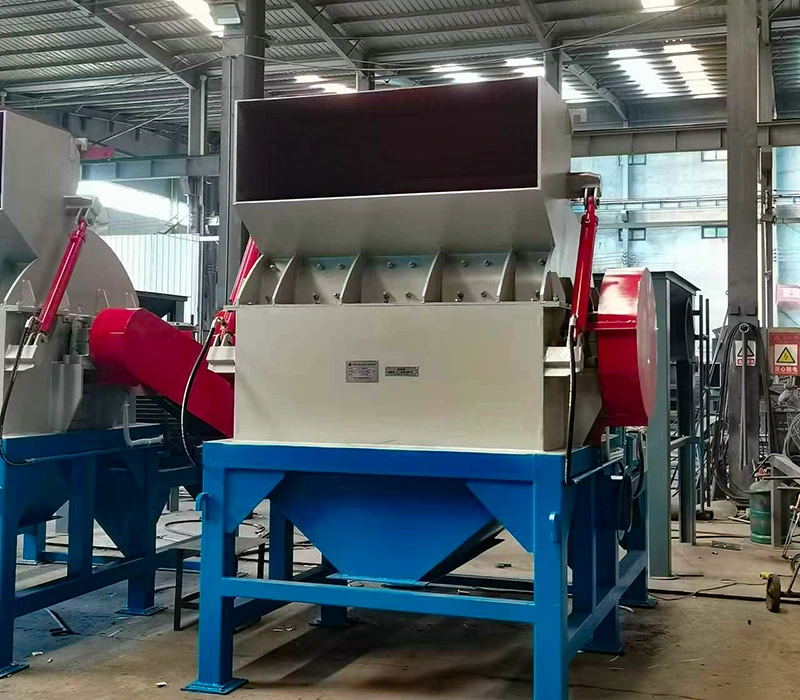
A Replaceable Mesh Wood Pulverizer changes the output specification. Instead of coarse chips, it produces controlled particles through a high-hardness alloy screen. The mesh can be swapped in minutes, so one machine can shift from a coarse mulch fraction to a fine 2–5 mm fiber suitable for pellet feed, particleboard furnish, or animal bedding.
For pallet recyclers, this means the same inbound stream of broken boards and old pallets can leave the yard as a higher-priced product. The machine pays for itself not by handling more tons, but by extracting more value from each ton.
Structure and Performance Evidence
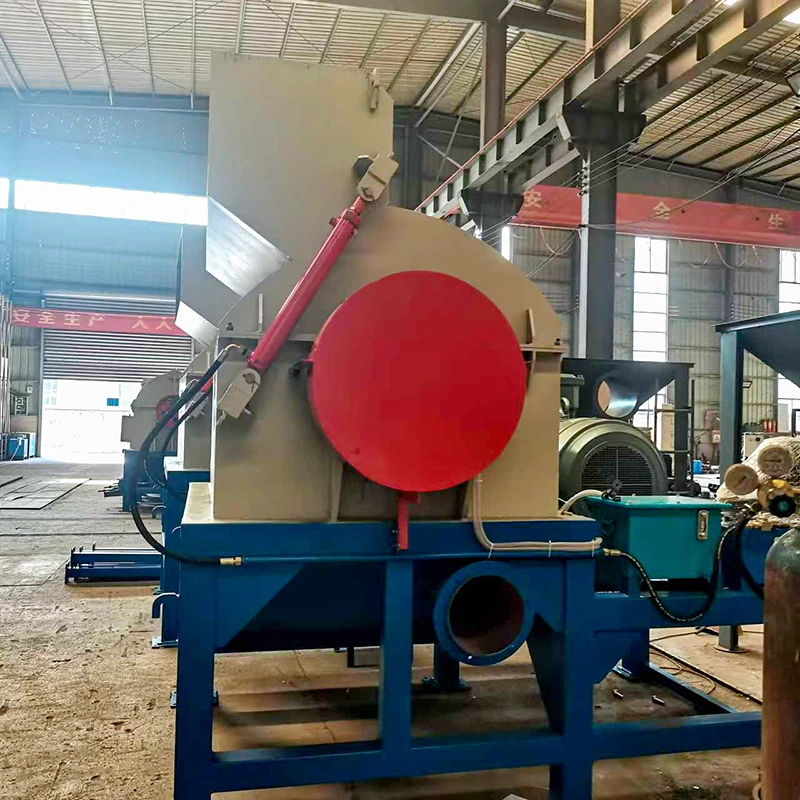
The Pulvz F-series uses a disc/rotor design with manganese steel hammer plates and liners, plus a belt-conveyor infeed. The screen is the critical control point: particle size is determined by mesh opening, not by operator guesswork.
Replaceable Mesh for Quick Product Grade Changes
Different outlets need different fractions. Biomass boilers accept a 3–5 mm chip; particleboard lines prefer a consistent 2–3 mm fiber; animal bedding needs clean, splinter-free particles in a narrow band. Swapping the mesh lets the same pulverizer serve all three grades without retooling the rotor.
≤5 mm Uniform Particles from Whole Pallets
With the right screen, the machine delivers ≤5 mm uniform particles from mixed wood waste. That consistency is what separates premium fiber from coarse mulch. Rated throughput ranges from 1 t/h to 8 t/h depending on rotor size, motor power, and screen choice.
Manganese Steel Hammers and Liners
Pallets contain nails, staples, sand, and embedded grit. Manganese steel hammer plates and liners absorb that punishment. Wear parts are bolt-on replacements, so maintenance does not require a full rotor rebuild.
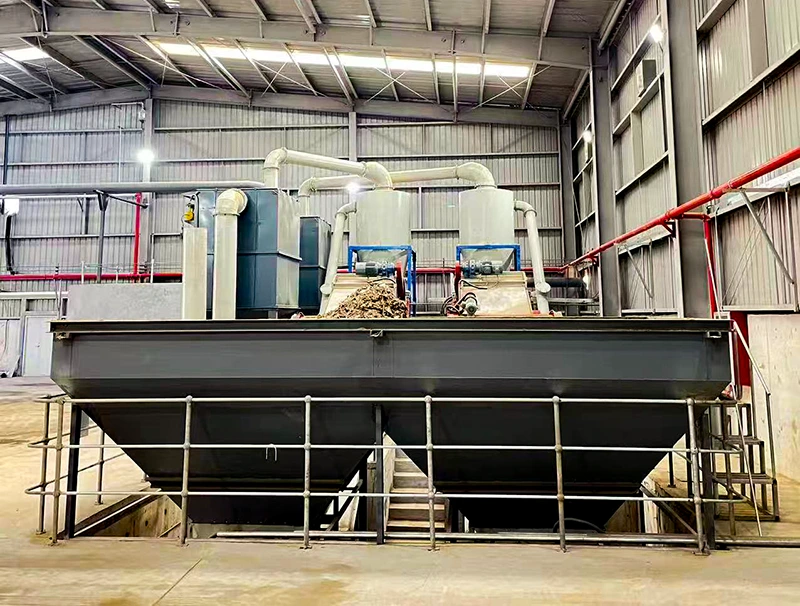
Optional magnetic separation can be added upstream to remove ferrous contaminants before they reach the screen, protecting downstream pellet mills or presses and improving the purity of the final fiber.
The Result: Higher Revenue Per Ton
After switching from a rough chipper to a Replaceable Mesh Wood Pulverizer, the same pallet waste stream can be graded and sold into markets that pay for particle consistency. A trailer that previously carried low-value mulch now carries premium fiber for biomass fuel, particleboard feedstock, or animal bedding.
- Irregular coarse mulch becomes a sized, saleable fiber product.
- One machine serves multiple premium markets by changing the mesh.
- Transport cost per dollar of revenue drops because the product is denser and higher priced.
- Margins improve without increasing inbound volume.
For recycling yards that want to move beyond the commodity mulch cycle, controlling particle size is the single most valuable upgrade. A replaceable screen turns a disposal cost into a flexible feedstock business.
Need to upgrade your pallet waste into premium fiber?
Tell us your target market — biomass, board, or bedding — and we will size the right Replaceable Mesh Wood Pulverizer and screen set.