
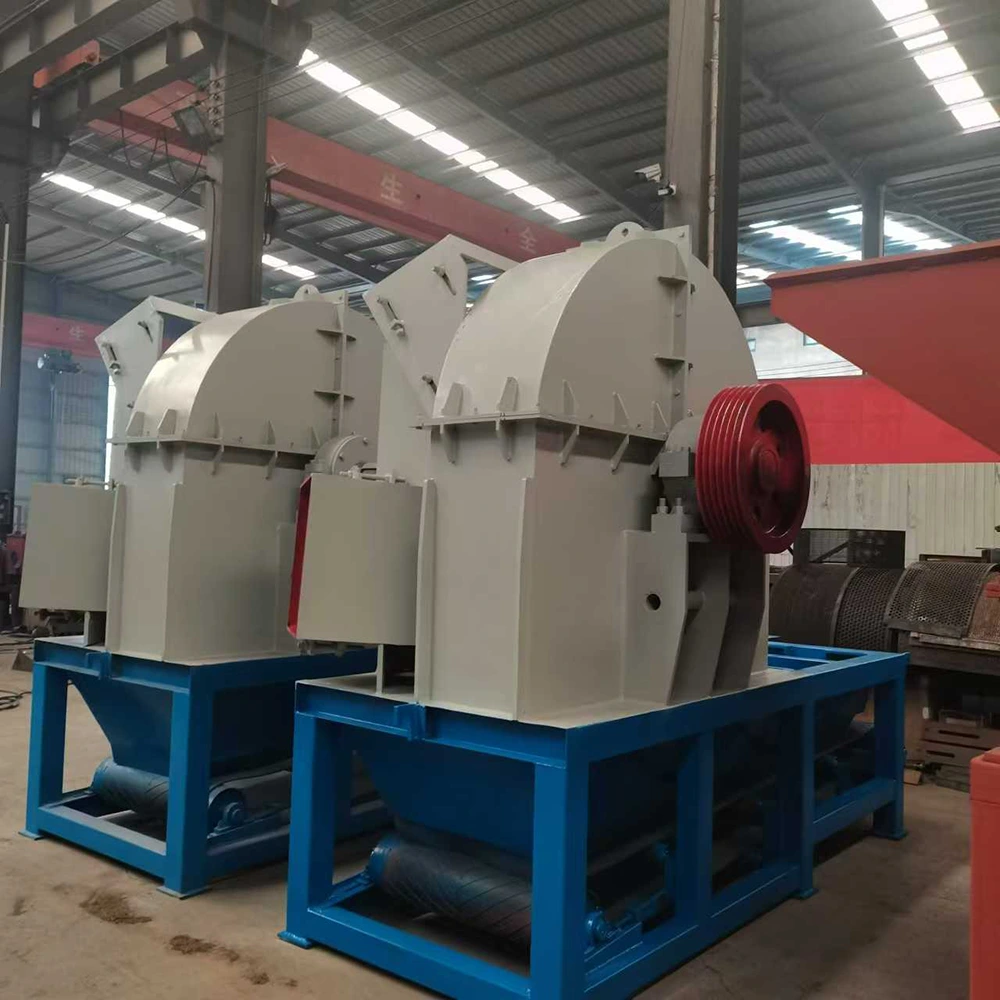
The Capacity Ramp Is Where the Audit Fails
A new presswood pallet plant selling into the EU, the US and Japan is not judged on its first pallets. It is judged on the pallets that come out at month nine, when the plant has added a second shift, the dryer has been re-tuned twice, and a second press is being commissioned for the export orders that just landed. Electronics and food buyers run qualification cycles — sample submission, dimensional and load testing, then a factory audit — that span this exact period. The chip preparation stage sits at the front of that chain, and chip preparation is what drifts during a ramp.
The mechanism is mechanical. Shift pattern changes, feedstock mix broadens from clean sawmill slab into branches and demolition formwork, and a second pallet press goes online before the chipping section is re-sized. When that happens, chip geometry — length, fines ratio, moisture window — stops being the 30–35 mm nominal figure the press was set against. The press still runs, but the pallet density profile moves with it. A buyer load test is the first place that movement shows up as a number that fails. One failed load test ends the qualification, and the export account it was meant to anchor is gone.
Why Outsourced or Mobile Chipping Cannot Be Tightened
Three chipping arrangements are common in new export plants, and all three of them hit the same ceiling during a ramp:
- Outsourced chips cannot be tightened by the buyer. The supplier is running a different feedstock mix for their other customers — pellet mills, biomass buyers, particleboard lines — and your chip spec is whatever survives their schedule. A pinch in their supply shows up as oversize chips in your next delivery, and the press sees it before you do.
- A mobile chipper has no baseline to hold. Every time the machine is moved — to clear a yard, to feed a different bin, to dodge a contractor — the foundation alignment, the knife gap reading, the dust extraction connection and the discharge setup change with it. There is no documented “today’s setting” to compare against tomorrow’s reading, which means there is no consistent starting point to audit against.
- A first fixed machine without a commissioning record has no baseline either. A stationary chipper installed without documented commissioning is technically fixed but operationally uncalibrated. The knife gap was set by whoever was on shift that day; the screen was specified by the procurement order; the discharge was set up by the electrician. There is no record to compare a drift against.
The common failure is not the equipment, it is the absence of a baseline the plant can hold its own process against. That is the gap a properly specified stationary installation closes.
Why a Stationary Wood Chipper Is the Anchor of Chip Consistency
A stationary wood chipper resolves the baseline question in one installation decision:
- The machine is fixed, so the setting is fixed. Concrete foundation, vibration isolation, fixed alignment of the rotor and the counter knife, and a calibrated sizing screen — these are not “as set today”, they are properties of the installation. Knife gap is measurable against a recorded value, screen condition is inspectable against a commissioning record, discharge alignment is repeatable.
- Drum geometry holds the chip regardless of feedstock variability. The horizontal knife roller cuts against the counter knife as the hydraulic feed roller pulls the feedstock through; the sizing screen below drops 30–35 mm chips onto the discharge conveyor. Branches, slab edges and recovered formwork all pass through the same geometry, which is why a stationary drum machine gives you a chip spec you can name in a buyer document.
- Electric drive keeps the process clean. No engine exhaust in the chipping hall, no fuel storage, no diesel particulate as a dust-ignition source. For a plant already managing wood-dust as a recognised explosion risk, taking combustion out of the chip preparation room is not optional — it is what makes the dust-extraction system auditable.
- Capacity tiers follow the ramp without re-commissioning. The X-215 stationary wood chipper at 45 kW for 4–5 t/h, the X-216 at 55 kW for 6–8 t/h, and the X-218 at 110 kW for 8–12 t/h all share chip geometry and feed-inlet dimension. Stepping from one tier to the next is a drive change, not a redesign, and the downstream sieve, dryer feed and storage stay on the same chip spec.
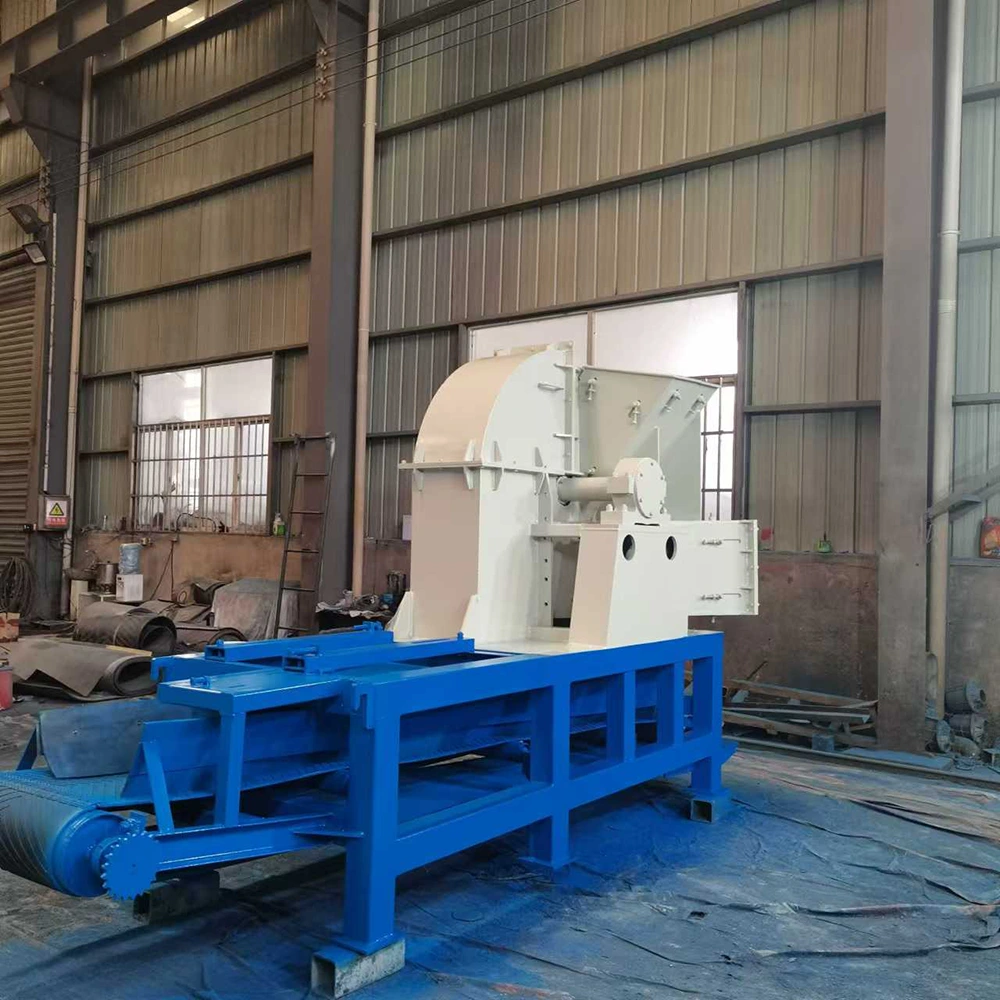
Structure and Parameters That Hold the Spec
The spec a stationary wood chipper can be held against is built from a small number of mechanical facts, and each one is an item an auditor can walk to:
- Knife roller / chipping drum. Horizontal rotor carrying the fly knives; bolted-on pairs, replaced in pairs; counter knife adjustable for chip length. Knife gap is the number you record against; knife-pair replacement is the number you schedule against.
- Sizing screen. The screen holds the 30–35 mm chip spec physically, not at the operator’s discretion. Screen condition is checked at every knife change and recorded; a worn screen is the first place chip oversize starts to slip through.
- Hydraulic feed roller. Continuous feeding operation holds feed rate constant through the ramp, which is what keeps chip length distribution consistent even when the feedstock mix broadens.
- Drive and control. Electric motor and drive ratings, control circuit documentation, and the electrical enclosure and earthing are prepared for the destination market. The local inspection walks the same drawings the maintenance team uses.
- Installation and commissioning. Concrete foundation and vibration isolation to the installation drawing; on-site commissioning and overseas engineer installation are part of the delivery scope. The commissioning record is the baseline.
Three numbers do most of the work: 30–35 mm chip length as the geometry target, the recorded knife-gap value as the setting reference, and the commissioning reading as the starting point. Everything else is supporting documentation.
Where the Intake Record Comes From
A stationary in-house chipper also fixes a second audit question that the ramp usually makes worse — the recovered-wood intake record. A buyer running a chain-of-custody review asks for lot identification on the wood fibre in the chip: where it came from, when, what category of recovered wood it is, and how much by weight. If the answer to that question is “ask our chip supplier”, the audit trail stops at your gate.
With a stationary wood chipper on your own floor, the intake record is created at the chipping station: each lot of recovered wood is logged on entry (date, supplier, recovered-wood category, weight, lot ID), the chip output is logged by lot, and the pallet produced from that lot is traceable back through the press. The chipper itself does not produce a certificate — chain-of-custody certification remains the buyer’s — but it produces the records the buyer’s auditor asks for. During a ramp, when feedstock sources broaden and lot diversity increases, that intake record is the document that keeps the chain-of-custody review honest.

Where This Article Stops (and Where the Documentation Conversation Picks Up)
The other half of an audited export plant is the documentation side: the technical file, the risk assessment, the declaration inputs, and the regulatory change on 20 January 2027 when Machinery Directive 2006/42/EC is replaced by Regulation (EU) 2023/1230. That is its own conversation — it sits on the same machine, but the spine of it is regulatory rather than process. This article stops where the chip spec stops, because the failure mode here is the buyer’s load test, not the conformity assessment file. A stationary wood chipper is what lets you keep producing the load-test pallets; the documentation set is what keeps the machine on the buyer’s market.
The Result: A Chip Stage That Survives the Ramp
A stationary wood chipper installed on a fixed foundation, with recorded knife-gap setting, calibrated sizing screen, documented commissioning record and intake logs at the chipping station, holds the chip specification through a capacity ramp the way an outsourced or mobile arrangement cannot. The press sees a consistent input, the pallet dimensional and load results stay inside the qualification window, and the buyer’s load test passes on the first run rather than the second. The whole exercise is fixing the installation once so the process discipline is something the plant can hold itself to, not something it has to rebuild every time the volume doubles.
Walk Through Your Capacity Ramp
If you are specifying a stationary wood chipper for an export presswood pallet line, send us your planned pallet output across the next 12–24 months, your current feedstock mix, and the buyer qualification window you are targeting. We will spec the X-215 / X-216 / X-218 tier set against the ramp, the chip-spec file against the buyer’s load test, and the intake record format against your chain-of-custody audit.