
The Front End Decides What Reaches the Mould
A recycler handling end-of-life pallets receives a mixed material stream: sound boards, broken boards, nails and staples, paint, labels, plastic strapping and occasionally stone or metal from the yard. Sorting and processing are not optional extras in front of a molding line; they are what decide whether the material can be treated as furnish at all.
Dismantling and sorting
Pallets that cannot re-enter service as pallets are dismantled, and the fractions are separated. Material that is painted, oil-contaminated, chemically treated or mixed with non-wood components is set aside for a decision rather than being swept into the feed. That decision is a material-qualification question, and it has to be answered by sampling and testing.
Tramp metal removal and size reduction
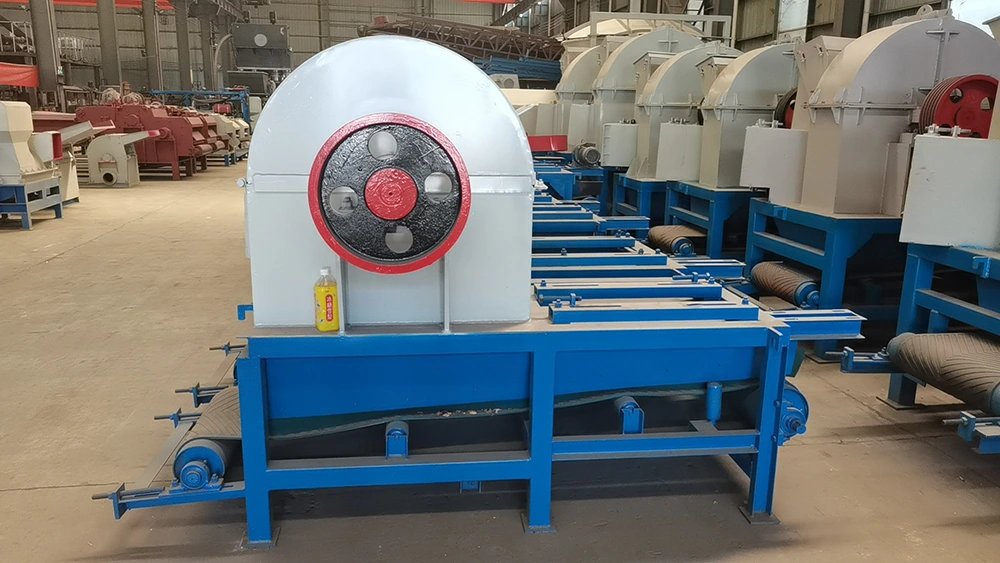
Magnetic separation and screening remove ferrous metal and oversize or inert material before size reduction. A crusher or pulveriser then brings the wood to a fibre geometry the mould can fill evenly. Metal that reaches this stage damages tooling and the press, so the position of the magnet and screen in the chain matters more than their rated capacity. The wood crusher machine and auxiliary equipment pages describe where these units sit.
Moisture and buffering
Recovered wood that has been stored outdoors varies in moisture across the pile and across the season. Drying brings it into the band the binder and mould require, and a buffer hopper holds prepared fibre so that the pressing stage is not exposed to every interruption in the yard.
Where the Moulding Stages Take Over
Once a qualified, dried fibre is available, the sequence is metered glue blending, weighed spreading into the mould, hot pressing, then demoulding and stacking. These stages do not repair a poor input. They convert a controlled input into a repeatable part, which is why the front end and the moulding section have to be specified together rather than purchased as separate projects.
Tooling sets the pallet geometry; see pallet moulds. A recycler starting with a limited budget may keep the blending and pressing stages and handle part of the front end manually, as described on the semi-automatic line page. That is a legitimate first step, but it shifts preparation work back into the yard and should be stated explicitly in the scope.
A Stage-by-Stage Checklist Before Investing
Walking the chain against your own material is more useful than comparing machine lists:
- What fraction of incoming pallets is clean, unpainted wood, and how stable that fraction is month to month.
- Where nails, staples and other ferrous material are removed, and how removal is verified.
- What the fibre geometry looks like after size reduction, measured on actual output.
- The moisture range of stored material, including the wet-season case.
- Whether painted, treated or contaminated fractions can be excluded economically.
- What pallet specification the recovered fibre is expected to produce, and how it will be tested.
The line selection guide is a useful frame for turning those answers into a configuration boundary.
Where the Scope Has to Be Confirmed
The removal of nails and the pre-treatment of nailed material must be confirmed for the specific operation; it is not correct to assume that every waste pallet can be fed directly into a line. Painted, treated, glued or contaminated material needs sampling and testing before it is accepted as furnish, and the resulting pallet’s properties have to be verified against the intended use. Neither the front end nor the press removes a material qualification problem.
Which stages are supplied, which are manual and which the recycler already operates depends on the project configuration. Final equipment scope, the accepted material fractions and the acceptance conditions are confirmed during technical review and set out in the agreed proposal and contract.
Next Step
Bring a description of your incoming material by fraction, plus any existing moisture or contamination records, and the chain can be reviewed stage by stage. That produces a scope with real boundaries instead of a machine list built on the assumption that all recovered wood behaves alike.
FAQ
Can nailed pallets go straight into the crusher?
Not as a rule. Magnetic separation and screening have to be positioned and verified for the actual nail load, because metal that reaches the tooling causes damage. The treatment of nailed material is confirmed per project, not assumed.
How many stages are essential?
At minimum the line needs prepared fibre, metered blending, a weighed charge, a heated mould and a way to remove the formed part. Which of the preparation stages are supplied as equipment and which are done in the yard is a configuration choice.
Do paint, labels and treatments matter?
Yes. They are contamination questions that affect both the process and the finished product. Those fractions should be sorted out and assessed by testing rather than blended into the feed.
Can pallets made from recovered fibre be used for export?
That depends on the destination market’s rules, the product’s documentation and the buyer’s requirements. It is a compliance question to be checked per market, not a property that follows automatically from the fibre source.
Is buying only a press a viable first step?
A press forms the part but assumes a weighed, blended charge is delivered to the mould and that the part is removed. It can be a starting configuration where prepared fibre is bought in, but it is not a complete recycling-to-pallet chain.