
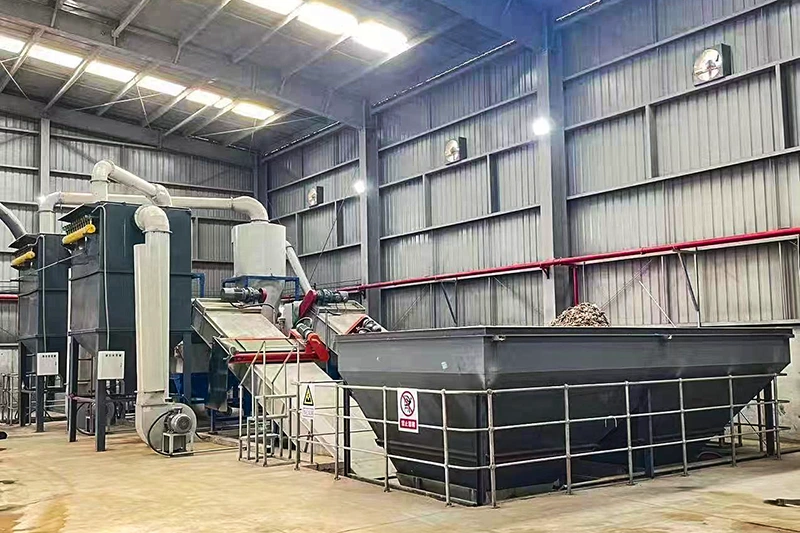
The Scene: When Raw Material Miles Eat the Margin
In pellet, particleboard, and presswood pallet plants, raw material cost is rarely just the cost of the wood. A producer in a fiber-short region may source off-cuts, branches, or retired pallets from suppliers spread across a 150 km radius. Every extra kilometer moves moisture, bark, and air-filled voids that the buyer still pays to transport. In markets where finished product prices are pushed close to — or even below — production cost, those kilometers convert directly into margin loss.
The same applies to in-house wood waste. Sawmill residues, pallet trimmings, and demolition wood arrive as irregular, bulky loads. Filling a truck with loose boards, slabs, and bark means paying freight for empty space and water. The longer the haul, the heavier the penalty.
The Hidden Cost Stack: Haulage, Moisture, and Drying Load
Before the material ever reaches the dryer or the press, three cost layers stack up:
- Bulk volume: Whole slabs, off-cuts, and old pallets carry far more air than usable fiber. Fewer tons fit per truck, so freight cost per usable ton rises.
- Uneven particle size: Mixed chips and splits dry unevenly. Large pieces stay wet in the core while fines over-dry on the surface, pushing dryer residence time and fuel consumption upward.
- Handling loops: Material is often unloaded, re-handled, and reloaded before processing. Each move adds labor, fuel, and spillage.
For a plant running thin margins, these are not minor line items. They can be the difference between a profitable shift and a loss-making one.
Why a Wood Chip Crusher at the Source Changes the Math
The simplest way to stop paying to move air and moisture is to break the material down before it travels. Installing a Wood Chip Crusher at the point where waste is generated — the sawmill yard, the pallet repair station, or the residue pile — turns bulky inputs into uniform chips or coarse sawdust right away. That single step changes several cost drivers at once.
Volume falls immediately. A load of old pallets or slab wood that once filled three trucks may now fit into one. Fewer kilometers per usable ton means lower freight per ton and fewer trucks on the road. The integrated-plant approach mirrors the logic used by large forest-product groups: process fiber as close to origin as possible so the material entering the main line is already in its most transportable form.
Particle size also becomes more uniform. Instead of feeding a dryer with a mix of slabs, slivers, and fines, the crusher delivers chips within a controlled range. Dryer airflow and residence time become more predictable, and the energy needed to bring the batch to target moisture falls.
Structure and Parameters That Deliver On-Site Volume Reduction
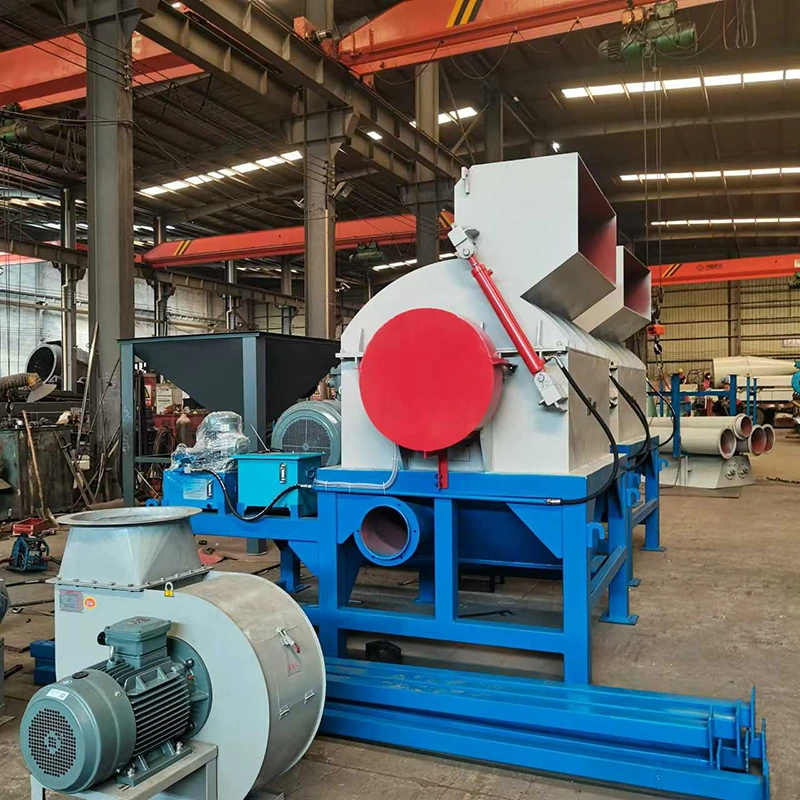
Manganese Steel Hammer Plates and Replaceable Screens
The crushing chamber uses manganese steel hammer plates to break wood against a high-hardness alloy screen. Screens are replaceable, so the same machine can shift between coarse chip output for particleboard or finer output approaching the ≤5 mm range used in presswood pallet and pellet lines. Wear parts are designed for replacement rather than replacement of the whole rotor assembly.
Belt Conveyor Feeding and 1–8 t/h Continuous Output
A belt conveyor feeding setup lets the unit take material directly from a loader or cross-conveyor without batch interruption. Depending on model and screen choice, the F-series wood pulverizer range covers roughly 1–8 t/h continuous output. That throughput is enough to keep a pallet line or medium-sized pellet dryer fed from locally generated waste rather than purchased chips.
Cyclone Dust Collection and Magnetic Separation
On dusty yards, the optional cyclone separator captures fines and returns airflow without spreading sawdust across the plant. A magnetic separator upstream of the crusher removes stray nails, staples, and hardware from old pallets or demolition wood before they reach the hammer plates, reducing damage risk and metal contamination in downstream product.
The Result: Lower Haulage, Lower Drying Energy, Better Feedstock
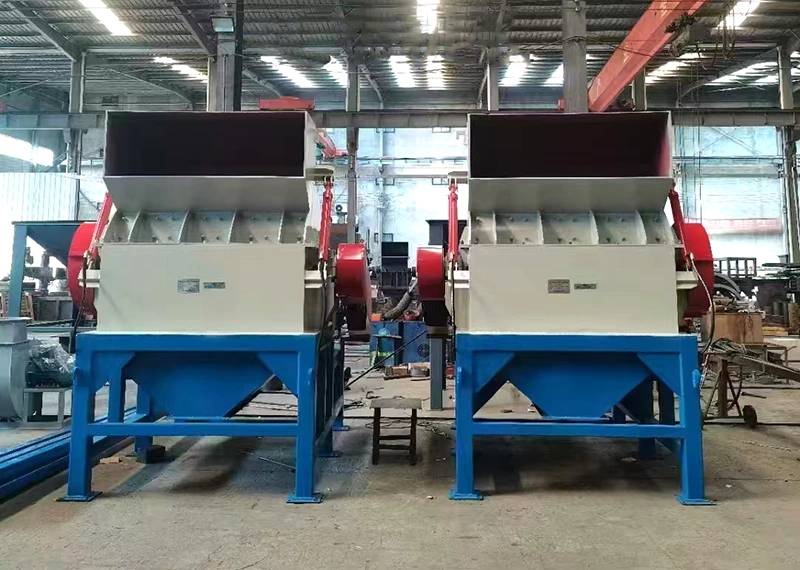
When a Wood Chip Crusher is placed at the source, the plant stops hauling voids and starts hauling fiber. Truck utilization improves because crushed chips pack more usable tons per load. Dryer performance improves because the feed is more uniform and starts with a smaller average particle size. Labor and re-handling loops shrink because material enters the process stream once, at the yard, instead of being moved twice before processing.
The final outcome is a lower delivered cost per ton of raw material — and a raw material stream that is already sized for the next stage, whether that is drying, pelleting, or feeding a presswood pallet production line.
Request a Source-Side Crusher Layout
Tell us what wood waste your plant receives, the typical haul distance, and the target output size. We will size a Wood Chip Crusher configuration that matches your feed rate and integrates with your existing belt conveyor or dryer feed.