DRYR | INDUSTRIAL SAWDUST DRYING FOR MOLDED PALLET LINES
The operating problem: wet sawdust turns fuel into a production constraint
Wood sawdust dryer for molded pallet production: reduce fuel pressure with self-insulated rotary drying and local multi-fuel flexibility
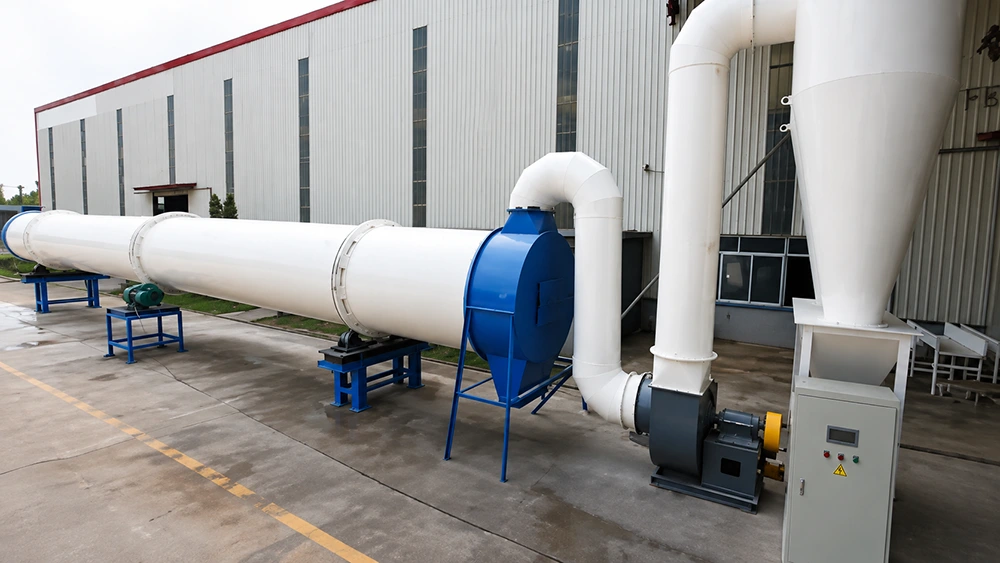
Why old drying methods create avoidable cost and moisture variation
Natural sun drying and manual open-air drying depend on weather, yard space, and time. They can also leave moisture uneven when a molded pallet production line needs a predictable feed condition. A small airflow dryer or sawdust flash dryer may suit fine, low-moisture material and a smaller duty, but it is not automatically the right route for wetter or less uniform biomass feedstock. If moisture remains unstable, the plant may face material degradation before processing, lower molding consistency, or less stable MDI or UF glue bonding. The right comparison is rotary dryer vs airflow dryer against actual moisture, particle size, throughput, and fuel conditions.
Why Dryr fits plants under fuel-cost pressure
Dryr is an industrial rotary sawdust dryer built as a continuous pre-treatment unit for molded pallet production lines, wood pellet lines, charcoal briquette plants, and other biomass material applications. Its self-insulation design is specified at above 80 percent heat efficiency, while the stated coal use is below 8 kg for drying one ton of material. The multi-fuel configuration can use coal, oil, natural gas, or suitable dry solid, pellet, and powdered fuels, allowing the plant to compare locally available fuel instead of depending on one energy source. Final fuel selection must follow local cost, supply, and environmental requirements.
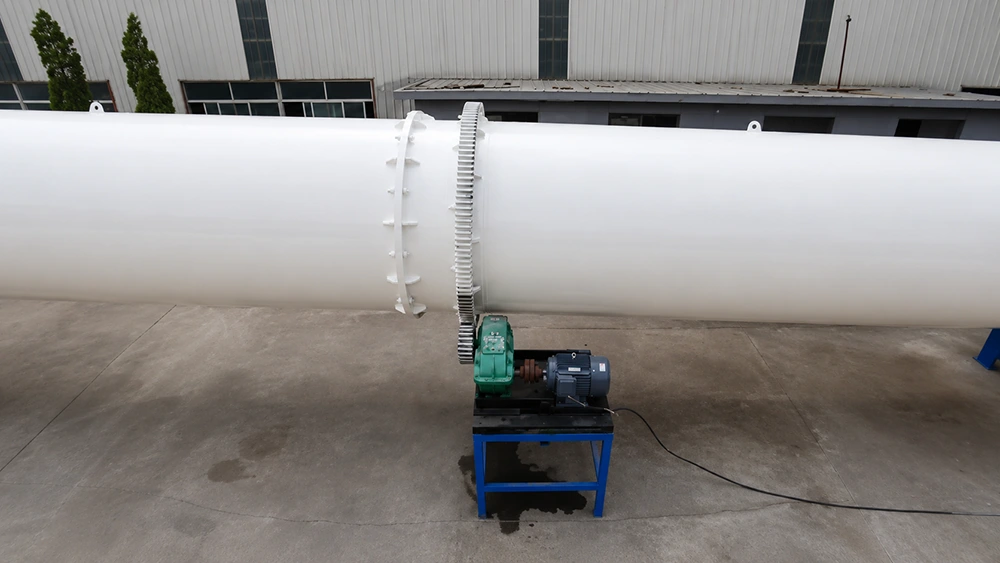
Visible structure and parameters behind the result
The Dryr system combines a hot air furnace, rotary drum, feed and discharge conveying, and dust-control equipment. Inside the drum, lifting flights raise and spread the material so hot air can contact the sawdust as it moves forward. The external girth gear, pinion, gearbox, and motor provide the rotary drive; the field system can also include process ducting, a blower, and a cyclone separator or baghouse direction for dust control. Available model capacities are approximately 0.8 to 1 t/h for H-1010, 1 to 1.2 t/h for H-1212, 1.2 to 1.5 t/h for H-1512, and 1.5 to 2 t/h for H-1815. The standard material reference is outlet moisture below 10 percent; a below 7 percent target should be confirmed through raw-material testing and process commissioning rather than assumed from the model name.
- The exact phrase Wood sawdust dryer is used in the keyword, intro, and both image ALT values
- The article follows the required sequence from customer scenario and old-method problems to Dryr fit, structure, parameters, image evidence, and results
- The article uses only supported Dryr facts including self-insulation, heat efficiency above 80 percent, coal use below 8 kg per ton, multi-fuel operation, and 0.8 to 2 t/h capacity
- The rendered body must contain the required EMP section root, primary contact button, and contact link


