MOLDED PALLET PRODUCTION LINE | DRYR SAWDUST DRYER
When molded pallet growth meets a drying bottleneck
A Rotary drum dryer gives molded wood pallet producers a practical way to expand output when wet sawdust becomes the line bottleneck. Dryr covers 0.8–2 t/h with four standard models and can be engineered with a 17–18 m drum for longer residence time, steadier sawdust drying, and feedstock moisture below 10 percent when the process is correctly specified.
Why old drying methods do not scale with demand
Natural sun drying and manual open-air drying are difficult to scale with production demand. They depend on weather, occupy working areas, and make moisture reduction uneven from batch to batch. A small airflow dryer may offer a lower entry cost, but it can become restrictive when feed volume increases or the material requires longer drying. These older approaches can leave sawdust degraded before molding, interrupt feeding, and force operators to compensate for inconsistent moisture instead of expanding output.
Why Dryr fits staged capacity expansion
Dryr is a sawdust dryer built around capacity that can grow with the line. The standard range includes H-1010, H-1212, H-1512, and H-1815 sawdust dryer models, covering approximately 0.8–2 t/h. For a larger molded pallet production line, the drum can be customized to about 17–18 m. A longer rotary drum dryer gives material more residence time, allowing the hot air process to remove moisture more thoroughly before the sawdust reaches the molding stage. This creates a flexible path from a mid-sized biomass material dryer to a larger industrial sawdust dryer without changing the basic process route.
Structure, parameters, and the production result
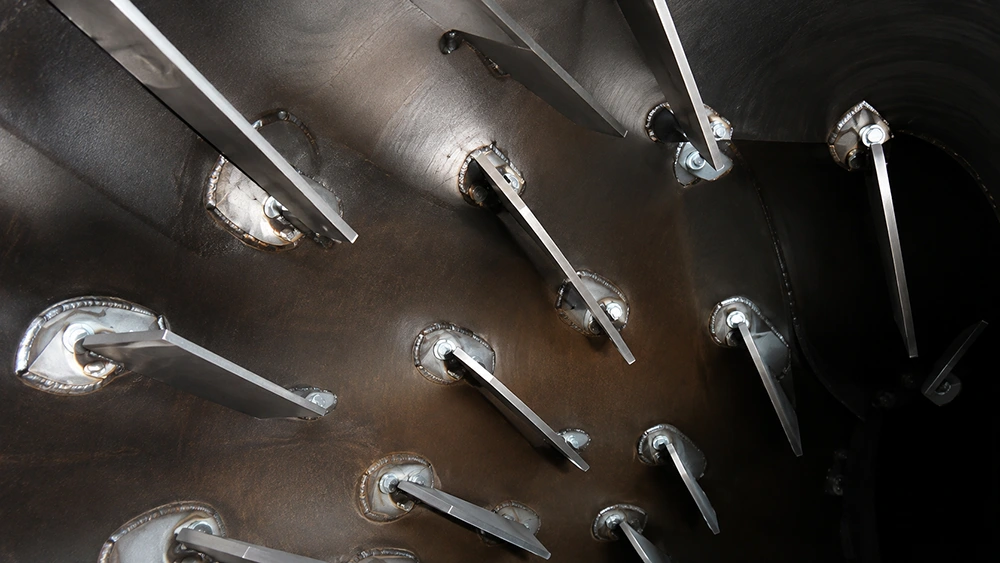
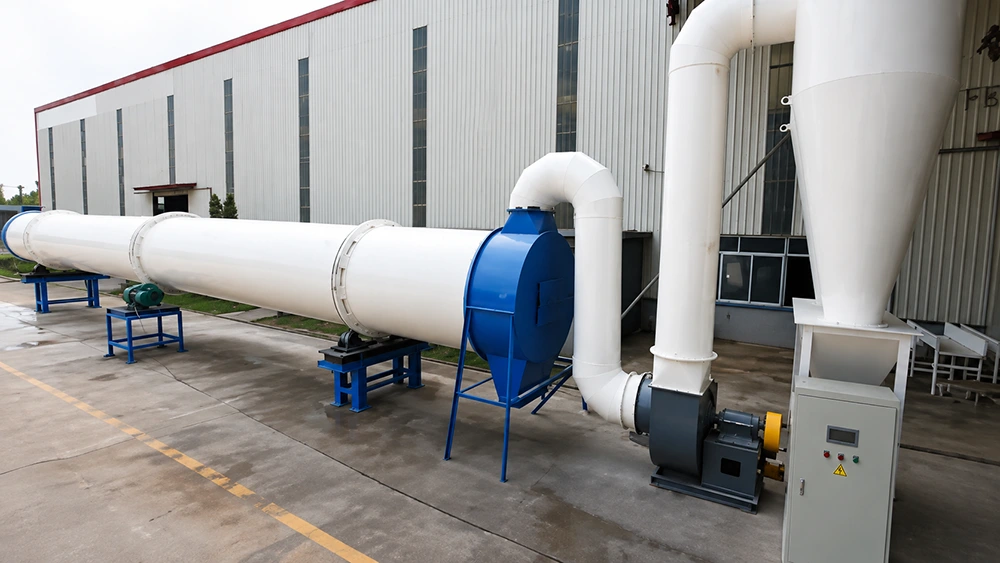
The equipment structure provides visible engineering evidence for continuous operation. Lifting flights inside the drum raise and distribute sawdust through the hot air stream, while the external ring gear, pinion, gearbox, and motor support controlled rotation. The Dryr system can be arranged with a hot air furnace, screw conveyor, PLC control, and cyclone or baghouse dust collection according to the line design. The gallery view also shows a long drum, roller supports, process ducting, blower, and cyclone separator. With the correct feed moisture, material size, and heat input, the target is stable drying with output moisture below 10 percent, fewer weather-related interruptions, less manual handling, and improved molding efficiency. Larger configurations can be positioned against German heavy-duty drum equipment while offering a more practical delivery and cost profile for capacity expansion projects. Contact EMP to size the Rotary drum dryer around your throughput, raw material, and installation conditions.
- Rotary drum dryer is used in the article title, SEO title, slug, H1, first-screen summary, and both image ALT texts
- The article follows the required logic from customer scenario to old-solution problems, product fit, structural and parameter evidence, and final production results
- All section copy is plain English text with no HTML, Markdown, or angle brackets, and the CTA target is /contact/
- Both selected images come from the resolved Dryr designer gallery and use descriptive English ALT text


