CHARCOAL BRIQUETTE PRODUCTION | DRYR SAWDUST DRYER
Why Charcoal Briquette Lines Need a Controlled Moisture Window
A sawdust dryer for charcoal briquette production helps replace weather-dependent drying with a controllable process. Dryr uses a rotary drum dryer, temperature sensor monitoring, and lifting flights to reduce sawdust moisture to below 10%, with an adjustable target below 7% when required, helping operators keep feedstock within the 8–12% forming window.
Why Natural Sun Drying Does Not Hold a Stable Feed Condition
Natural sun drying and manual open-air drying depend on weather, pile thickness, turning frequency, and operator experience. The surface may appear dry while the centre remains wet, and changing sunlight or humidity can create a different moisture level from one batch to the next. That variation can lower briquetting or molding efficiency, increase rework, and make the next carbonization stage harder to manage. Compared with an airflow sawdust dryer used as a small-scale alternative, continuous sawdust drying in a rotary system gives the line a defined feed and discharge process.
How the Dryr Rotary Drum Dryer Fits the Process
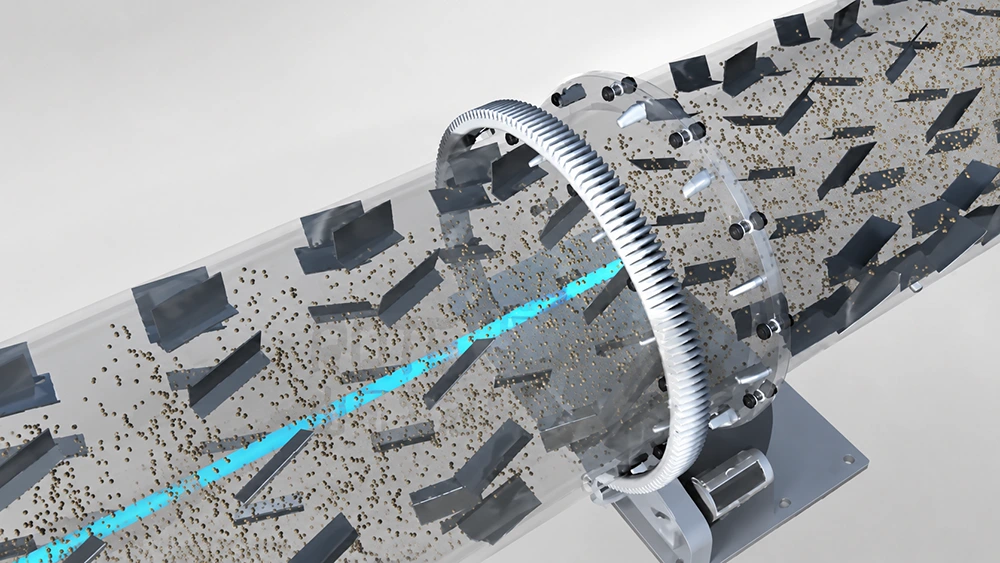
Dryr is a rotary sawdust dryer built around a horizontal drum and hot air drying path. Temperature sensor monitoring gives the operator a basis for controlling the drying condition, while the combination lifting flights repeatedly raise and drop the sawdust through the hot air. This increases contact between the material and the drying air and helps reduce uneven heating. The system can be configured with a hot air furnace, screw conveyor, and PLC control according to the line layout and fuel arrangement.
Structural and Image Evidence Behind the Final Result
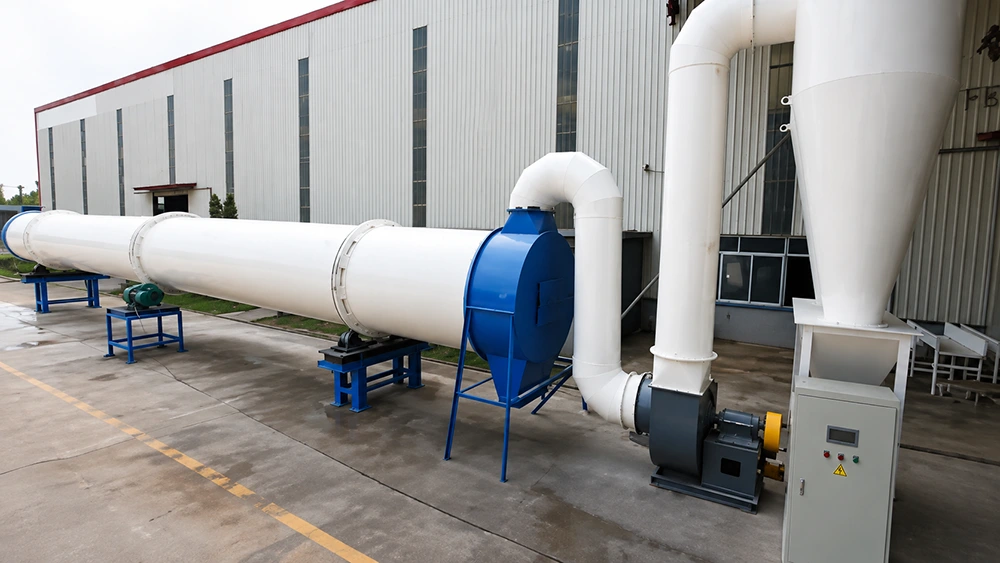
The system photograph shows a rotary drum dryer connected with process ducting, a blower, cyclone separator, support frames, and control equipment. The transparent drum image shows the internal lifting flights, material movement path, ring gear, and drive support that make continuous heat exchange possible. In operation, Dryr targets outlet moisture below 10% and can be adjusted below 7% when a lower setpoint is needed. With the discharge checked against the forming requirement, a charcoal briquette line can move from weather-dependent drying toward a repeatable 8–12% feed condition, with less manual drying work and more consistent forming and carbonization preparation.
- Charcoal briquette production needs sawdust feedstock controlled within the 8–12% moisture window before forming
- Natural sun drying and manual open-air drying create moisture variation that can reduce forming consistency and increase carbonization risk
- Dryr rotary sawdust dryer uses temperature sensor monitoring and combination lifting flights for more even heat exchange in continuous hot air drying
- The industrial sawdust dryer targets outlet moisture below 10% and can be adjusted below 7% when the process requires a lower target


