CHARCOAL BRIQUETTE PRODUCTION IN AFRICA | YEAR-ROUND FEEDSTOCK PREPARATION
When Natural Sun Drying Interrupts Briquette Production
For a charcoal briquette producer in Africa, the production bottleneck may begin before the briquette press. When a plant depends on natural sun drying, rainy-season moisture, rewetting, open-yard space, and long drying cycles can interrupt feedstock preparation. Dryr is a continuous rotary sawdust dryer that moves moisture reduction into the process, helping a covered storage and mechanical drying arrangement support a more deliberate feedstock flow through both dry and rainy seasons.
Why a Continuous Rotary Sawdust Dryer Fits the Feedstock
Dryr is an industrial sawdust dryer designed for continuous hot-air drying in a rotary drum. A hot air furnace supplies process heat while the rotating drum lifts, spreads, and advances the material through the drying zone. That operating route is relevant to wood sawdust, wood chips, wood shavings, and other biomass material when weather-dependent drying cannot hold a stable moisture window. The equipment still needs to be selected from the actual feedstock moisture, particle size, target moisture, required throughput, fuel, and site conditions.
Capacity, Rotary Structure, and System Evidence
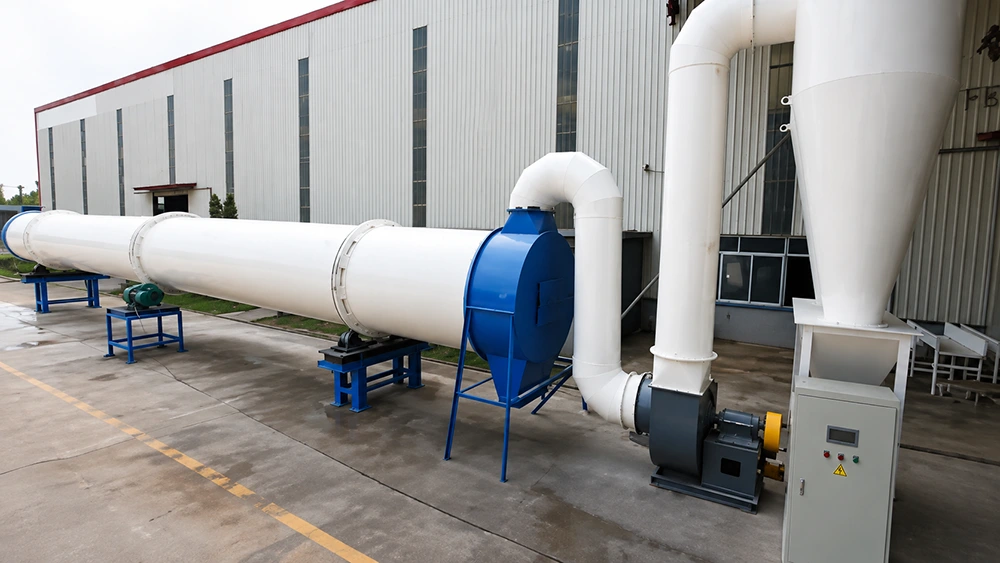
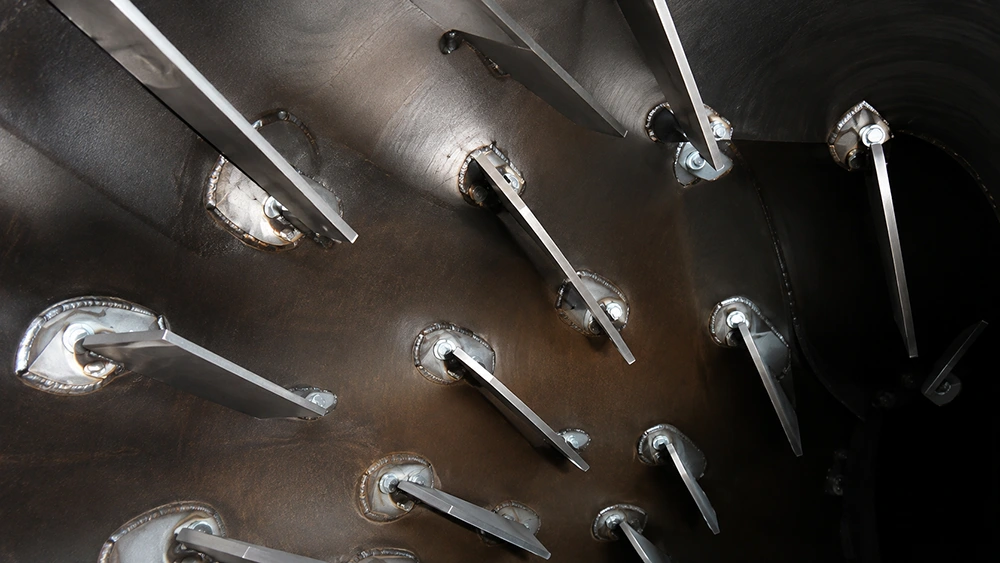
The reference product range covers about 0.8–2 t/h across four sizes: H-1010 at 0.8–1 t/h, H-1212 at 1–1.2 t/h, H-1512 at 1.2–1.5 t/h, and H-1815 at 1.5–2 t/h. The stated reference output moisture is below 10 percent, subject to process confirmation. The system image shows a long rotary drum with support frames, process ducting, a blower, a cyclone separator, and an electrical control cabinet. The internal image shows staggered metal paddle bars, welded mounting plates, bolted hubs, and the construction details that help lift and redistribute material inside the drying chamber.
From Weather-Limited Drying to Planned Output
For a Char Briq-type capacity expansion plan, the operating concept is practical: protect incoming material in a covered storage area, then use continuous mechanical drying when feedstock moisture is outside the briquetting window. Compared with waiting for clear weather, this can reduce the weather dependency of pre-treatment and help the charcoal briquette line plan feedstock across both seasons. Dryr reference materials also identify assembled construction, self-insulation, and heat efficiency above 80 percent. Final engineering should confirm the layout, fuel system, dust collection, moisture target, installation, and commissioning plan before purchase.
- Natural sun drying can interrupt African charcoal briquette production when rainy-season moisture, rewetting, limited yard space, and long drying cycles delay feedstock preparation.
- Dryr is a continuous rotary sawdust dryer for wood sawdust and biomass feedstock, with final selection based on starting moisture, particle size, target moisture, throughput, fuel, and site conditions.
- The reference range covers about 0.8–2 t/h, with H-1010, H-1212, H-1512, and H-1815 options; the selected images show the process system and internal lifting structure without proving unlisted dimensions or test results.
- A covered storage and mechanical drying arrangement can reduce weather dependency and support a Char Briq-type year-round feedstock plan, while the final capacity, fuel, dust control, and commissioning details require engineering confirmation.


