DRYR SAWDUST DRYER FOR RAINY-SEASON CHARCOAL BRIQUETTE PRODUCTION
The Raw-Material Problem Behind Weather-Related Production Stoppages
Charcoal briquette producers in Africa need a sawdust dryer for charcoal briquette production when rainy-season moisture makes natural sun drying unavailable. DRYR combines continuous sawdust drying with a storage plus mechanical drying workflow, helping supply drier feedstock in both dry and rainy seasons and giving a growing line a more practical path to year-round output.
Why DRYR Fits a Rainy-Season Charcoal Briquette Line
DRYR is a continuous rotary sawdust dryer, so raw-material preparation does not depend on a clear day. Prepared sawdust or other biomass material enters a hot-air drying process and moves continuously toward discharge for the next production stage. A covered storage area can protect incoming material from rain, while the sawdust drying machine supplies controlled moisture reduction before briquetting. This storage plus mechanical drying arrangement separates feed preparation from daily weather conditions.
Rotary Drum Structure, Capacity Range, and Dust-Control Options
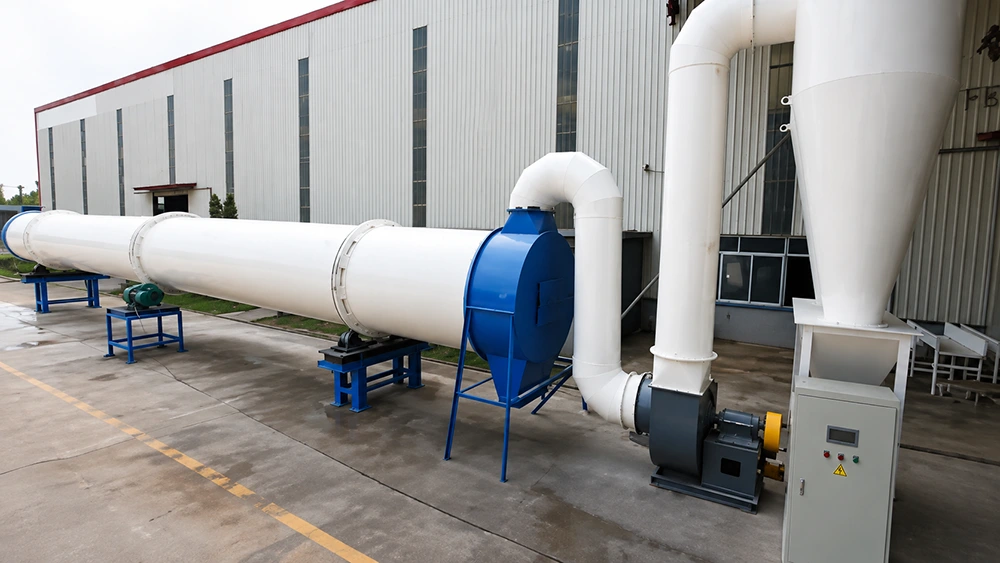
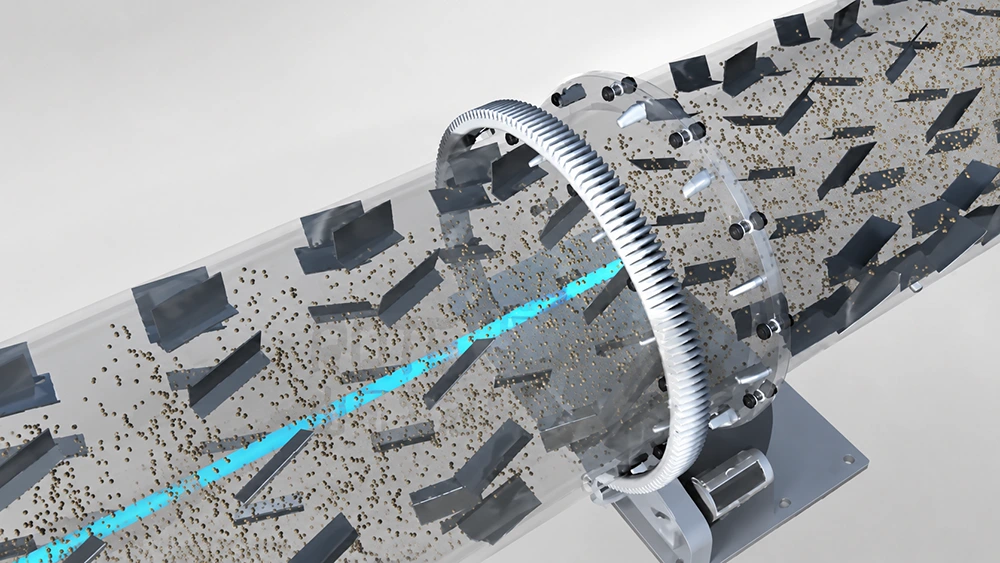
The equipment images provide direct structural evidence for process planning. The first image shows a horizontal rotary drum dryer connected to process ducting, a blower, and a cyclone separator on steel support frames. The second image shows the transparent rotary drying drum, internal lifting flights, ring gear, and drive support. The lifting flights raise and release material through the drum to improve hot-air contact. Depending on feed moisture, particle size, and target output, DRYR configurations cover about 0.8 to 2 t/h, with drum diameter options of 1000, 1200, 1500, and 1800 mm. A cyclone or baghouse filter, PLC control, screw conveyor, and multi-fuel hot air furnace can be selected to suit the line layout.
From Natural Sun Drying to Planned Year-Round Briquette Output
The result is a more planned feed-preparation stage rather than a larger drying yard. Continuous automated operation can reduce manual drying work, while more stable sawdust moisture can support consistent charcoal briquette forming and help meet the process moisture standard. For a Char Briq expansion plan, covered storage combined with a continuous industrial sawdust dryer can reduce rainy-season interruptions and support year-round output. Final capacity, thermal settings, dust-control equipment, and the moisture target should be confirmed against the actual feedstock and site layout.
- African charcoal briquette producers need a continuous sawdust dryer when rainy-season moisture stops natural sun drying and interrupts production.
- Manual or open-air drying is weather-dependent, slow, and space-intensive, creating a raw-material bottleneck during capacity expansion.
- DRYR uses a continuous rotary drum dryer, hot-air drying, internal lifting flights, and cyclone dust-control options to match a planned feed-preparation line.
- A storage plus mechanical drying workflow can support more consistent sawdust moisture, fewer weather-related stoppages, and planned year-round charcoal briquette output.


