Eco-friendly Pallet Production
A Pooling Network That Still Sends Tonnage to Waste
Responsible logistics networks already pool, repair and return their wooden pallets, yet the loop still empties into a waste stream at the end. A presswood pallet machine moves the loop upstream: recovered wood fiber goes in, a one-piece pallet comes out, and a retired pallet can be crushed and fed straight back into the same molded pallet production line. Because the input is recovered material rather than virgin timber, the compliance story stops depending on a recycling slogan and starts depending on an input you can document.
Why a Recycling Claim Reads as Greenwashing
The problem is almost never the intent, it is the evidence trail. An auditor or an ESG reviewer does not accept the sentence we recycle, they ask what mass entered the recovery route, who took custody of it, and what it became. When recovered pallets are chipped and sold out of your gate to an unknown third party, the material leaves your control and your report loses its proof. When the same recovered wood is downgraded into low-value streams, the loop closes on paper only. A traditional pallet nailing machine or wooden stringer pallet equipment line renews a pallet once or twice and then produces the waste you started with. Under scrutiny, a claim with no artefact behind it is the definition of a greenwashing risk, and the safest response is to stop claiming and start owning the outlet.
Why a Presswood Pallet Machine Fits This Operating Reality
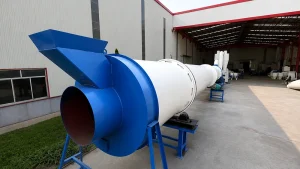
A molded pallet production line answers the question with equipment rather than language. A wood waste recycling machine reduces recovered wood, sawdust, shavings, offcuts and agricultural fibre into a controlled furnish, and that furnish is the product input, not a by-product that has to be placed somewhere. The high-pressure pallet molding 3000T stage forms a one-piece pallet press solution: a single molded body with no nails, no loose boards and no joints to work loose, which is why the same process is described as a nail-free wooden pallet process. The physical loop is the part that matters commercially. Pallets that fail inspection, and pallets returned from the field, are crushed and re-fed as fibre, so the second life of a pallet is not a negotiation with a downstream buyer, it is a load in your own hopper. As an automated pallet manufacturing line, the cycle repeats without a change of supplier, a change of fate, or a change of custody.
Structure, Parameters and the Evidence on the Line
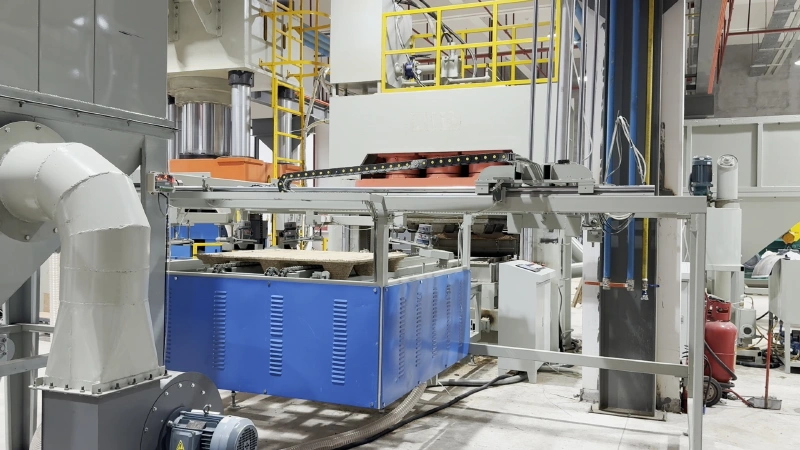
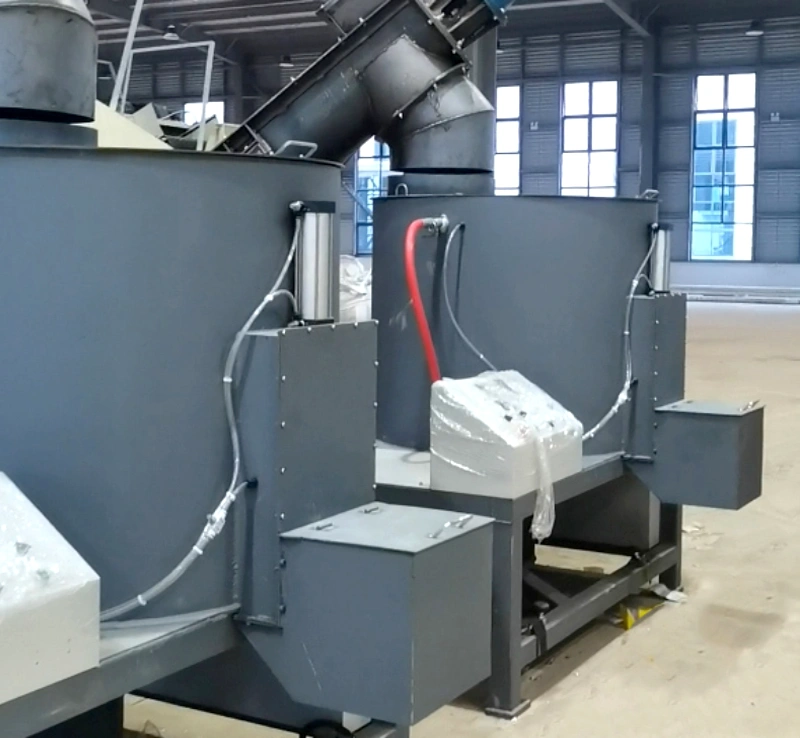
Two parts of the line carry the burden of proof. First, the raw material preparation stage: the automated glue mixing and feeding system holds dosing repeatability and the moisture window that the press needs, which is what allows recovered fibre of variable origin to behave like a defined input rather than a gamble. Second, the press group and the finished part: the finished molded wood pallet after pressing shows the one-piece deck and consistent edge geometry that inspection, handling equipment and stacking all depend on, and because the profile nests, nestable pallet manufacturing cuts the volume of an empty return trip. The commercial and compliance result follows from that structure. Fumigation-free pallet machine output means the products are ISPM-15 exempt pallet equipment, and because the feedstock is entirely recovered material, the due diligence burden under EUDR is not pushed back onto harvested timber from a supplier you cannot audit. That is the difference between a recycling claim and a documented input, and it is a high ROI pallet production setup precisely because the raw material is the stream your own network already generates. If your facility is sitting on a waste-wood pile and a sustainability target that does not reconcile, the next step is a line review against your real tonnage and pallet specification, and our engineers will map the molded pallet production line to your recovered volume.
- Recovered-fiber input and closed-loop re-feed are stated as the process basis, not as a marketing claim
- All traffic-profile terms used are drawn from the AutoML product, scenario, problem and result vocabulary
- Both images come from the resolved AutoML designer gallery with the index ALT text preserved
- Closing call to action routes to the contact page for a line review against real tonnage and pallet specification