Agriculture and heavy duty
Cold-chain and heavy loads: the pallet duty cycle nobody prices in
Cold-chain and humid-warehouse sites do not buy pallets for the first trip, they buy them for the twentieth. A presswood pallet machine presses recovered wood fiber with MDI resin into a one-piece, nail-free pallet at 150 to 180 degrees Celsius and 15 to 20 MPa, with a finished density of 0.8 to 1.2 g/cm3, so the deck that goes into a wet agricultural store comes back without a loose nail or a broken edge board.
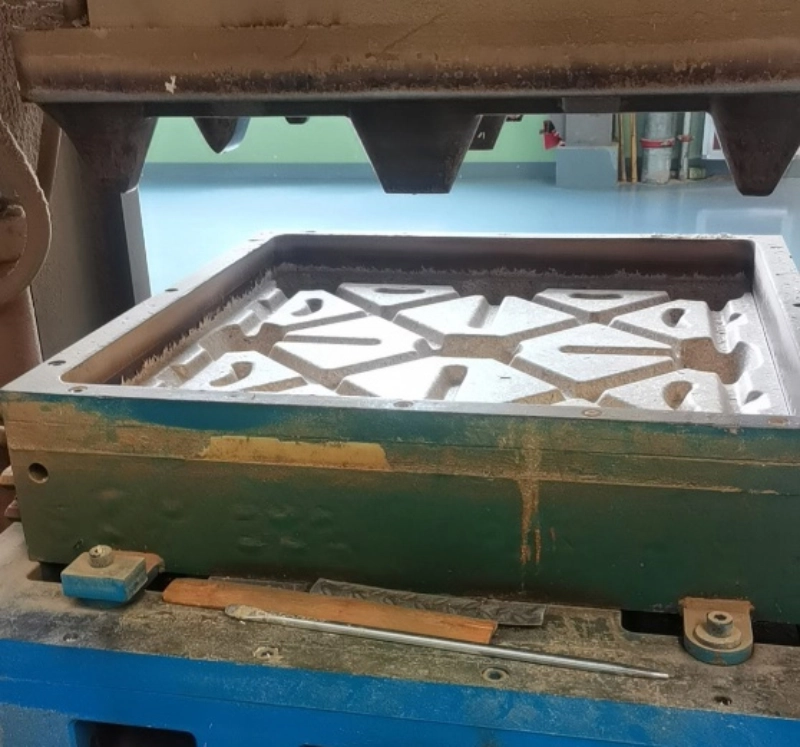
Where nailed wood pallets fail in wet, heavy service
Solid wood stringer pallets and nailed decks are the default in that duty cycle, and the failure mode is predictable. Wood takes on moisture in a humid store, the fibers swell, and the pallet starts to decay from the inside out. Every nail is a hole through the board, so a load that travels with vibration works the nail loose, and a loose nail means a shifting deck and a growing repair pile. Edge boards absorb the forklift entry impact and crumble exactly where the load-bearing section is thinnest. At the end of that life the site pays two costs at the same time: repair labor on the units still worth fixing, and disposal for the ones that are not.
Why a molded one-piece pallet fits that duty cycle
The molded route removes the joint instead of reinforcing it. A presswood pallet machine meters recovered wood fiber with MDI resin, a formaldehyde-free binder with water resistance, and presses it into a single piece at 150 to 180 degrees Celsius and 15 to 20 MPa, with a cycle of roughly 180 to 240 seconds on a 1600T class press. Finished density lands in the 0.8 to 1.2 g/cm3 range. Because there are no nails, no stringers and no board joints, there is nothing to work loose under load and no fastener hole for moisture to enter. The underside reinforcement ribs and the four-way entry pockets are formed in the mold, which is why the deck holds its shape when it is lifted wet and heavy instead of sagging at the entry points.
The real cost, and what you get at the end of the pallet's life
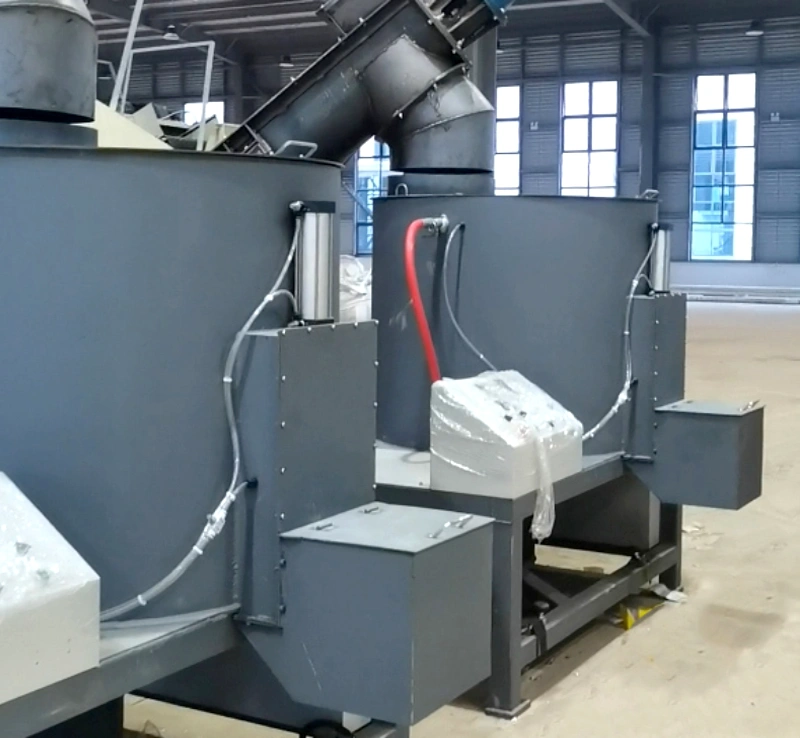
MDI is the honest caveat. It costs more per kilogram than UF or PF systems, and it is more sensitive to mold sticking, which is a genuine maintenance load on any line running it. That is why the standard configuration includes automatic release-agent spraying at the press, so demolding is a controlled process rather than an operator judgment call. The second half of the payback sits at end of life, where a worn molded pallet can be crushed and fed back into the press instead of going to landfill. For a cold-chain or heavy-duty site the result is a smaller repair bench, fewer scrap-outs per year, and one pallet specification that holds the same dimensions in a wet shed as it does on a dry dock. Send us your load class, storage humidity and annual turn count, and we will size the line against your repair and replacement spend.
- Body sections are plain text with no HTML tags or markdown
- Root section carries emp-section, emp-blog-p0 and emp-blog-p0–tw-layout
- Primary call to action links to /contact/
- Both images come from the AutoML designer gallery and carry distinct alt text