Export Packaging and ISPM-15 Exempt Pallet Output
The Export Order That Rides on a Kiln Calendar
Export packaging teams run a heat treatment or fumigation step on every solid wood pallet lot, and that step sits on the same plant capacity as production. A presswood pallet machine turns recovered wood fiber into a one-piece molded pallet that is classed as a processed wood product, so the load no longer needs the phytosanitary treatment. The same customer, the same channel and the same dispatch desk get a fumigation-free pallet SKU without adding kiln or chamber capacity.
Every Lot Carries a Second Production Step
Solid wood pallets are host material for pests, so the export flow must run heat treatment or fumigation on each lot and then apply the IPPC marking that proves the treatment happened. That step is not free. It consumes kiln or chamber time, it consumes plant labour, it inserts a queue between pressing and dispatch, and it adds a failure mode the production manager cannot fully control, whether that is a treatment record that does not line up, a marking that is questioned, or a consignment held at destination. When the treatment queue is full, the pallet line is fine but the shipping plan is not, and the plant is left selling capacity it cannot move.
Why Molded Fiber Pallets Sit Outside the Treatment Step
A presswood pallet machine changes the material rather than the paperwork. It takes sawdust, wood chips, shavings, straw, bamboo powder or bagasse, mixes the fiber with a binding system, and presses the mix into a one-piece molded pallet at 150 to 180 degrees Celsius and 15 to 20 MPa. That heat and pressure cycle is why the output is handled as a processed wood product instead of raw wood, which places the molded pallet on the ISPM-15 exempt pallet equipment side of the rule. There are no nails and no separate stringers to work loose, so the nail-free wooden pallet process also removes the joints where a nailed pallet fails first. For an exporter the practical effect is that the same account, the same channel and the same dispatch desk can quote a molded pallet as an additional SKU instead of pushing every lot through quarantine treatment.
What the Line Looks Like, and What It Changes at the Gate
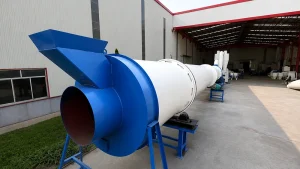
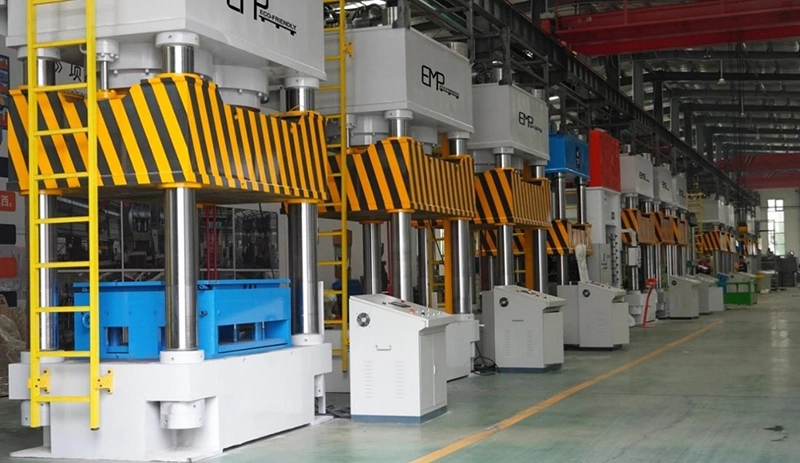
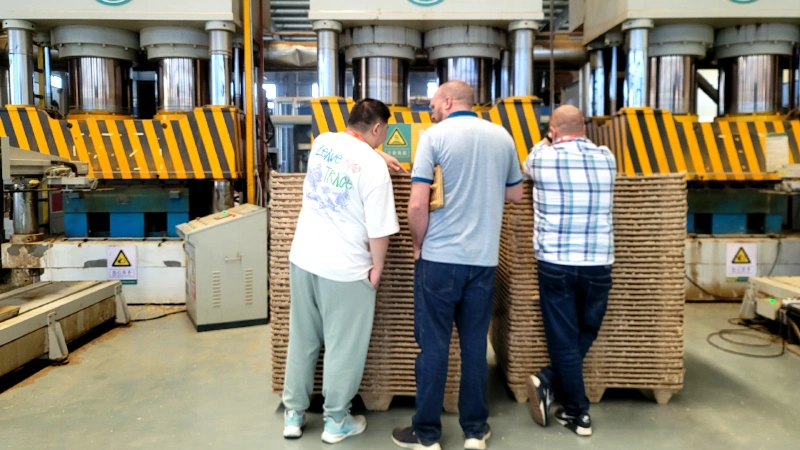
The line is a chain, not a single machine: crushing, drying, glue mixing, weighing and dosing, spreading, hot pressing, demolding and stacking, configured semi-automatic or fully automatic according to labour cost, plant layout, electrical capacity and target output. Press tonnage is selected by pallet size and load class, with 1200T, 1250T, 1600T, 1800T and 2200T references in the project files, and the four column hot presses in the plant photograph are the 1600T class. Pressing parameters commonly cited across the files are 150 to 180 degrees Celsius, 15 to 20 MPa and a cycle of roughly 180 to 240 seconds, with raw material prepared to a length of 5 to 30 millimetres and a thickness of 2 to 5 millimetres, moisture matched to the glue system, and a finished density of 0.8 to 1.2 grams per cubic centimetre. Standard mold sizes cover 1000 by 1000, 1100 by 1000, 1200 by 1000 and 1219 by 1016 millimetres, all of which can be sold as a fumigation-free pallet SKU. Before packing, the stack is checked for structural tightness, burr control and stacking fit, which is exactly the inspection the engineers in the second photograph are running. On the commercial side the project costing notes reference around RMB 2 million for a semi-automatic line and around RMB 4 million for a fully automatic line, with a static payback of roughly 1.3 to 1.8 years in the ideal case. That is the result the export seller is buying: orders that no longer wait on heat treatment capacity, one less compliance step on every lot, and a molded pallet sold through a channel that already exists. Talk to the engineering team at /contact/ with your pallet size, load class and monthly volume to size the correct configuration.
- Export packaging scene is stated before any equipment claim
- Pressing parameters are cited from the AutoML product brief, not invented
- ISPM-15 position is limited to processed wood product status
- CTA resolves to the /contact/ page