AutoML Presswood Pallet Machine | Wood Waste to Pallet Conversion | Predictable Cost and Circular ESG Evidence
When Virgin Timber Controls Both COGS and the ESG Conversation
When virgin-timber prices swing and supply tightens, a pallet operator can lose control of cost before the next customer quote. AutoML is a modular presswood pallet machine and molded pallet production line that converts sawdust, straw, bamboo powder and other plant fibers into one-piece, nail-free pallets, then supports a documented route for reprocessing suitable retired material. The result is not a promise that every pallet will cost less or every ESG claim will pass automatically; it is a more controllable feedstock and evidence structure for a predictable pallet production setup.
Why a Traditional Nailing Route Leaves Both Problems Exposed
Traditional pallet nailing machines and wooden stringer pallet equipment start with purchased boards and blocks. They can produce a familiar pallet, but they do not by themselves solve virgin-timber price exposure, board-grade competition or the traceability of every input. Repair, downgrade and disposal also sit outside the nailing step, so a recycling statement can remain a claim rather than a physical loop. Switching to a used pallet press machine without checking feedstock, moisture, adhesive and mold control creates a different risk: inconsistent density, poor curing and unplanned maintenance. The old route is not wrong for every load; it is simply a weak fit when the commercial question is predictable material cost plus defensible circularity.
Why AutoML Fits a Plant-Fiber and Circular Feedstock Strategy
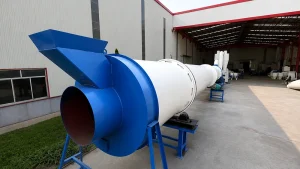
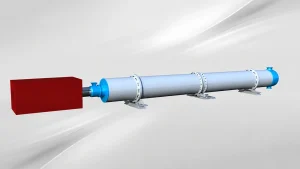
AutoML is a project-configured presswood pallet machine, not a single standalone press. Its production chain can be arranged around crushing, drying, glue mixing, dosing or spreading, hydraulic hot pressing, demolding and stacking, with a semi-automatic or automated pallet manufacturing line selected around labor cost, raw-material access, plant layout and target output. Sawdust, wood chips, shavings, straw, bamboo powder, bagasse and other lignocellulosic residues can be evaluated as feedstock, with particle size and moisture matched to the selected glue system and trial data. For a wood waste to pallet conversion route, retired pallets can be crushed and returned to the process when contamination, resin compatibility and local handling rules have been checked. The optional MDI route is relevant to selected food, pharmaceutical and export-grade programs because the binder is described as no-formaldehyde, water-resistant and strong; it still requires application-specific testing and documentation rather than an automatic certification claim.
The Pressing Window, Image Evidence, and the Resulting Business Case
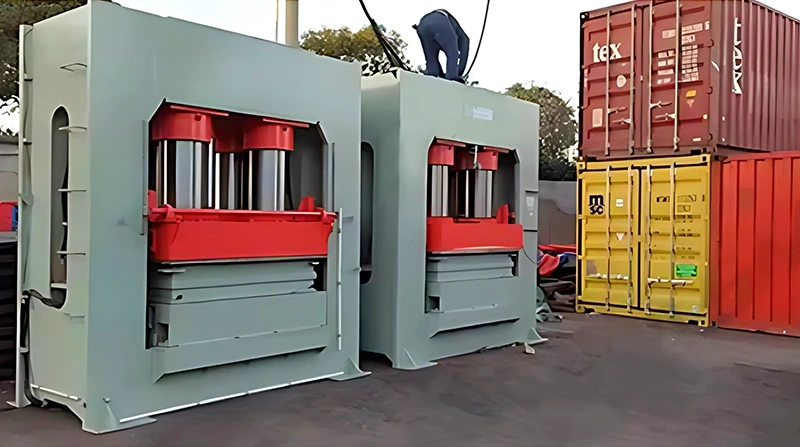
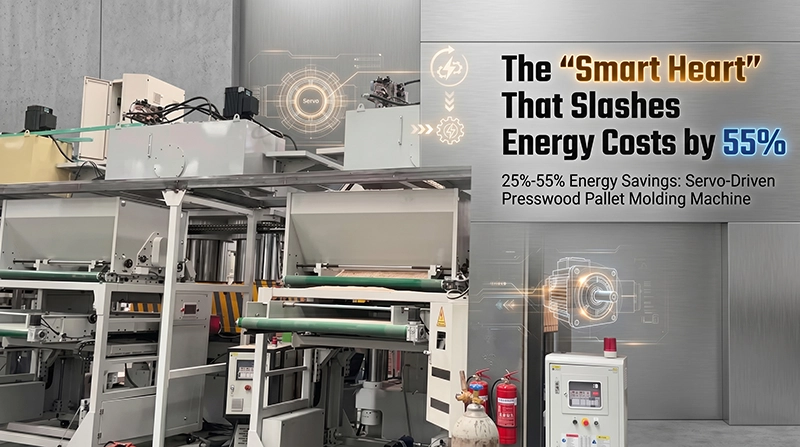
The production window is specified by the project rather than by a universal brochure number. Common references include 1200T to 2200T hydraulic presses, a 1600T class press for repeated projects, 150 to 180 degrees Celsius, 15 to 20 MPa, about 180 to 240 seconds per cycle, particle length of 5 to 30 mm with thickness of 2 to 5 mm, and product density around 0.8 to 1.2 g/cm3. The shipment image shows two heavy hydraulic press structures prepared for installation, evidence of project-scale equipment rather than a claim about one fixed capacity. The servo-control image records a 25 to 55 percent energy-saving claim; that figure must be validated for the selected line, utilities and duty cycle in the technical agreement. MDI is also the honest trade-off: it costs more and can stick to the mold, so an automatic release-agent spray system must run correctly or the tooling can be damaged. With that control in place, the likely business result is a more predictable raw-material budget, a one-piece pallet press solution, a nail-free wooden pallet process, and a physical path from waste to pallet to re-feed. Export programs may position the processed output as fumigation-free or ISPM-15 exempt pallet equipment, subject to destination rules and declarations; the ESG result still depends on measured feedstock records, energy data, utilization and verified product performance.
- Feedstock route: sawdust, straw, bamboo powder and other plant fibers reduce dependence on virgin timber alone.
- Process chain: crushing, drying, glue mixing, dosing, hot pressing, demolding and stacking are planned as one molded pallet production line.
- Compliance route: optional MDI binder supports selected food, pharmaceutical and export applications, subject to project testing and declarations.
- Operating truth: MDI costs more and requires a normally running automatic release-agent spray system to control mold sticking and protect the tooling.