Sawdust Dryer / Equipment Reliability
Where hand-welded sawdust dryers fail first
When emerging-market pellet and molded-pallet plants retire a hand-welded low-end rotary drum, the bottleneck stops being capacity and starts being roundness, alignment, and uptime. Here is how a standardized sawdust dryer from DRYR replaces hand-welded shells with bolted flange assemblies and a precision drive train, and what changes at the 0.8 to 2 tonnes per hour working range.
Why a standardized sawdust dryer fits the line
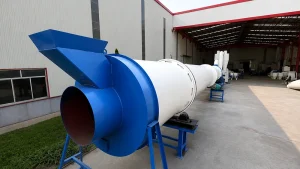
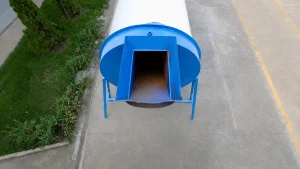
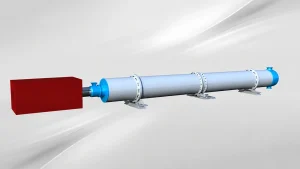
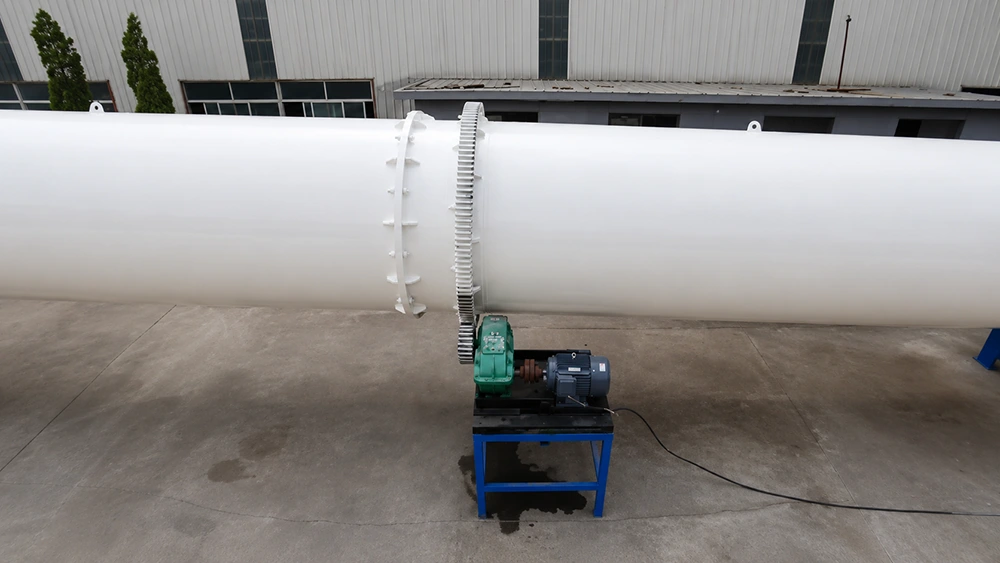
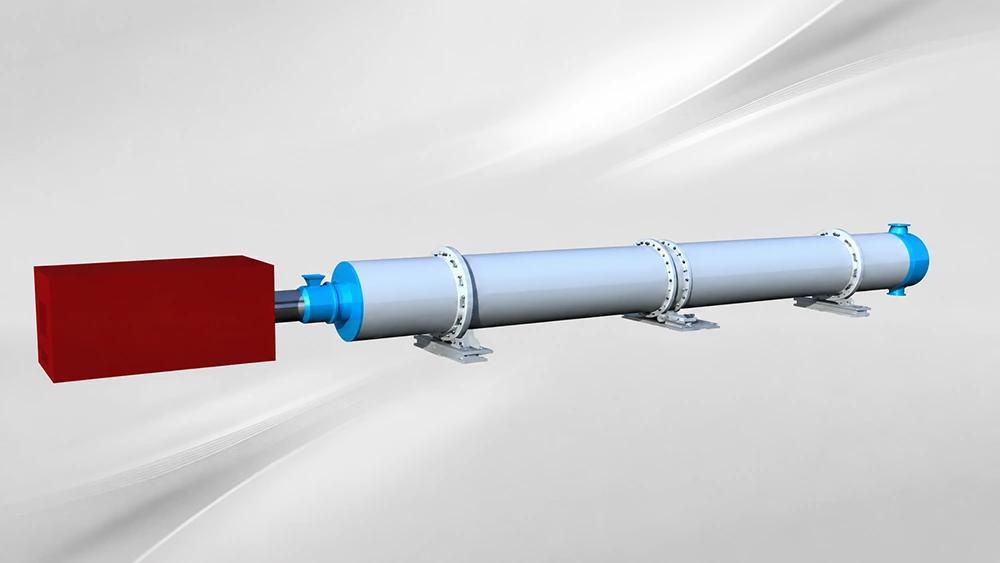
A standardized sawdust dryer is not defined by a thicker plate or a louder motor. It is defined by how the shell is joined, how the drum is driven, and how repeatable that geometry is from one delivery to the next. On a DRYR rotary drum dryer the shell rings come with bolted flange connections, so the drum ships in engineered sections and is assembled on site rather than relying on a single full-perimeter hand weld to hold roundness. The drive is an external girth gear meshed with a pinion on a geared motor, so drum speed is set by gear ratio and not by a stretched chain. The internal lifting flights are welded to machined mounting plates at a consistent pitch, so material turns over the same way at every load. None of this is exotic; it is the minimum a continuous sawdust drying line needs to stay inside its moisture band.
DRYR sawdust dryer specs and assemblies for 0.8 to 2 t per hour
DRYR ships a four-model standardized sawdust dryer range, and the table lines up with the 0.8 to 2 t per hour window most pellet and molded-pallet lines actually run. The H-1010 uses a 1000 mm drum, a 4 kW main motor and a 7.5 kW induced-draft fan for 0.8 to 1 t per hour. The H-1212 steps to a 1200 mm drum and 5.5 kW main motor for 1 to 1.2 t per hour. The H-1512 widens the drum to 1500 mm with a 7.5 kW main motor and an 11 kW fan for 1.2 to 1.5 t per hour. The H-1815 tops out at 1800 mm, an 11 kW main motor, a 15 kW fan, and 1.5 to 2 t per hour. Every model in this sawdust dryer range uses the same bolted flange shell, the same external girth gear and pinion drive train shown on the featured image, and the same option set for PLC control, multi-fuel hot air furnace, cyclone dust collector and screw conveyor. Assembled on site from engineered pieces, the drum stays round on the rollers, the drive stays in mesh, and commissioning is shorter than a hand-welded equivalent.
What the plant gets: stable moisture, lower downtime
Put the standardized sawdust dryer in front of a press or pellet mill and the line behavior changes in three measurable ways. Output moisture stops swinging, because the bolted shell holds its roundness and the lifting flights keep turning the material through the same hot-air path on every cycle, which holds the binding window that MDI, UF and binder-free pellet recipes need below 10 percent. Downtime drops, because the girth gear and pinion drive train, the bolted flange joints and the optional cyclone dust collector are wearing parts with predictable service intervals rather than weld repairs waiting to happen. Labor drops, because a PLC-controlled sawdust dryer runs continuous feed, drum speed and outlet temperature on setpoints rather than on an operator watching a pyrometer. The drum length can be extended up to 17 to 18 metres for high-moisture raw material, the unit ships split for container loading, and on-site installation and commissioning is part of the package — so the line is replacing a hand-welded old drum with a standardized sawdust dryer that the next shift, and the next campaign, can actually rely on.
- bolted flange shell rings replace full-perimeter hand welds on every dryer section
- external girth gear and pinion drive replace chain and friction shortcuts
- PLC-controlled continuous sawdust drying holds output moisture inside the binding window
- H-1010 to H-1815 covers 0.8 to 2 t per hour with optional multi-fuel furnace and cyclone dust collector