Bolted-Flange Drum vs Hand-Welded Shell — Standardized Construction for 0.8 to 2 t/h Pellet and Pallet Lines
Where a hand-welded rotary drum dryer actually fails on a 0.8 to 2 t/h line
For 0.8 to 2 t/h biomass pellet lines and molded wood pallet production lines, the rotary drum sawdust dryer ahead of the press is the first bottleneck when the drum shell walks out of round or the alignment drifts after a few heat cycles. Replacing a hand-welded low-end rotary drum dryer with a standardized DRYR sawdust dryer built from bolted-flange drum sections, an external girth gear and pinion drive, and optional PLC control changes that bottleneck from an unplanned maintenance pattern into a controlled continuous drying step.
Why a standardized DRYR rotary sawdust dryer drum holds geometry
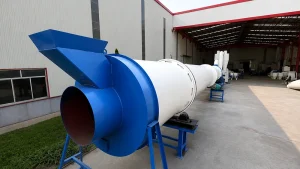
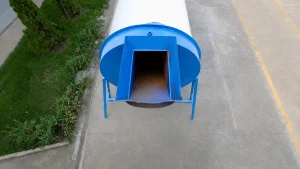
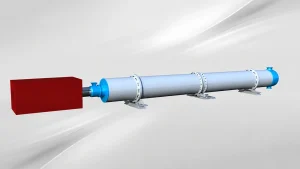
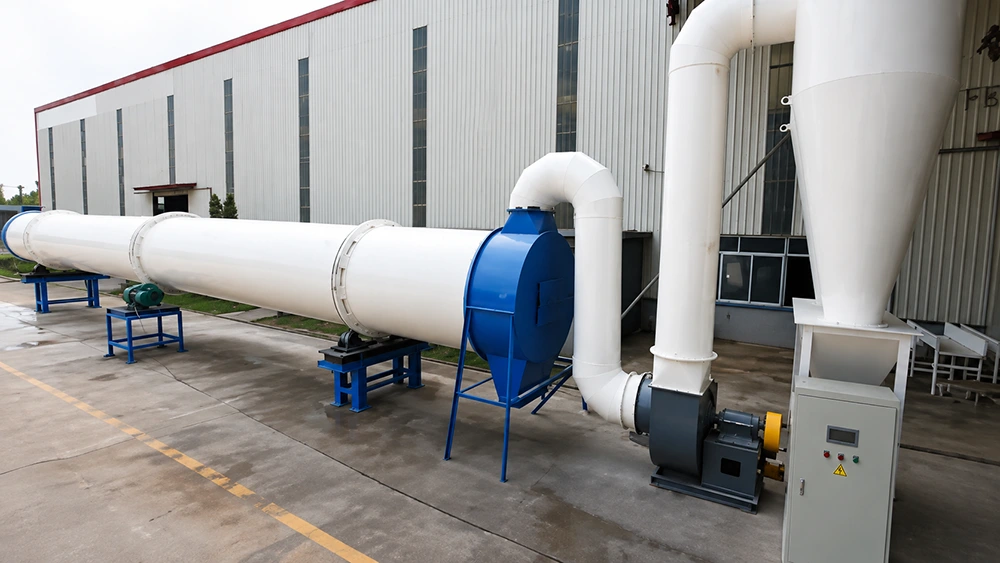
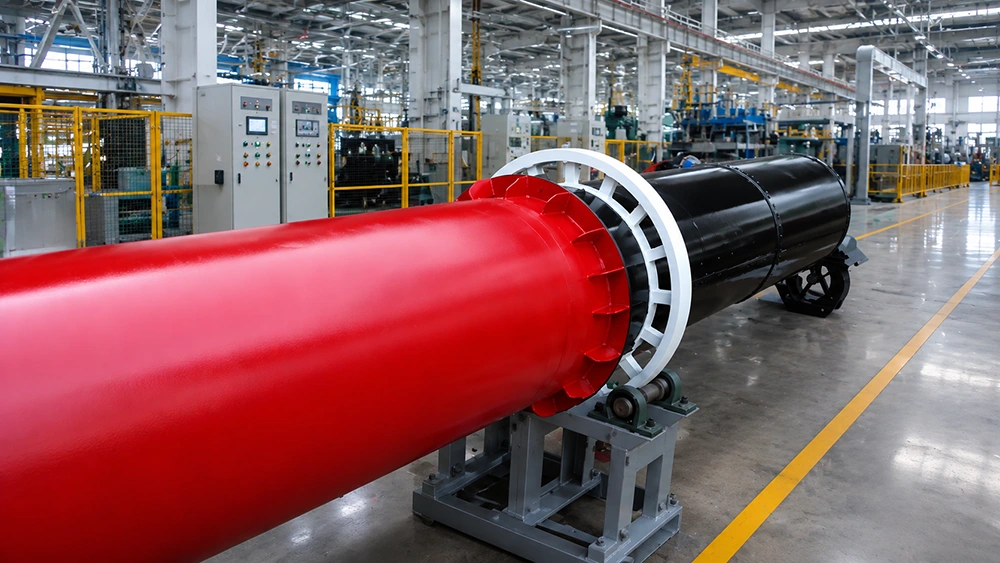
The DRYR rotary sawdust dryer drum is built in sections that are rolled, flanged, and bolted together on site, not welded end to end on a hand-held jig. Each drum section carries machined flange faces that set the bolt circle true, so when the sections are bolted up the shell returns to round within a working tolerance that a hand-welded drum cannot match. The drive train is bolted to the shell through the same flange pattern, with an external girth gear and pinion that turn the drum on its own bearing seats instead of forcing the shell to track a variable weld. Inside the drum, the lifting flights are welded to repeatable mounting plates so the lifting pattern stays consistent drum-length to drum-length rather than drifting section by section. The result is that roundness, alignment, and lifting geometry stay where the engineering drawing put them, instead of walking with weld shrinkage over the first year of service.
What changes at the discharge, the drive side, and the press
On a 0.8 to 2 t/h pellet line or molded pallet production line, that geometry change shows up first at the discharge end: output moisture drops into the 10 percent binding window and holds there, instead of swinging 12 to 18 percent across a shift as the shell distorts. It shows up second at the drive side, where the motor and gearbox nameplate is no longer being asked to absorb a shell that has walked out of alignment, so thermal trips fall from weekly events to scheduled maintenance. It shows up third at the press, where pellet die wear and molded-pallet delamination stop being blamed on the dryer and go back to being press problems that the press team can solve. For a multi-fuel plant the same geometry also stabilizes the hot-air path: with a DRYR multi-fuel sawdust dryer, the refractory-lined combustion chamber and the bolted drum shell stay coupled by ductwork and seals instead of by welded flex, so the burner side and the drum side can be tuned independently.
What to verify before replacing a hand-welded drum with a DRYR
Before specifying a DRYR sawdust dryer to replace a hand-welded unit, the buyer should pull four numbers from the existing line: raw material moisture at the inlet, particle size distribution of the sawdust or wood shavings, current output moisture swing across a shift, and the gearbox trip log over the last quarter. The four-model 0.8 to 2 t/h DRYR range (H-1010, H-1212, H-1512, and H-1815) covers 0.8 to 1, 1 to 1.2, 1.2 to 1.5, and 1.5 to 2 t/h so the replacement drum can be sized to the actual shift output rather than the optimistic one. The buyer should also confirm the optional PLC control, cyclone dust collector or baghouse filter, screw conveyor, and assembled structure sawdust dryer split shipment against the plant side, and confirm that the 17 to 18 m drum length option is available if the site moisture profile needs it. The final check is on shipping: a DRYR sawdust dryer with a bolted-flange drum structure is built to be split for container loading and re-assembled on site, which is the only reason an emerging-market buyer can replace a hand-welded drum with a standardized drum in the first place.
- The DRYR rotary sawdust dryer drum is built as bolted flange sections and an external girth gear drive, not as a single hand-welded shell.
- The four-model 0.8 to 2 t/h DRYR range from H-1010 to H-1815 covers the line's actual shift output.
- PLC control, cyclone dust collector or baghouse filter, multi-fuel hot air furnace, and screw conveyor options are matched to the plant's fuel and dust rules.
- The assembled drum structure is built to be split for container shipment and re-assembled on site at the buyer location.