Press Exit-Side Operator Safety
Why Manual Take-Out Keeps a Worker Inside the 1250 to 1600 Ton Press Danger Zone
On a 1250 to 1600 ton presswood line, manual take-out forces a worker to step into the press danger zone twice per cycle to pull a freshly pressed pallet at about 80 degrees Celsius from the open die. The hot press is rated at 1250 to 1600 tons of clamping force, so any misfire while a hand is inside the pressdie area is a severe crush or shear injury, and the MDI off-gas coming out of the same mold is a chronic exposure for the operator on that station. AutoG is the automatic pallet take-out robot from EMP that puts a six-axis articulated arm with a vacuum-suction end effector into the press exit side, so the press danger zone is physically unoccupied from the press open signal to the press close signal.
Why the AutoG Six-Axis Robot Fits the Presswood Line Press Exit Side
AutoG is the automatic pallet take-out robot designed for the press exit side of a 1250 to 1600 ton presswood line. The base is a column-mounted floor anchor that sits beside the press, and the articulated six-axis arm reaches into the pressdie area with the same hand-entry envelope a manual operator would use, plus the wrist articulation needed to clear the mold lip and clear the stacked pallet station. The end effector is a multi-suction vacuum gripper that conforms to the rough top surface of a molded pallet, so it can pick the freshly demolded pallet at 80 degrees Celsius without a cooling wait time. The control side talks to the press PLC on the press open and close signal, so the take-out sequence is triggered by the same press signal a manual operator would watch. One AutoG arm is sized to serve two 1250 to 1600 ton presses in alternation, which is the same take-out workload that two manual operators used to cover on a dual-press presswood line. The vacuum-suction gripper also avoids the contact-and-lift pattern that puts a worker's fingers under the mold lip, so the press danger zone stop is no longer dependent on the operator's reaction time.
Structure and Line-Side Evidence for the AutoG Six-Axis Cell
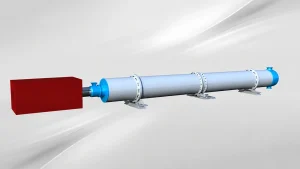
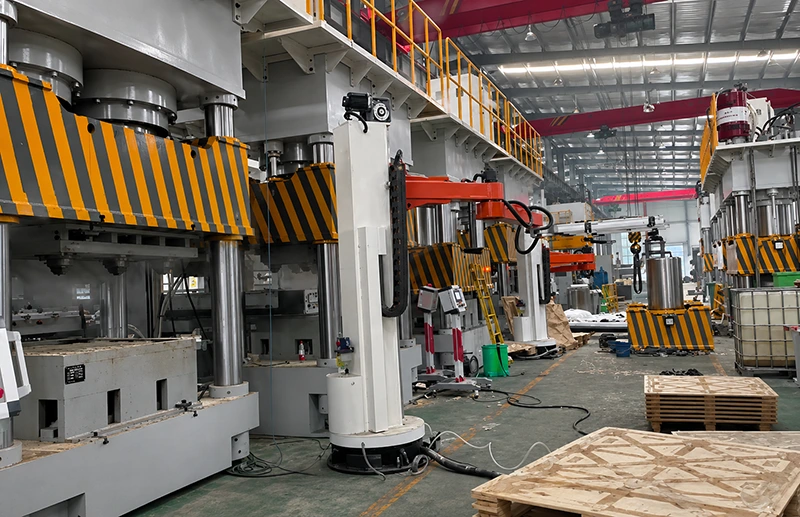
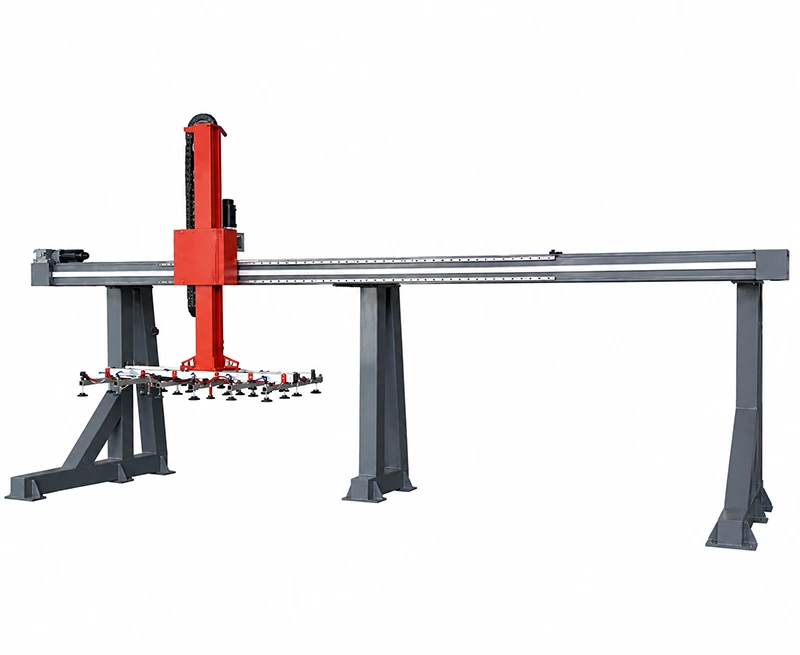
The structure on the press side is what makes the press danger zone argument engineering-grade instead of marketing-grade. The factory-floor photo of a 1250 to 1600 ton-class heavy-duty hydraulic press line shows a guarded platen, a multi-cylinder frame, the kind of striped safety enclosure that currently surrounds the press danger zone, and the install footprint where the take-out cell has to be tied into the press foundation and the press PLC. AutoG is installed into that footprint as a column base outside the pressdanger zone boundary, with the articulated arm reaching across the press opening only after the press is confirmed open through the interlock, and the multi-suction vacuum gripper taking the hot pallet out without a hand crossing the press danger zone line. The 3D render of a long-span automated gantry vacuum lifter with a multi-cup gripper shows the same end-effector principle applied to a wider line layout, useful for presswood sites where two 1250 to 1600 ton presses stand far enough apart that a longer-travel gantry is preferred over a single-column articulated arm. In both layouts the take-out cycle stays inside the interlocked window, and the press danger zone stays empty for the entire open-mold minute.
Final Result – The 1250 to 1600 Ton Press Danger Zone Becomes an Unmanned Station
Once AutoG is the take-out cell for a 1250 to 1600 ton presswood line, the press exit side stops being an attended station. Two manual operators per dual-press line are removed from the press danger zone and reassigned to upstream dosing, downstream stacking inspection, and pallet quality checks, and the press danger zone stays empty from the press open signal to the press close signal. The 80 degrees Celsius pallet is still taken out at the cycle the press was sold on, with vacuum suction replacing the worker's hands, and the MDI vapor exposure shifts from the take-out operator to a fixed station exhaust the line engineer can plan and monitor. The press danger zone becomes an engineering control with a documented interlock and a documented arm reach envelope, instead of an SOP that the safety team has to police by observation. That is the difference between a fenced press with a procedural rule and a presswood line that the safety team can sign off as press-exit-side unmanned, and it is the result the presswood plant takes to its insurer, its labor counsel, and its next safety audit.