presswood pallet press take-out
The 80°C Press-Open Signal Is an Off-Gas Pulse, Not a Continuous Exposure
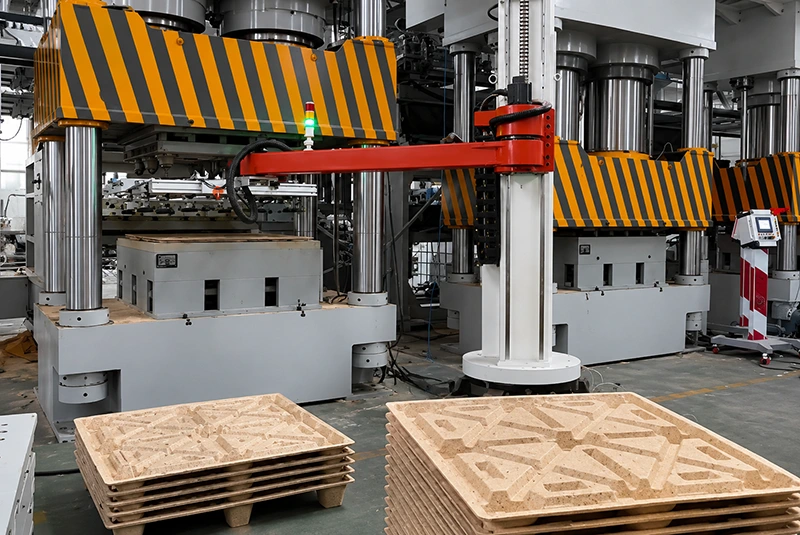
On a 1250 to 1600 ton presswood pallet press, the MDI binder vapour release and the freshly pressed 80°C pallet reach the take-out station on the same press-open signal. The manual take-out operator is the closest receptor to that pulse. AutoG is the automatic pallet take-out robot from EMP that performs the take-out from outside the press open-to-close window, so the MDI off-gas pulse no longer has a human breathing zone at the take-out station.
Ventilation and PPE Treat the Reachable Dose, Not the Pulse Source
General workshop ventilation dilutes what drifts into the room, but the press-open pulse is concentrated at the open die for a few seconds at a time. Local exhaust can be hooded near the press mouth, yet the take-out operator still has to reach across the open die to grip the freshly pressed pallet, which puts the breathing zone directly over the release plane. PPE reduces the fraction of the dose that reaches the operator, but the dose window keeps reopening at the press-open signal on every cycle. Engineering control hierarchy puts source elimination above PPE, and the take-out station has historically been the one station where source elimination was not feasible.
AutoG Robotic Offloading Acts Outside the Press Open-to-Close Window
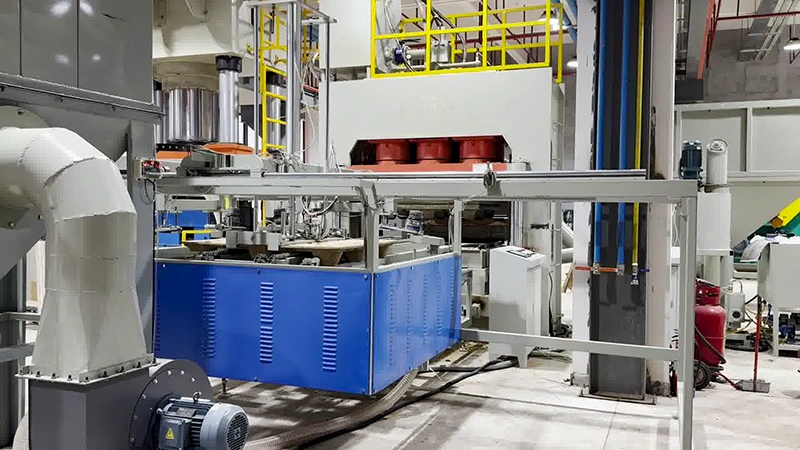
AutoG is the automatic pallet take-out robot from EMP. It is installed at the press exit side and reaches into the open die with a six-axis articulated arm and a multi-cup vacuum gripper. Because the take-out is performed by the robot, the operator does not have to be at the press mouth. The robot picks the freshly pressed pallet at about 80°C, transfers it to the stacking position, and stacks the pallet in one motion. With one AutoG serving two 1250 to 1600 ton presses, the take-out station runs unmanned from press open to press close, and the off-gas pulse no longer has a human breathing zone at the closest position.
What Changes at the Take-Out Station When the Pulse Has No Receptor
The dose that no longer has an operator in its path is the dose that no longer needs to be diluted, filtered, or breathed through a respirator. The press-open window stops being a per-cycle health event and becomes a press-cycle timing event. The line PLC, the press open/close signal and the robot reach into the die together, so the 4 to 5 minute press cycle stays the bottleneck the press was sold on, not the take-out operator. With two presses on one AutoG, the take-out station headcount drops by the two operators who used to stand at the press mouth, and the take-out station stops being the chronic exposure point of a 1250 to 1600 ton presswood pallet line.