Sawdust Moisture Control for Pellet Lines
The Pelletizing Yield Curve and the Furnish Moisture Variance Behind It
On a 0.8 to 2 tonne per hour biomass pellet line, sawdust moisture swing ahead of the pellet mill can drop pelletizing yield by 10 to 30 percent, lift re-feed tonnage by about 15 percent, and add 8 to 10 percent more kilowatt-hours per ton of finished pellet at the press. A rotary sawdust dryer that locks furnish moisture inside the 8 to 10 percent binding window batch after batch is the path back to nameplate output. DRYR is the rotary drum dryer from EMP built around a sealed drum, combined lifting plates and continuous temperature feedback, sized to the four-model H-1010 to H-1815 range and the 0.8 to 2 tonnes per hour pellet platform.
Why Natural Sun Drying and Small Airflow Dryers Cannot Hold the Window
Most 0.8 to 2 tonne per hour pellet lines first try natural sun drying or a small airflow dryer to bring sawdust inside the 8 to 10 percent window. Natural sun drying is weather dependent — monsoon weeks push furnish moisture back above 15 percent and force the press operator to throttle the line or accept a pelletizing yield drop of 10 to 20 percentage points. Small airflow dryers handle fine sawdust but stall on chip and shaving fractions, and their short residence time holds output moisture within a 3 to 5 percent band rather than the sub-1 percent band the pellet press needs to keep re-feed constant. A hand-welded low-end rotary drum can move more tonnage, but the roundness drifts after the first year of thermal cycling, the welded-on lifting flights deform under hot sand load and the resulting channel lets a band of wet sawdust travel down the centre of the drum. None of these three solutions gives the pellet mill the same output moisture, batch after batch, that a sealed industrial rotary drum dryer with combined lifting plates and continuous temperature feedback can hold.
DRYR Sealed Drum, Combined Lifting Plates and Continuous Temperature Feedback
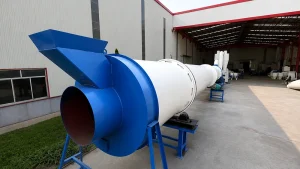
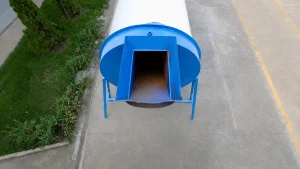
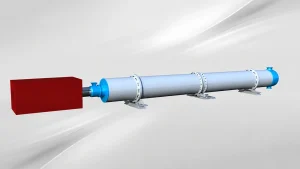
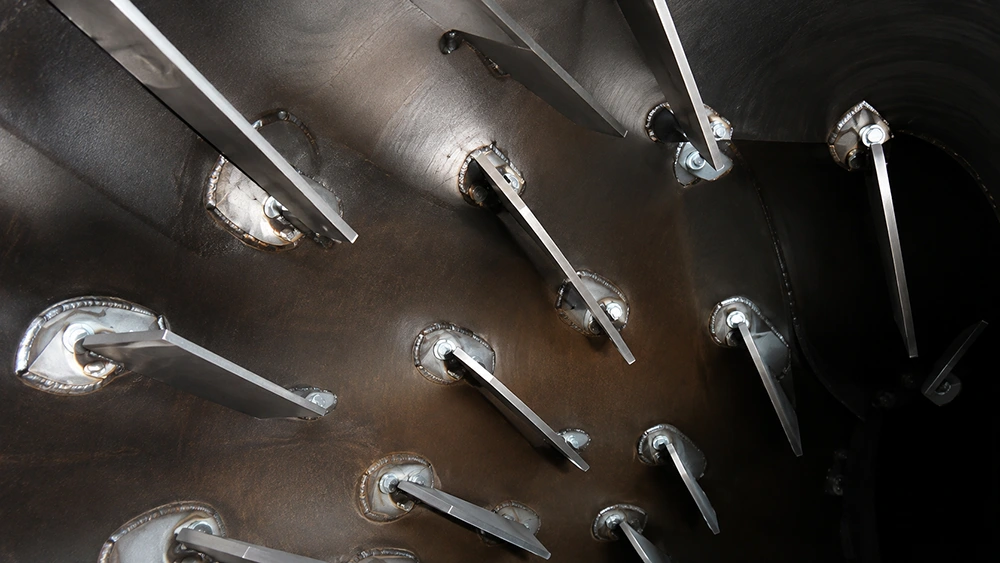
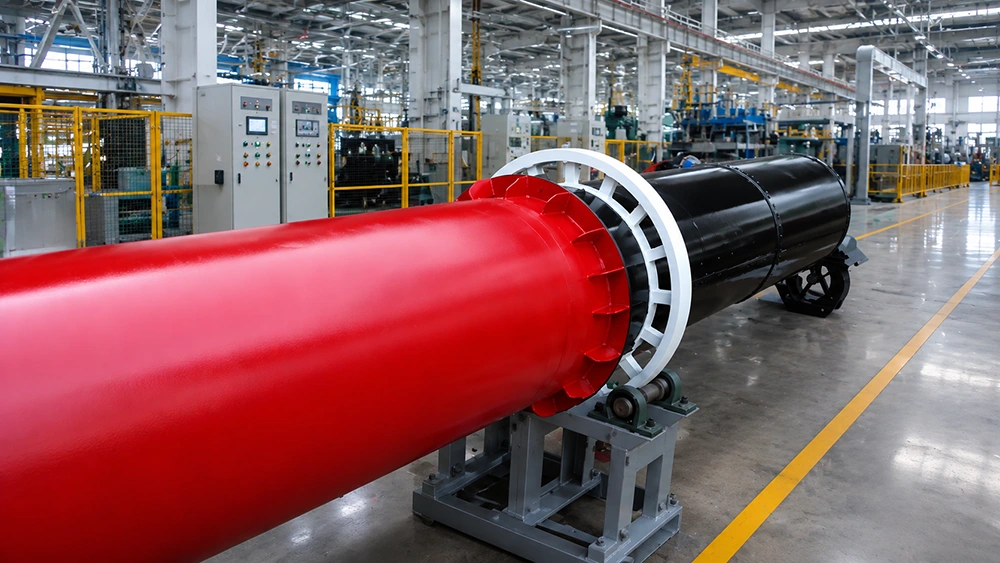
DRYR is the rotary drum dryer from EMP built for 0.8 to 2 tonne per hour biomass pellet lines. The drum ships in bolted-flange sections so a 17 to 18 metre dryer can be assembled and commissioned on site, and the assembled structure holds roundness through thermal cycling. Inside the drum, combined lifting plates — staggered metal paddle bars welded to the inner shell — lift the sawdust into the hot air stream, drop it through the cross-section and break the centre channel that lets wet material travel under-dried. The sealed shell keeps ambient humidity from re-wetting the falling curtain at the discharge end, so the output moisture that reaches the pellet press reflects the drum temperature and residence time, not a leak in the envelope. Continuous temperature feedback on the hot-air inlet and the discharge end lets the operator hold the work zone between 150 and 180 degrees Celsius against incoming moisture swing. The four-model H-1010 to H-1815 range covers drum diameters from 1000 to 1800 millimetres with main motors from 4 to 11 kilowatts, draft fans from 7.5 to 15 kilowatts and capacities from 0.8 to 2 tonnes per hour, with a multi-fuel hot-air furnace that can burn coal, oil, natural gas or on-site biomass powder on the same drum without a rebuild.
Result on a 0.8 to 2 tonne per Hour Biomass Pellet Line
With a DRYR rotary drum dryer sized to the 0.8 to 2 tonnes per hour pellet platform and tuned to the 8 to 10 percent furnish moisture window, the pellet press stops compensating for incoming moisture swing. Furnish moisture stays inside a sub-1 percent band batch after batch, the binder bonds at the designed surface area and pelletizing yield recovers to the 90 to 95 percent band the pellet press was sold on. Re-feed tonnage drops by about 15 percent per 10 percentage points of yield recovered, and energy per ton at the press drops by 8 to 10 percent because the press is no longer re-compacting fines. The combined lifting plates carry the heat exchange load, the sealed shell protects the moisture window and the continuous temperature feedback handles the wet winter sawdust lot or the dry summer lot without operator throttling. On the biomass pellet line, the dryer ahead of the press stops being a moving target and becomes the controlled feedstock the pellet mill was specced against.
- furnish_moisture_window_8_to_10_percent
- sealed_drum_combined_lifting_plates
- continuous_temperature_feedback
- pelletizing_yield_recovery_and_refeed_drop