Sawdust Pellet Line Drying Control
Pellet Mill Yield and Re-Feed Are Set by What the Dryer Sends It
Sawdust pellet line operators lose yield and pay re-feed costs when the rotary drum dryer ahead of the pellet mill lets moisture drift outside the 8 to 10 percent binding window. A DRYR rotary sawdust dryer with combined lifting plates, sealed drum and continuous temperature feedback holds batch moisture tight, lifts pelletizing yield and cuts re-feed tonnage back into the line.
Why Open-Air Drying and Hand-Welded Drums Cannot Hold Furnish Moisture
Natural sun drying follows the weather, not the production schedule, and indoor open-air drying still drifts from 18 to 28 percent moisture between batches. A hand-welded low-end rotary drum drifts out of round in the first year, so the same shell runs hot on one side and cold on the other, and discharge moisture varies from batch to batch. A small airflow sawdust dryer or sawdust flash dryer moves the water out fast, but the discharge is a pulse, not a steady stream, so the pellet mill sees a wet batch followed by an over-dried batch on the same shift. None of those three routes can hold a tight 8 to 10 percent furnish moisture band, which is what the pellet mill die needs to keep pelletizing yield and re-feed rate on their design curve.
How DRYR Rotary Sawdust Dryer Holds Furnish Moisture Tight
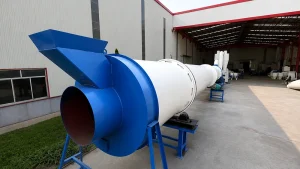
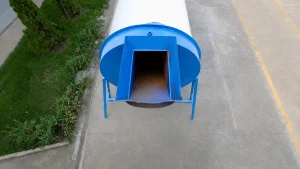
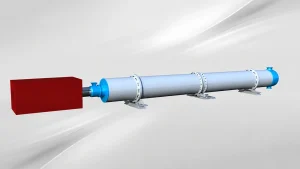
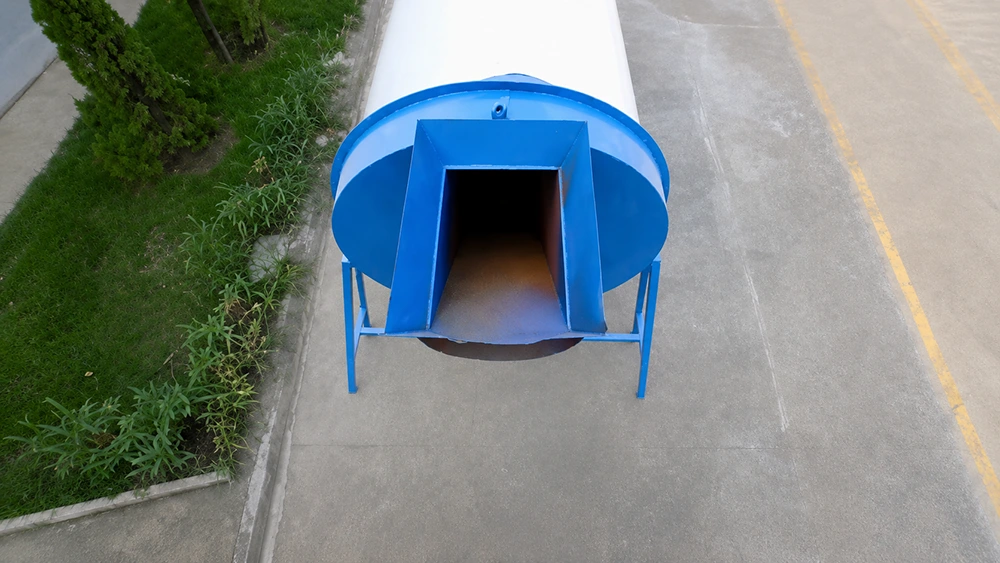
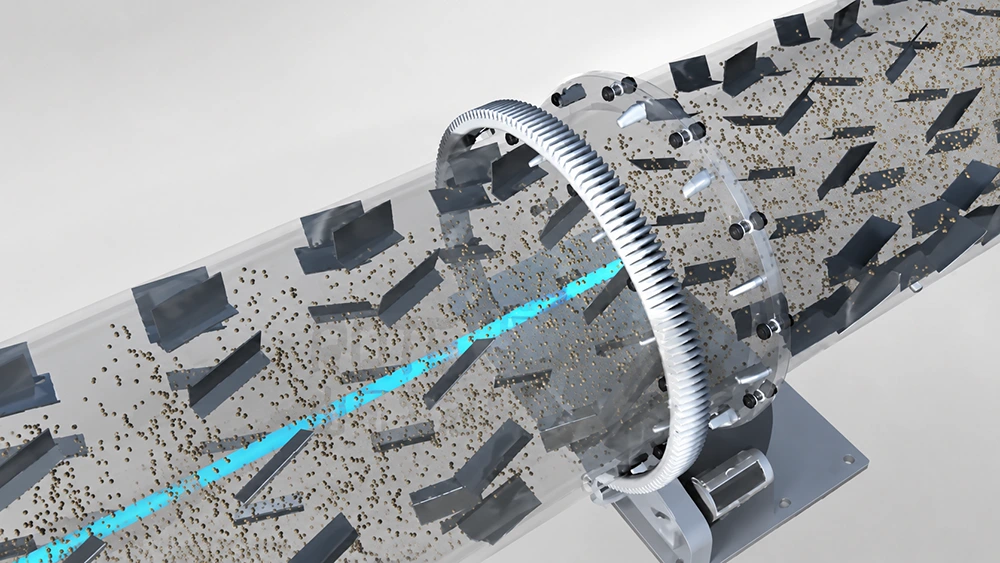
DRYR is a continuous rotary sawdust dryer in the H-1010 to H-1815 range, sized for 0.8 to 2 t/h on a four-model ladder. The drum carries combined lifting plates along its length. As the drum turns, the plates lift the sawdust and shower it through the hot air stream coming from a multi-fuel hot air furnace, so every particle sees the same heat and the same residence time, not just the bottom layer. A sealed shell holds residence time constant, a temperature sensor at the discharge end feeds back to the burner, and optional PLC control locks the setpoint. The drum is a bolted-flange assembled structure, so the roundness that makes heat transfer even is held over the life of the dryer instead of being lost to a hand-welded seam. The hot air furnace can burn coal, biomass powder, oil, or natural gas, so the dryer is not pinned to one fuel market when the pellet plant is scaling output.
What the Pellet Mill Sees When Furnish Moisture Stays Inside the 8 to 10 Percent Band
When the sawdust leaves the DRYR rotary drum dryer inside the 8 to 10 percent binding window, the pellet mill stops doing two compensating jobs. Re-feed tonnage drops back toward the design value, finished pellet density holds the spec the buyer was qualified on, and the press no longer draws the extra 8 to 10 percent per-ton kWh it was pulling to push wet sawdust through the die. The 0.8 to 2 t/h dryer platform matches the pellet line output, so the dryer is no longer the bottleneck that forces the operator to throttle the press. The result is a pellet line that hits the pelletizing yield the project was sold on, with the dryer acting as the controlled first stage instead of the variable one, and re-feed tonnage stops scaling against pelletizing rate on every shift.
- DRYR H-1010 to H-1815 covers 0.8 to 2 t/h continuous sawdust drying for the pellet line.
- Combined lifting plates inside the drum lift and shower the sawdust through the hot air stream.
- Output moisture is targeted below 10 percent before the sawdust reaches the pellet mill die.
- Stable batch moisture narrows the re-feed loop and reduces per-ton energy use at the pellet press.