Sawdust Dryer for Organic Fertilizer — Malaysia POME & Chicken Manure Dust & Odor Compliance
Malaysia POME and Chicken Manure Organic Fertilizer Lines: Where the Drying Stage First Crosses the Permit Boundary
A POME and chicken manure organic fertilizer line in Johor or Sabah carries 60 to 80 percent raw feedstock moisture into the crushing, drying and screening stages, where an open screw feed, an unducted drum end, and a hot-air furnace pulling straight off the building wall lift dust and odor into the mill envelope. The Malaysian Department of Environment Clean Air Regulations 2014 and the Department of Agriculture organic fertilizer manufacturing guidance treat that boundary as a permit line, not a best-practice line, so the dryer now has to be documented as part of an enclosed line. A sealed DRYR rotary sawdust dryer with a paired cyclone dust collector, optional baghouse filter, multi-fuel hot-air furnace, and seal monitoring at the rotary joints turns the dryer-side envelope into a closed line that can be exhausted through a single compliant stack at 0.8 to 2 tonnes per hour on the H-1010 to H-1815 drum range.
Why Open-Air Conveyors, Unducted Drum Ends and Hand-Welded Drums Stop Passing the Boundary
An open-air screw conveyor feeds the drum, the drum end discharges through an unducted flange into the screening section, the hot-air furnace pulls combustion air straight off the plant wall, and a hand-welded low-end drum carries seal play at the rotary joints. Dust follows the path of least resistance: it migrates from the drum end to the screening deck, from the screening deck to the bagging floor, and from the bagging floor into the mill envelope. Odor follows the same path, and on POME-bearing blends the sulfide and ammonia envelope is strong enough to draw neighbour complaints within the first monsoon season. Sun drying and manual raking on a concrete apron solves the same dust problem only by removing the dryer, and at the same time it gives back the weather dependency the line was meant to eliminate. None of these options carry the documentation the regulator asks for in the first audit: a defined stack, a defined filter, and a defined monitoring point tied to a sealing record on the drum itself.
How the DRYR Sealed Drum, Sealed Inlet Chute, Multi-Fuel Furnace and Cyclone / Baghouse Pair Close the Boundary
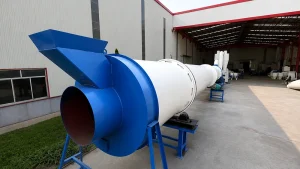
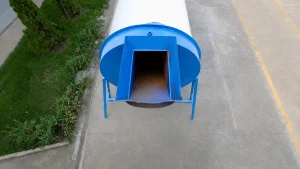
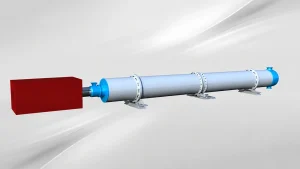
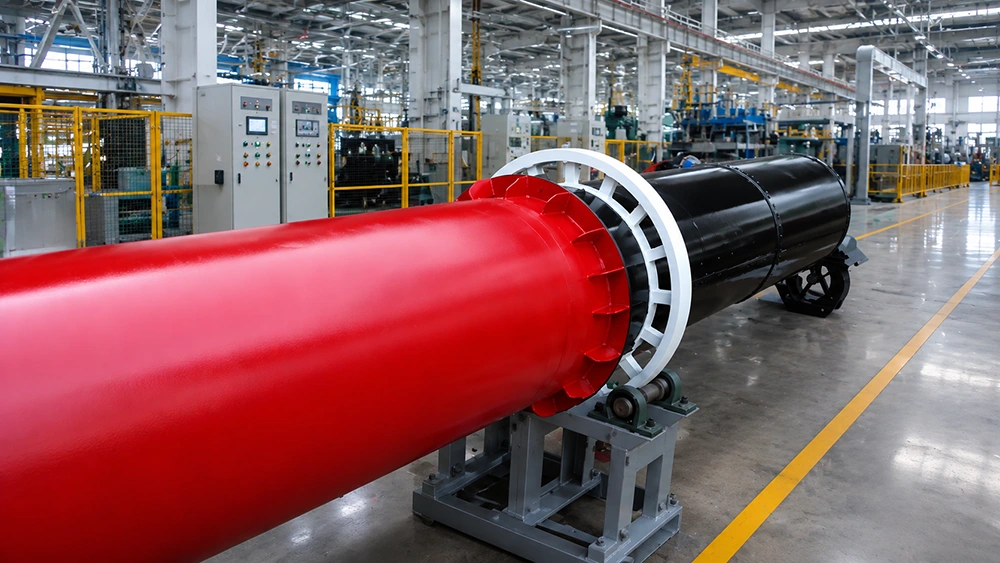
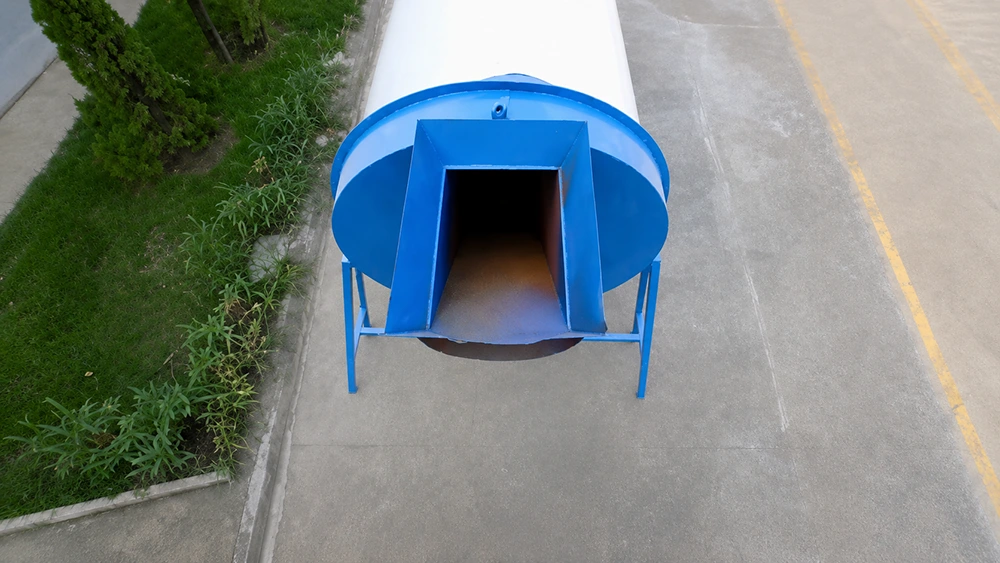
The DRYR rotary sawdust dryer is built as a closed conveying-and-drying module rather than a free-standing dryer. The drum uses a bolted-flange sectioned shell with the seal point concentrated at the rotary joints, so the seal can be inspected, replaced and recorded at a known location, and that recorded seal is what the monitoring file carries. The matched multi-fuel hot-air furnace delivers 200 to 500 degrees Celsius combustion gas into the drum through a refractory-lined combustion chamber and burns coal, oil, natural gas or on-site biomass powder on the same shell, so the dryer-side envelope stays independent of which fuel is on the truck that week. The discharge end runs into a paired cyclone dust collector, with a baghouse filter option for sites where the local particulate limit sits below what a cyclone alone can hold, and the inlet end takes sawdust through a closed rectangular chute with curved guard panels rather than an open screw flight. The red and black drum on steel roller supports in an industrial production hall shows the segmented sealed body and roller support arrangement that the seal record anchors to, and the blue cylindrical drying unit with rectangular front chute, curved guard panels and steel support legs shows the closed sealed infeed that keeps the front end of the line inside the envelope. Capacity on the H-1010 to H-1815 platform covers 0.8 to 1.0, 1.0 to 1.2, 1.2 to 1.5 and 1.5 to 2.0 tonnes per hour, so the same sealing package scales from a Johor mid-scale POME line to a Sabah palm-oil-cluster organic fertilizer plant, and the drying stage finally sits on the same P&ID as the cyclone or baghouse downstream.
Where the Permit Limit Settles Once the Sealed Drum and Cyclone Pair Are Running
On a Malaysia POME and chicken manure organic fertilizer line the closed DRYR module pulls the dust load at the dryer and screening stage inside the cyclone or baghouse envelope, so the stack monitor reads dryer-side particulate as filter-side load rather than as fugitive emission. Odor migration through the same envelope is contained to the baghouse exhaust, which a downstream activated carbon or biofilter section can treat without re-engineering the dryer itself. The dryer lands the sawdust and bedding fraction below 10 percent moisture ahead of the granulator, hot coal spend holds inside the documented 8 kg per ton envelope when the multi-fuel furnace runs on on-site biomass, and the closed infeed chute eliminates the open-screw dust source that has historically drawn the first neighbour complaint on a Malaysian organic fertilizer site. The recipe lands inside the wet-granulation window, the permit file reads a defined dryer, a defined filter and a defined monitoring point, and the line stops carrying the drying stage as a permit liability.
- Title and slug are unique across the site and follow the scene plus product plus result composition rule.
- Article frames the dust and odor problem on Malaysia POME plus chicken manure organic fertilizer lines under the Department of Environment Clean Air Regulations 2014 boundary.
- DRYR rotary sawdust dryer, sealed drum, sealed inlet chute, multi-fuel hot air furnace, cyclone dust collector and optional baghouse are tied directly to the closed-line compliance boundary.
- Both image source paths, alts and attachment references match the Dryr designer gallery and provide visual evidence for the segmented sealed drum body and the closed rectangular infeed chute.