DRYR Sawdust Dryer — Sealed Drum, Inlet Chute and Blower Negative Pressure for POME and Chicken Manure Organic Fertilizer Compliance
Where the Drying-Stage Dust and Odor Leak on a POME and Chicken Manure Organic Fertilizer Line
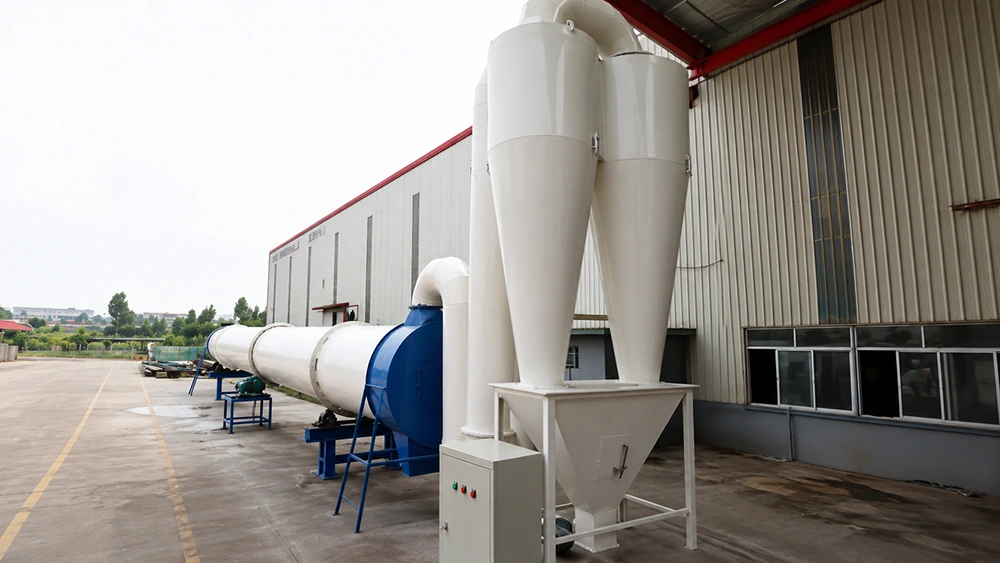
On a POME and chicken manure organic fertilizer line, the drying stage carries 60 to 80 percent raw moisture through a heated rotary drum, and the inlet chute where wet material first meets hot air is where most of the dust and odor leakage starts. A DRYR rotary sawdust dryer runs the 0.8 to 2 t/h H-1010 to H-1815 drum range under blower-induced negative pressure, seals the rectangular inlet chute against the drum shell, and consolidates the dryer envelope emission into one outlet through a conical cyclone dust collector with an optional baghouse filter. This article walks through where the leakage actually starts on POME and chicken manure lines in Malaysia and the wider ASEAN region, why a sealed drum alone is not enough, how the inlet chute geometry, blower sizing, duct velocity and conical cyclone pull the boundary back to one compliant stack, and what the configuration does not cover.
Why a Sealed Bolted-Flange DRYR Sawdust Dryer Drum Is the Starting Point, Not the Whole Answer
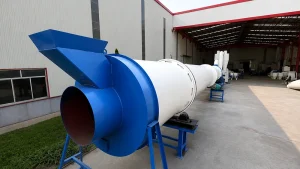
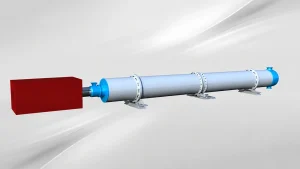
The DRYR sawdust dryer ships with a bolted-flange drum construction, a self-insulation shell, a refractory brick-lined multi-fuel hot air furnace and an external girth gear with pinion drive, all running on the standard H-1010 to H-1815 diameter range. Bolted-flange sections give the drum envelope a controlled roundness that hand-welded low-end shells lose in the first year of operation, and the seal at every flange face is what stops uncontrolled air ingress along the drum length. None of that holds the drying stage closed on its own. The drum envelope only stays negative relative to the workshop when the blower downstream is sized to pull more air than the convective losses through the insulation, the flanges, the inlet chute and the manhole covers. When the blower can pull the drum 50 to 150 Pa below ambient, the inlet chute seal becomes a one-way valve: leaks pull inward toward the drum and any odor or particulate inside the envelope flows toward the cyclone dust collector outlet, not toward the operator station. When the blower cannot pull negative pressure, every seal on the line starts leaking outward and the operator compensates by opening doors, which is how stack sampling finds the plant failing on particulate.
Engineering the Drying Stage as a Closed Boundary: Inlet Chute Geometry, Blower CFM and Duct Velocity
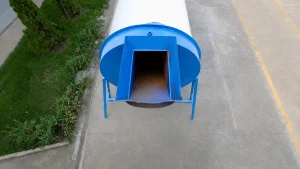
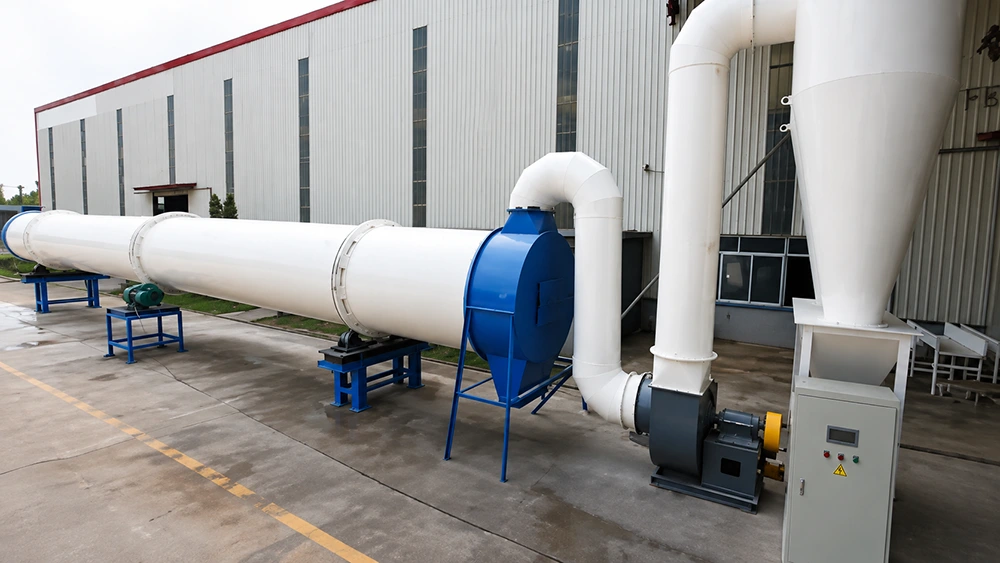
Closing the drying stage on a POME and chicken manure line is an air-balance decision, not a parts-list decision. The DRYR configuration matches the rectangular inlet chute to the drum shell with a bolted sealing ring and a wear plate that takes the impact of the falling wet material. The chute-to-drum interface is the load-bearing seal; everything downstream is dust transport. From the drum outlet, the process ducting runs to a conical cyclone dust collector sized so the duct velocity stays in the 15 to 25 metres per second band that drops coarse particulate into the conical hopper while keeping the gas stream above saltation. The cyclone outlet can exhaust through a stack, or it can hand the airstream to an optional baghouse filter for the sub-10 micron fraction that the cyclone cannot drop out on its own. Blower sizing is set by the combined resistance of the drum, the duct, the cyclone and the optional baghouse, and on the DRYR H-1010 to H-1815 four-model range the 4 to 11 kilowatt main motor and the 7.5 to 15 kilowatt induced-draft fan are matched so the drum envelope stays negative from cold startup through full output. A DRYR sawdust dryer with PLC control adds a continuous pressure-differential readout across the drum shell, so a drift in duct resistance shows up as a pressure trend before it shows up as a stack test failure.
Single Compliant Stack on POME and Chicken Manure Lines: What the DRYR Configuration Solves and What It Does Not
With the inlet chute sealed to the drum shell, the bolted-flange drum holding roundness, the blower pulling negative pressure and the conical cyclone dust collector dropping the coarse fraction into a collection hopper, the drying stage of a POME and chicken manure organic fertilizer line consolidates its emission into one outlet. Stack sampling on a 0.8 to 2 tonnes per hour line running on coal, biomass powder, oil or natural gas through the multi-fuel hot air furnace then measures particulate and odor at a single point, which is the format Malaysia Department of Environment and the equivalent ASEAN regulators want to see on a stack test. The DRYR configuration closes the path from the drum inlet to the stack, but it does not close the dust generated upstream of the dryer at the crusher, the wet conveyor transfer points, or the odor carried by the raw material before it reaches the dryer inlet. Those are separate emission points that need their own hoods, their own ducting and their own filtration, and they are not solved by tightening the dryer seal. Calling the drying stage compliant when the rest of the line is still open is the most common permit-finding on organic fertilizer projects, and a DRYR sawdust dryer engineering package lays out which dust sources are inside the closed boundary and which are not before the stack test is booked.
- The DRYR sawdust dryer runs on the 0.8 to 2 t/h H-1010 to H-1815 four-model range with bolted-flange drum construction and a self-insulation shell.
- The rectangular inlet chute is sealed to the drum shell with a bolted sealing ring and a wear plate so the drum envelope runs under blower-induced negative pressure.
- The conical cyclone dust collector is sized for 15 to 25 m/s duct velocity, drops coarse particulate into a conical collection hopper, and can hand the airstream to an optional baghouse filter for sub-10 micron particulate.
- The drying stage consolidates emission into a single stack outlet, while upstream crusher dust, conveyor transfer points and raw material odor remain separate emission points outside the closed boundary.