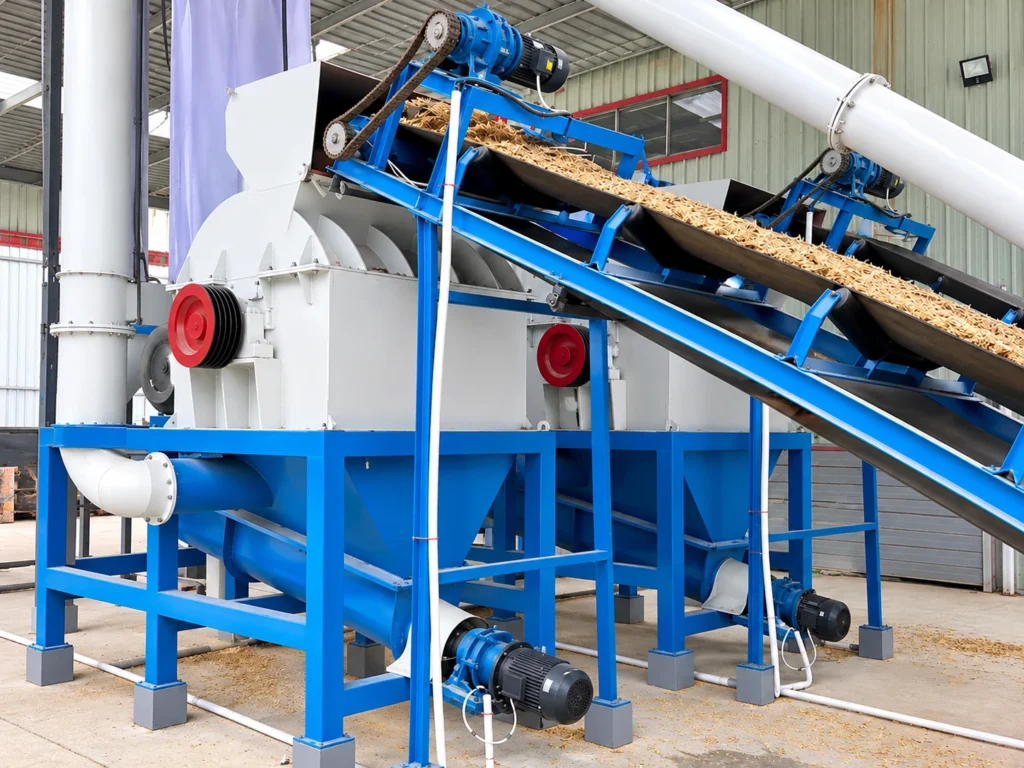
Pulvz F-Series Wood Pulverizer Machine
The Yard Problem: Whole Pallets, Mixed Thickness and Hardware in One Pile
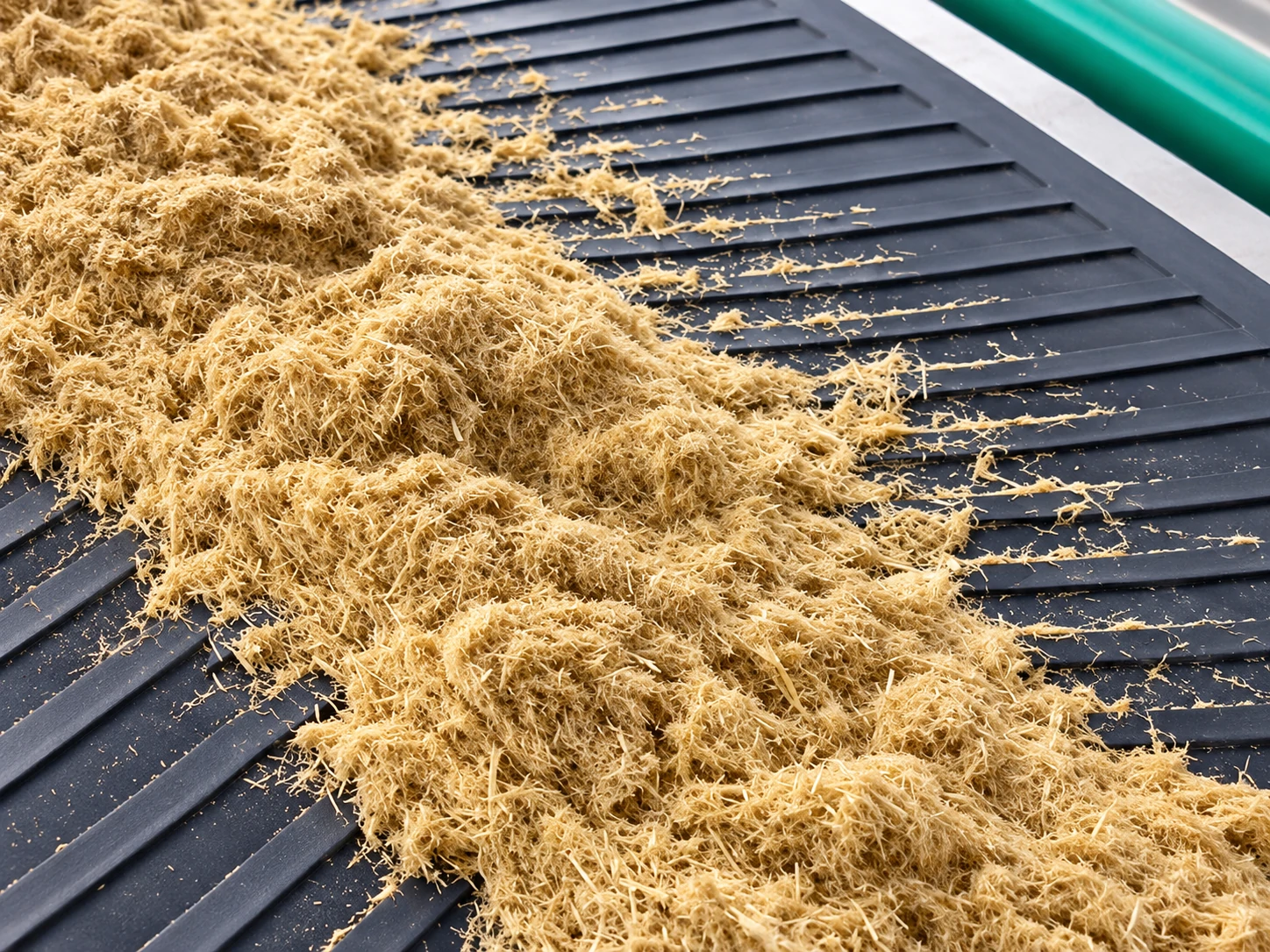
A yard that takes whole pallets, used formwork and block offcuts cannot feed a narrow-mouth machine, and it cannot stop the recycling line every time a block jams the rotor. This page follows one wood pallet crusher decision from the pile itself to the settings that keep a PULVZ wood pulverizer machine running across a long shift: an F-1500 infeed of 1350 x 450 mm taking whole units without pre-cutting, 5 to 8 t/h inside a 1 to 8 t/h model range, belt conveyor feeding for continuous infeed, one-piece manganese steel liner and dynamic balancing technology for steady high-speed running, a hydraulic open cover for fast hammer and screen access, and a replaceable screen that holds the output at 5 mm and finer wood particles for the presswood pallet line downstream.
What Narrow Infeed Setups Cost: Pre-Cutting, Jams and a Stalled Line
The manual version of this job is an axe or a chainsaw and a bench, which caps throughput at whatever a crew can swing and leaves the sawdust grade entirely uncontrolled. The usual first machine step is not much better: an old single-roll crusher with a narrow mouth forces every pallet to be broken down first, so the yard buys the crusher and still pays for pre-cutting labor. Once a block or a wet board bridges in the throat, the rotor stalls, the belt stops and the whole recycling line goes down with it, because the wood waste feeding the press, the boiler or the bedding buyer is not going anywhere. The other two exits are worse on cost: burning or landfilling the tonnage throws away material the yard has already paid to collect, and buying ready-made sawdust puts the raw material bill back on the market. Sending everything through a wood chipper or a wood shredder instead produces chips or coarse shred rather than the uniform fine particle a molded pallet needs, so the mismatch just relocates downstream.
Why the F-Series Wood Crusher Machine Matches Oversized Mixed Wood Waste
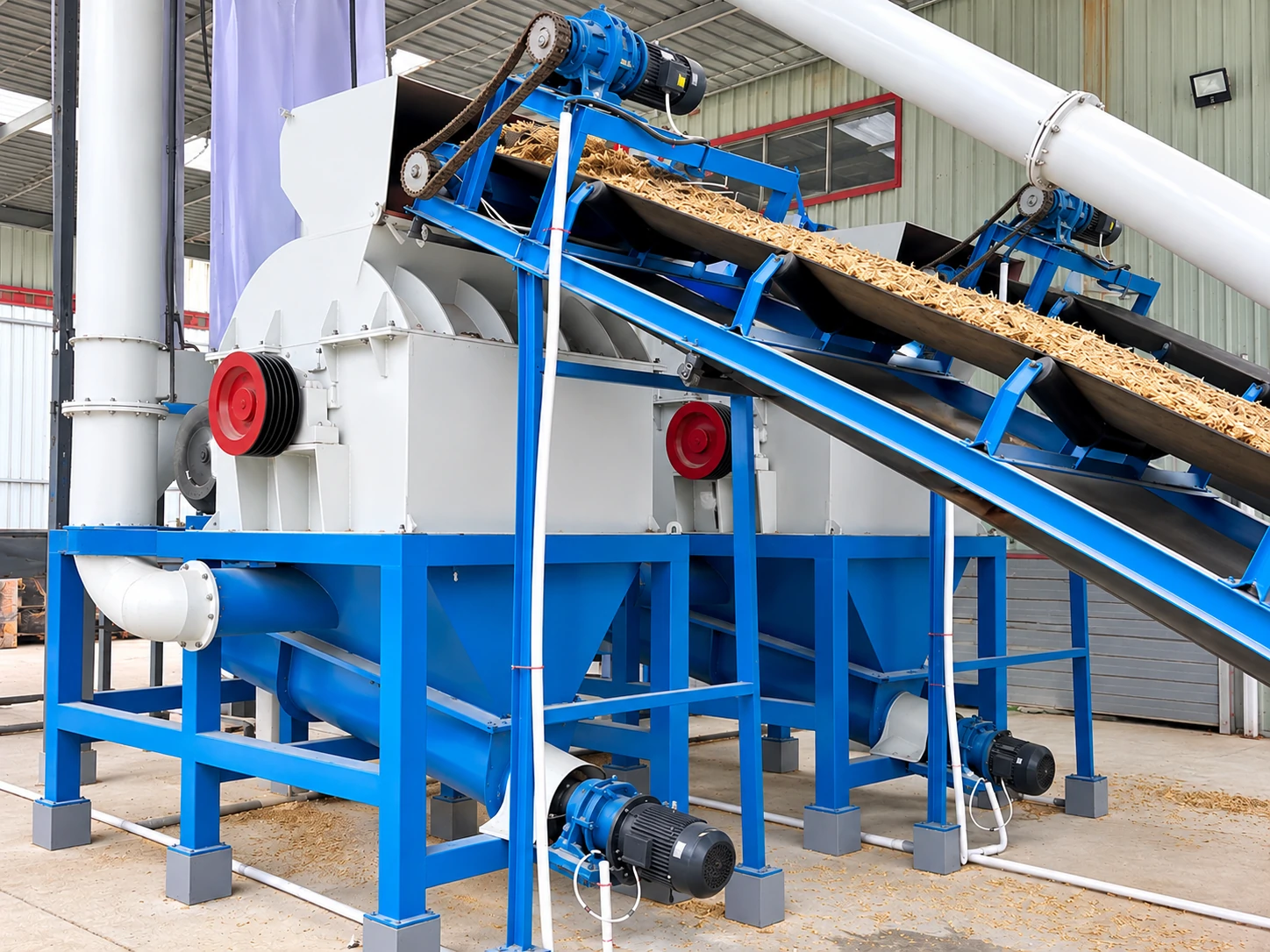
The F-series is sized around exactly this duty rather than around clean offcuts. An F-1500 wood pulverizer machine carries a 1350 x 450 mm infeed, wide enough for whole pallets and large blocks to go in as they are picked up, and the model runs at 5 to 8 t/h inside a platform that spans 1 to 8 t/h, with 45 kW, 75 kW and 110 kW drives available across the range. Belt conveyor feeding replaces hand tipping at the throat, so the loader can keep the hopper charged and the machine keeps a continuous feed instead of running batch by batch. The cutting section is built as a hammer mill crusher with a manganese steel hammer plate set and a high hardness alloy screen, so moderate hardness mixed wood is reduced in one pass rather than being softened or pre-split first. Screen apertures from 780 to 1480 mm across the range and a replaceable mesh let the yard set the output grade instead of accepting whatever falls out.
Structure and Settings That Hold a Long Shift: One-Piece Manganese Steel Liner, Dynamic Balancing, Hydraulic Open Cover
Continuous running on mixed pallet wood is a wear question as much as a capacity question, and the answers are in the structure. The manganese steel liner is formed in one piece, so there are no lap joints for splinters and grit to work behind, and the manganese steel hammer plates carry the impact load instead of the housing. Dynamic balancing technology keeps the rotor stable at full speed, which is what a yard needs when the machine is expected to run through a long shift rather than be nursed between stoppages. When the hammer set or the screen does need attention, the hydraulic open cover system lifts the top cover on its cylinders, so a hammer or mesh change is a planned stop with the rotor exposed instead of a bolted-down teardown. For yards running nail-bearing pallet wood, an upstream magnetic separator and a cyclone separator on the dust side complete the station, and the belt conveyor on the discharge end carries the finished material straight to the next stage. The result is the output the downstream line is specified on: uniform particles down to 5 mm and finer, wood waste volume reduction on site, pallets crushed and re-fed instead of trucked out, and a sawdust preparation section that keeps the presswood pallet production line fed on the shift it was scheduled for.
- Infeed and capacity stated as model data: F-1500 infeed 1350 x 450 mm, 5 to 8 t/h inside the 1 to 8 t/h F-series range, with 45 kW, 75 kW and 110 kW drives across the range.
- Structure evidence limited to published items: one-piece manganese steel liner, manganese steel hammer plate set, high hardness alloy screen, dynamic balancing technology and hydraulic open cover system.
- Output grade tied to the screen, not to a guarantee: replaceable and adjustable mesh, 780 to 1480 mm screen range, particles down to ≤5 mm before the presswood pallet forming stage.
- Boundary stated plainly: magnetic separation and cyclone dust collection are separate upstream and dust-side equipment at the station, and final particle distribution is set by the screen fitted and the feedstock.