Wear Parts and Spare Parts Continuity for the Pallet Line Front End
The Customer Situation: A Front End Warranty Held From Another Continent
An integrator that hands over a molded wood pallet line in another country signs a warranty on a front end it did not build, and the parts that fail first are the small ones: a screen, a set of hammer plates, a liner. This page follows the Pulvz wood pulverizer machine as a spare parts and service question rather than a tonnage question, across the F-800 to the F-1500 at 45 kW, 55 kW, 75 kW and 110 kW over a nominal 1 to 8 t/h, through replaceable 780 to 1480 mm screens, thickened manganese steel hammer plates, a one-piece manganese steel liner and a hydraulic open cover, to the drawing and BOM support, repeat screen and hammer plate supply and remote diagnosis that let an integrator keep the front end inside its own line warranty.
The Old Arrangement and Where It Breaks: A Crusher Bought as a Box
The default purchase is one machine, priced, shipped, wired and forgotten. The failure mode is not mechanical, it is documentary: no drawing set, no bill of materials, no record of which screen aperture was fitted and why, no statement of how particle size was set on the day of commissioning. Then the wear part goes. The plant measures the old screen by eye, a local fabricator punches holes to an approximate pitch, the discharge drifts coarse, the dryer settings are retuned against a changed particle band, and the press starts rejecting strength on pallets the same line made well the month before. Every party blames the machine. Older single-roll crushers and a wood hammer mill bought on price alone repeat the loop, and the locally fabricated screen usually costs more in lost tonnage than the part ever cost to buy.
Why the F-Series Front End Can Sit Inside the Integrator Warranty and Spare System
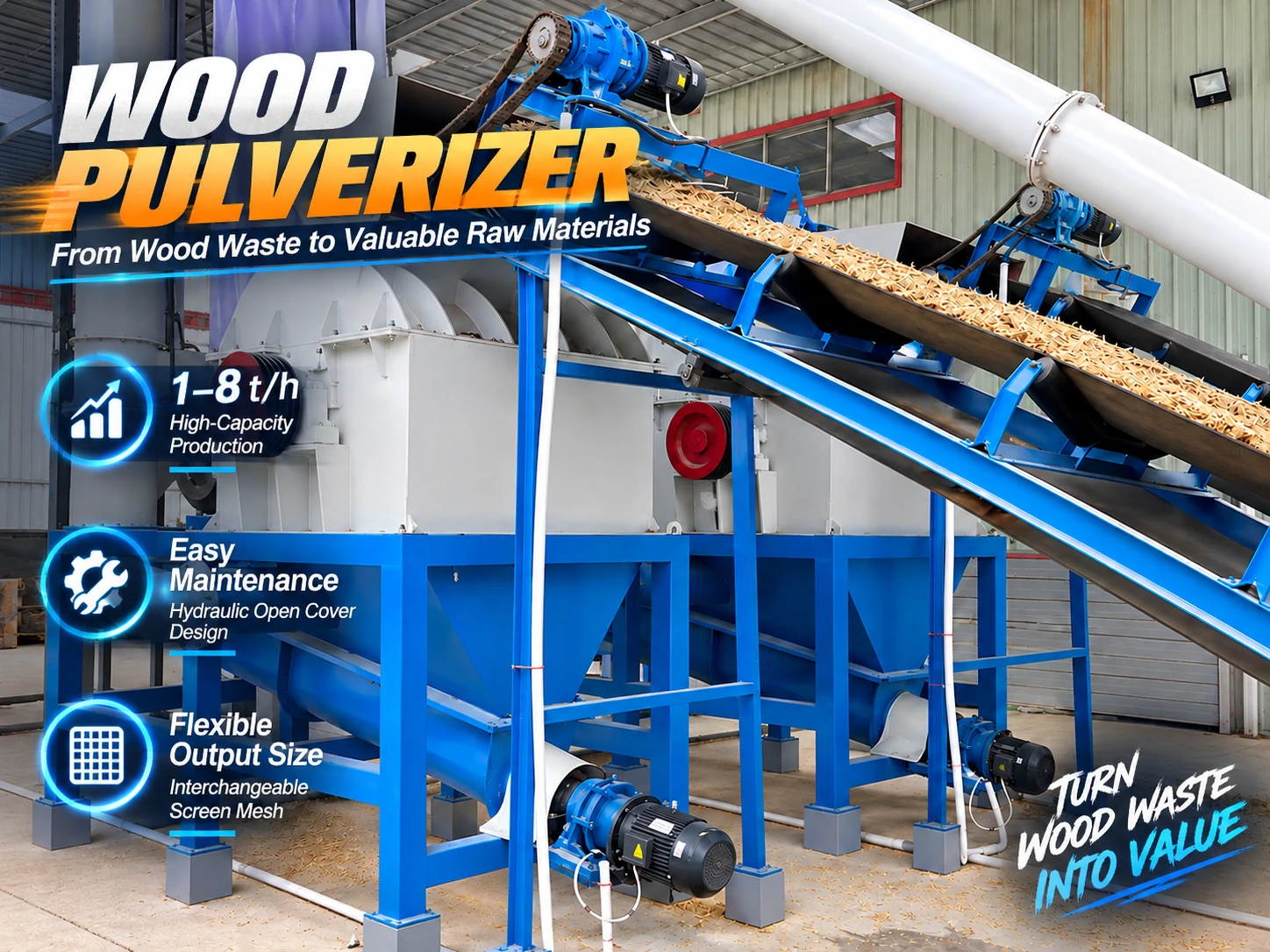
The front end is documented at the level a spare parts list needs. Screens are replaceable items on every model, 780 mm on the F-800, 980 mm on the F-1000, 1180 mm on the F-1200 and 1480 mm on the F-1500, which makes the grading element a named, orderable part instead of a workshop improvisation. Hammer plates are thickened manganese steel working against a one-piece manganese steel liner, and the hydraulic open cover turns a hammer or screen change into an access job rather than a disassembly job. The scope offered to the integrator is the continuity around those parts: repeat supply of screens, hammer plates and liners, drawings and BOM support so the front end can be registered in the integrator own spare parts catalogue and line warranty, and technical contact by remote diagnosis and parameter guidance when a fault looks like a machine fault but is actually a moisture, infeed or screen condition problem. The limits sit in the same document: nominal tonnage moves with species, moisture, infeed evenness and screen condition, 5 mm is a screen-set target band rather than a guarantee on every raw material, magnetic separation is a project-confirmed stage and not a standard item on every unit, and wear part life is not published, so it is verified against the customer own feedstock instead of promised from a table.
The Evidence a Spare Parts List Rests On, and the Result the Integrator Signs For
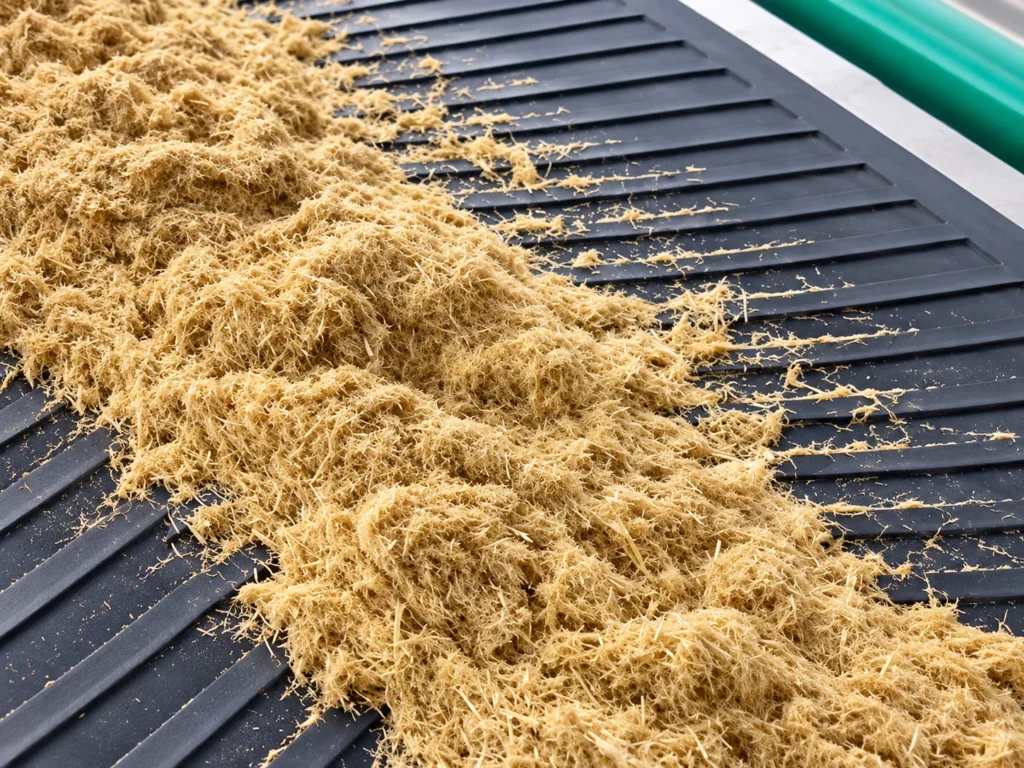
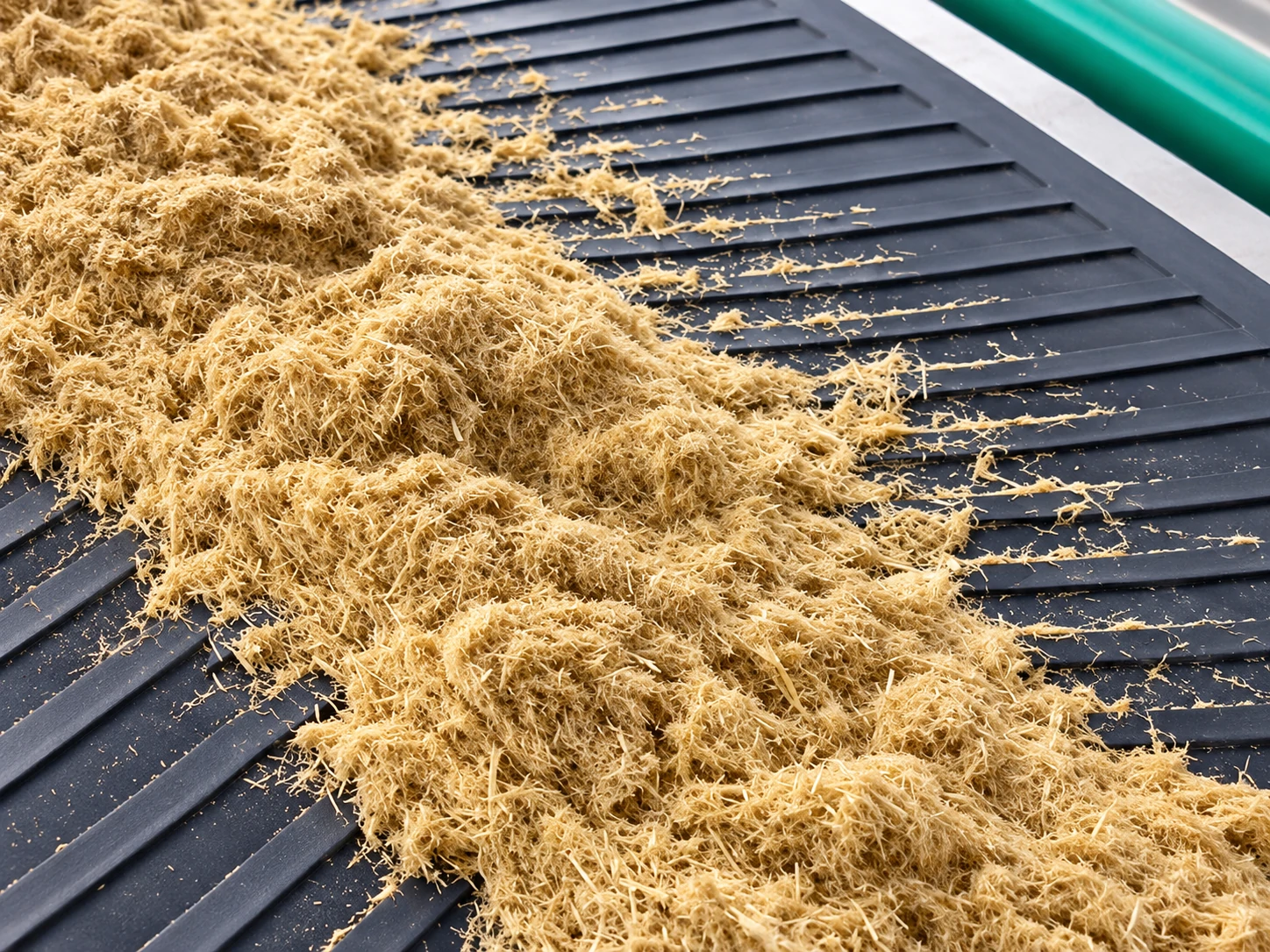
The parameter ladder is what makes the parts list finite: F-800 at 45 kW for a nominal 1 to 2 t/h behind a 680 x 380 mm infeed, F-1000 at 55 kW for 2 to 3 t/h behind 880 x 400 mm, F-1200 at 75 kW for 3 to 5 t/h behind 1050 x 420 mm and F-1500 at 110 kW for 5 to 8 t/h behind 1350 x 450 mm, with belt conveyor feeding, a cyclone separator where the layout calls for dust separation, and the same hammer plate, liner and screen families across the range so one spare shelf covers several plants. The images show where the wear actually sits: the first is the discharge end, pulverized fiber lying evenly on the slotted screen deck that sets particle size and wears first; the second is the full unit with its inclined belt conveyor feeding the white crushing chamber on a blue steel frame, and on the manufacturer material the hydraulic open cover and replaceable screen are called out alongside the 1 to 8 t/h band and the dual-screw discharge end. Put together, the result the integrator can sign for is a maintenance plan instead of a hope: a screen change booked against tonnage processed rather than against a breakdown, two spare screens and a hammer plate set on the shelf before commissioning, a BOM that lets a local workshop make the brackets and guards while the wear parts come from the original supply, remote diagnosis that separates a real machine fault from a wet feedstock day, and a front end that stays inside the line warranty through its second and third year of running. That is what turns a wood pulverizer machine from a line risk into a line item.
- Nominal tonnage moves with species, moisture, infeed evenness and screen condition; 1 to 8 t/h is a nominal range.
- 5 mm is a screen-set target band, not a guarantee across every raw material.
- Magnetic separation is a project-confirmed stage, not a standard item on every unit.
- Wear part life is not published and is verified against the customer feedstock per project.