Capacity Expansion · Molded Pallets
The Order Voice Outruns the Line That Was Built to Prove the Process
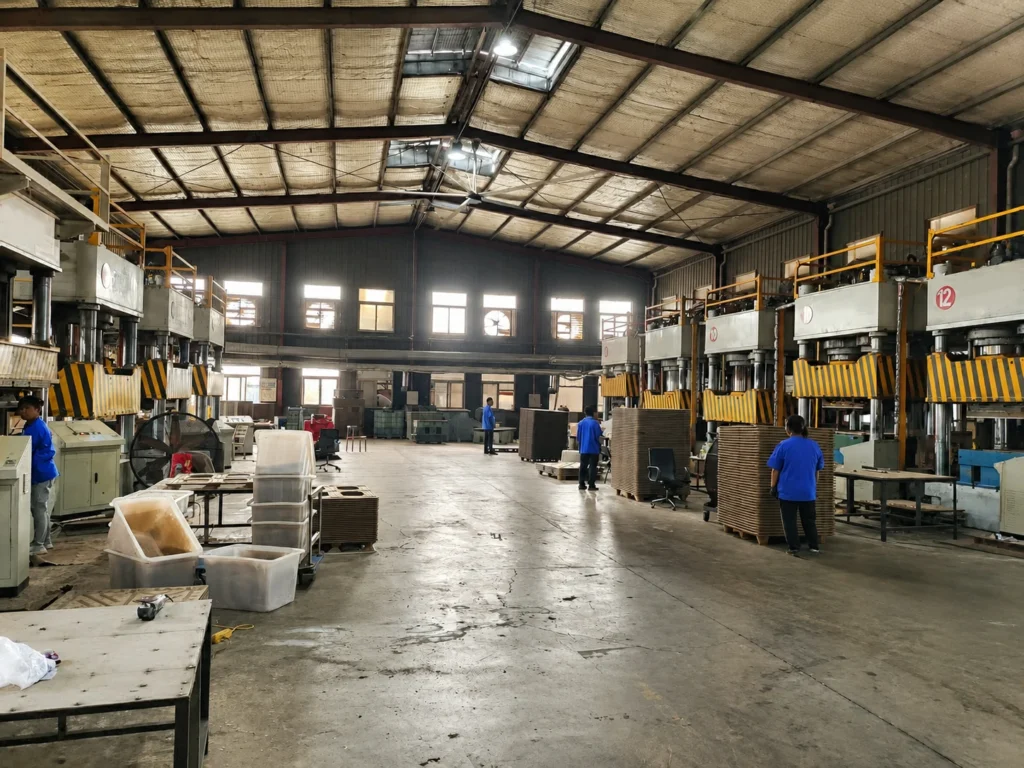
A molded pallet plant rarely fails on demand; it stalls on the second line. One UK molded pallet maker publicly reports about 300,000 pallets a year while its units are already in front of retail buyer panels and moving through UK distribution channels, which is a nameplate output far smaller than the order voice it has created. European retail and logistics users can each absorb tens of thousands of pallets a year, and a US molded pallet producer that has traded for more than sixty years across two plants sets the reference for what a mature output looks like. This page follows one expansion decision on a molded pallet hydraulic press machine: how a validated first line gets copied instead of replaced, and how Line Two is sized on pallets per shift rather than on a single large capital bet.
Why the Usual Answer Is One Big Bet or No Bet at All
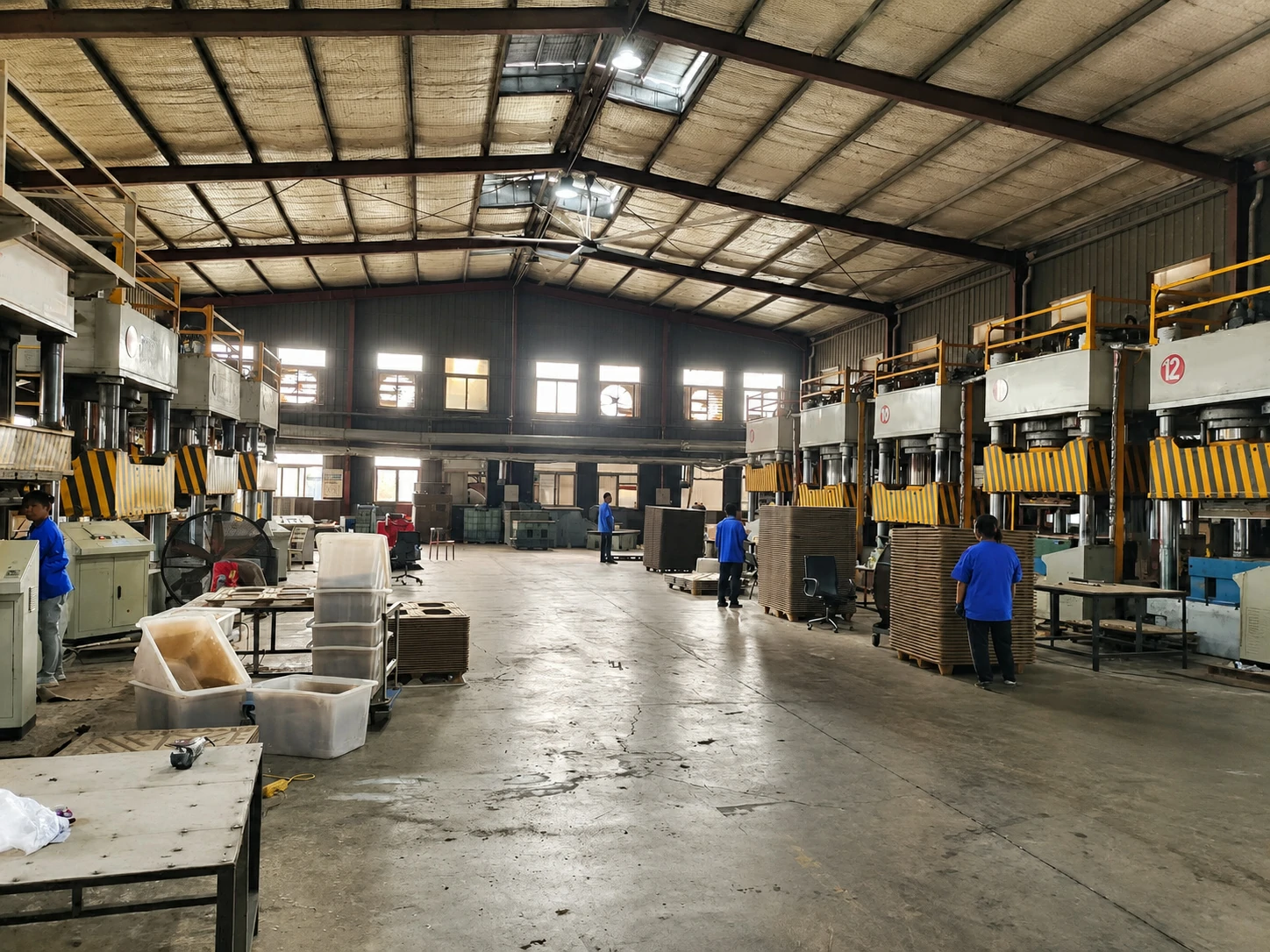
The standard expansion route asks a plant to replace its validated line with a much larger one, and that is where most second lines die. A European turnkey molded pallet line is expensive and slow to deliver, so the next capacity step arrives as a single capital event that has to be justified against demand nobody has contracted yet. The alternative usually offered is worse: keep running the same line and cap the business at its first answer. The asymmetry is real and it is specific. Existing nailed wooden pallets and heat treated wooden pallets carry a treatment programme, a repair bench and a nail hazard that the retail and distribution buyers who approved the molded unit have already stopped wanting; plastic pallets solve the hygiene question at a per unit cost and a return freight that keep one way export lanes expensive. The category decision has already been won by the molded pallet. What has not been won is the tonnage behind it, and the machine is the only place that can be fixed.
Sizing Line Two on Pallets per Shift, Not on a Capex Leap
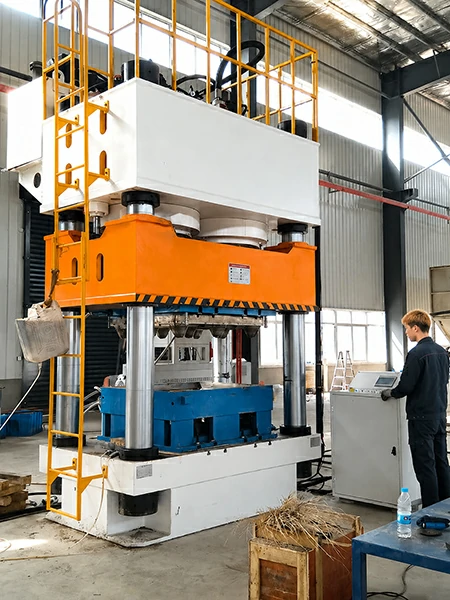
This is where a molded pallet hydraulic press machine is selected as a ladder rather than a model. The Y series runs four tonnage tiers, Y-1250, Y-1600, Y-2000 and Y-2500, all on the same Y32 three-beam four-column platform with a top beam, a slide and a worktable carried on four solid columns, platens up to 2500 x 1700 mm, and single or double station layout. The selection input is not prestige tonnage, it is the pallet: the buyer's own 1200 x 1000 mm or 1219 x 1016 mm footprint, the deck and block geometry in the mold, and the number of finished units the plant wants to take off one shift. From there the arithmetic runs backwards, one finished nail free pallet per press cycle, hot press molding at 150 to 180 C, with fibre crushed to about 5 mm and dried to 8 to 12 percent moisture and MDI adhesive mixed evenly ahead of the press. A double station frame is how a plant buys more units without buying a second building. Every one of those numbers is confirmed per project against the mold, tonnage and platen, and the press is not sold as a stand alone machine, because a press with wet fibre in front of it produces scrap at high speed.
Bolt the New Line Beside the Old One and Copy It Again
The expansion that actually holds is a parallel one. The existing automatic line keeps running its validated recipe while the new press is installed alongside it and draws on the same upstream crush, dry and glue stages, so the plant never stops selling to re learn its own process, and no approved specification is rewritten to make room for new capacity. That is the practical meaning of small steps, repeated: prove Line Two at a modest tier, then order Line Three from a proven shift output instead of a forecast. Cost is the part a plant can check before it commits, and it is the reason this route exists at all. Published price anchors for comparable Chinese built molded pallet lines have sat in the region of USD 67,000 to 100,000, against European proposals far above that band, and that gap is what keeps an expansion decision from being blocked on capex. EMP builds the equipment and also runs molded pallet production itself, so the capacity conversation starts from tonnes per shift and a recalculable pallet unit cost rather than a parameter sheet. The limits stay where they are: tonnage, mold, platen and station count are fixed per project, upstream crushing, drying and glue mixing must be in place first, and destination acceptance of a fumigation free pallet remains a buyer and plant protection question.
- Y-1250 to Y-2500 tonnage tiers chosen against pallets per shift and the buyer's pallet footprint, not against a headline capacity figure
- Second line installed in parallel with the validated automatic line on shared crush, dry and glue stages so approved specifications are never rewritten
- Public price anchors for comparable Chinese-built molded pallet lines stated as market reference at roughly USD 67,000 to 100,000 against far higher European turnkey proposals
- Tonnage, mold, platen and station count confirmed per project, upstream 5 mm crush and 8 to 12 percent drying stated as prerequisites



