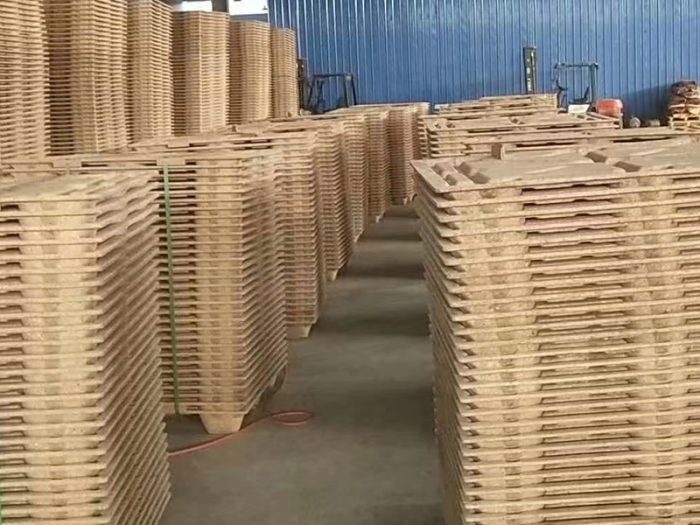
As environmental laws become stricter worldwide, sustainability is no longer optional in cross-border logistics—it’s essential. Traditional wooden pallets often face regulatory hurdles, from deforestation concerns to mandatory fumigation, which can lead to customs rejections. As a green alternative, the pressed wood pallet not only avoids these issues but also helps companies seamlessly comply with international environmental standards.
Navigate Environmental Regulations with Ease
Traditional wood pallets present several environmental challenges. Their production contributes to deforestation, and the chemical fumigation required for ISPM 15 compliance harms the environment. In contrast, pressed wood pallets offer clear advantages:
- Sustainable Materials: Made from recycled wood fibers and industrial byproducts, they support a circular economy and reduce the demand for virgin timber.
- Fumigation-Free: The high-heat, high-pressure manufacturing process naturally sterilizes the pallets, making them instantly ISPM 15 compliant without chemical treatments. This saves an average of $25 per pallet in fumigation fees.
Improve Resource Utilization Through Recycling
The sustainability of the pressed wood pallet extends throughout its lifecycle. Unlike traditional pallets that consume vast amounts of raw timber, these eco-friendly alternatives give waste materials a new purpose. Furthermore, at the end of their service life, they can be fully recycled, closing the loop and minimizing landfill waste. By choosing this option, a company producing 10,000 pallets can save approximately 2,500 cubic meters of wood annually, equivalent to preserving around 5,000 trees.
Reduce Your Carbon Footprint in Logistics
In modern supply chains, minimizing carbon emissions is a key performance indicator. The lightweight design of a pressed wood pallet directly contributes to a lower carbon footprint. A standard wooden pallet weighs around 20-25 kg, while a pressed wood version is often closer to 15 kg. This weight reduction leads to lower fuel consumption during transport, which in turn reduces CO2 emissions. For every 1,000 pallets shipped, this seemingly small difference can save thousands of kilograms in carbon emissions and significantly lower freight costs.
| Environmental Aspect | Traditional Wooden Pallet | Pressed Wood Pallet |
|---|---|---|
| Regulatory Compliance | Requires costly chemical fumigation. | Naturally ISPM 15 compliant. |
| Material Sourcing | Contributes to deforestation. | Made from recycled, sustainable materials. |
| Carbon Footprint | Heavier, resulting in higher emissions. | Lightweight, reducing fuel consumption. |
| End-of-Life | Often ends up in a landfill. | 100% recyclable. |
Enhance Your Brand with Corporate Social Responsibility
Today’s consumers care about sustainability. Market research shows that over 70% of shoppers prefer to support environmentally responsible companies. By integrating pressed wood pallets into your supply chain, you send a clear message about your commitment to the planet. This not only enhances your brand image and builds consumer trust but also positions you as a leader in the green logistics space, giving you a competitive edge in a conscious marketplace.