In logistics and warehouse management, the right pallet can make all the difference. It directly impacts storage efficiency, transport costs, and overall inventory control. Yet, many companies overlook a crucial factor in pallet selection: space utilization. An inefficient pallet design can waste a tremendous amount of valuable warehouse space, leading to unnecessary storage costs that eat into your profits.
This article provides a detailed comparison between the pressed wood pallet and traditional timber pallets, analyzing how a smarter design can save space, improve storage efficiency, and directly boost your bottom line.
The Hidden Cost of Wasted Space: Limitations of Wood Pallets
Traditional wooden pallets are not designed for optimal space utilization. Their bulky, non-nesting structure means they take up the same amount of floor space whether they are full or empty. This inefficiency leads to significant wasted space in warehouses and shipping containers. To ensure stability, gaps must often be left between stacked pallets, further increasing storage costs and limiting how much product you can store or transport at one time.
Optimize Your Space with an Efficient Nestable Design
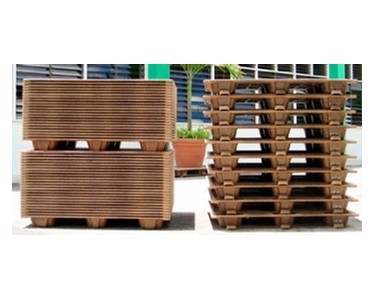
In contrast, the pressed wood pallet is engineered specifically for space optimization. Created through a high-temperature and pressure molding process, these pallets have a uniform, solid structure and a smooth surface, allowing them to be nested securely when empty. This key design feature provides several advantages:
- Precision Design: The smooth, solid surface of a pressed wood pallet allows for tight, stable stacking, reducing gaps and increasing storage density by over 50% compared to traditional pallets.
- Lightweight Strength: They are lighter than timber pallets but maintain a high load-bearing capacity, which means lower shipping weights and more efficient use of container space.
- High Stacking Capacity: Their stability allows for safe vertical stacking, maximizing the use of your warehouse’s vertical space and further increasing storage density.
Let’s break down the numbers: In a 1,000-cubic-meter warehouse, you might only fit 1,000 bulky wooden pallets. By switching to nestable pressed wood pallets, you can increase storage efficiency by 50%, effectively adding 500 cubic meters of usable space. If each pallet holds $500 worth of goods, this space saving translates into an additional $250,000 in storage value without expanding your warehouse.
Improve Warehouse Efficiency and Reduce Costs
Beyond just saving space, a smarter pallet design improves overall warehouse workflow. The optimized design of pressed wood pallets means staff can store and retrieve goods faster, reducing manual handling time and the operational hours of equipment like forklifts.
| Feature | Traditional Wooden Pallet | Pressed Wood Pallet |
|---|---|---|
| Weight | Heavy and bulky, wasting space. | Lightweight and strong, easy to handle. |
| Stacking Efficiency | Low, non-nestable design. | High, nestable design saves 50%+ space. |
| Space Utilization | Low, with unnecessary gaps. | High, maximizes warehouse density. |
| Shipping Costs | Higher due to heavier weight. | Lower due to reduced shipping weight. |
| Warehousing Costs | High due to wasted space. | Low, saving on storage costs. |
The Strategic Value of a Smarter Pallet
Choosing a pressed wood pallet is more than a simple product swap; it’s a strategic move to optimize your entire logistics operation. It helps you reduce warehousing costs, improve the utilization of your existing assets, and accelerate inventory turnover. If you’re struggling with high storage costs and inefficient space, making the switch is the clear choice for improving your bottom line.