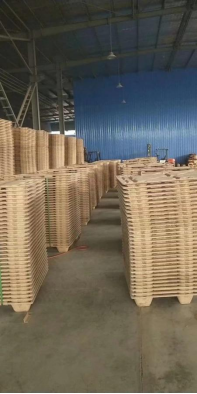
As global environmental laws become stricter, sustainability is now a critical part of cross-border logistics. Traditional wooden pallets often face quarantine challenges and may even be rejected at customs due to pests or bacteria. As a green material that meets international standards, the sawdust pallet not only avoids these issues but also helps companies navigate increasingly stringent environmental regulations worldwide.
Meeting Environmental Standards with a Smarter Pallet
Traditional wooden pallets present several environmental and regulatory challenges. Their production contributes to deforestation, and they require chemical fumigation to comply with ISPM 15 standards—a process that adds costs and environmental pressure. In contrast, the sawdust pallet offers distinct advantages:
- Recycled Materials: Made from reclaimed wood and sawdust, it fully supports sustainable development goals.
- Fumigation-Free: It is exempt from fumigation requirements, eliminating the associated costs, energy consumption, and environmental pollution.
If your company uses 1,000 traditional wooden pallets per year, you could be spending up to $25,000 annually on fumigation fees alone. By switching to a fumigation-free alternative, these costs are eliminated entirely.
Improving Resource Utilization and Reducing Waste
The core of the sawdust pallet’s environmental benefit is its circular design. Unlike wooden pallets that rely on harvesting virgin timber, these pallets are made from recycled materials. This process reduces dependence on natural resources and minimizes waste.
| Aspect | Traditional Wooden Pallet | Sawdust Pallet |
| Raw Material | Virgin timber, contributing to deforestation. | Recycled wood waste and sawdust. |
| Lifecycle | Often single-use, contributing to landfill waste. | Can be recycled again after use, creating a closed loop. |
| Environmental Impact | High resource consumption and waste generation. | Low resource consumption and reduced pollution. |
Reducing Your Carbon Footprint in Logistics
In modern supply chains, a company’s carbon footprint is a key measure of its environmental commitment. Traditional wooden pallets are heavy, which means more fuel is consumed during transport, leading to higher carbon emissions. The lightweight design of the compressed pallet directly addresses this issue.
- Lower Weight: A lighter pallet reduces fuel consumption for every shipment.
- Efficient Stacking: Superior nesting capabilities allow more goods to be shipped in fewer trips, further cutting emissions.
Switching from a 45 lb wooden pallet to a 33 lb compressed pallet can lead to significant savings in fuel costs and a measurable reduction in CO2 emissions over the course of a year.
Enhancing Your Brand with Sustainability
As consumers become more environmentally conscious, a company’s commitment to sustainability can be a powerful differentiator. Using an eco-friendly logistics tool demonstrates corporate social responsibility and enhances your brand image. Market research shows that a majority of consumers prefer to support environmentally friendly companies. Choosing a sustainable sawdust pallet is not just good for the planet—it’s good for business.
The compressed pallet offers a win-win for green logistics and economic efficiency. It helps companies comply with environmental regulations, reduce carbon emissions, and lower costs. By making this strategic choice, you can improve supply chain performance, fulfill your social responsibilities, and build a stronger, more sustainable brand.