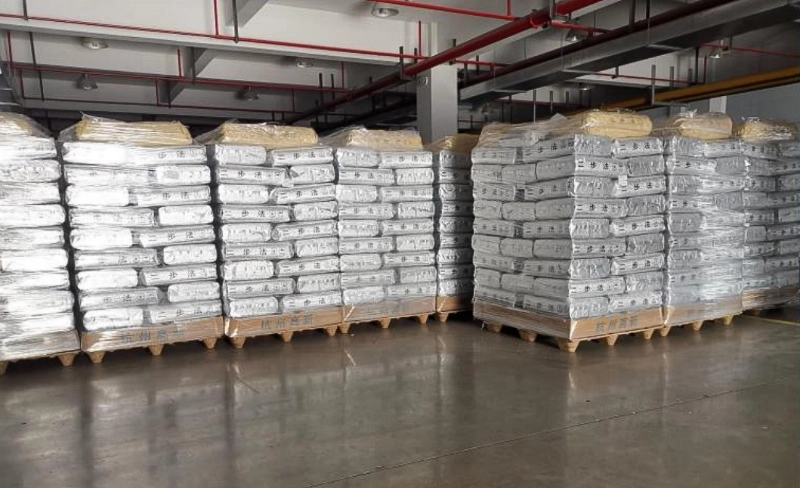
 | Stop risking your high-purity exports with “dirty” pallets. For pharmaceutical ingredients and food additives, Volatile Organic Compounds (VOCs) and cross-contamination are deal-breakers. Discover why switching to MDI-bonded molded pallets is the only way to guarantee CARB-NAF compliance and zero odor migration. |
The Short Answer: It Depends on the Glue (And Why It Matters)
If you are managing logistics for sensitive supply chains—such as pharmaceutical APIs, food ingredients (like Cargill), or high-end electronics—the question of formaldehyde isn’t just about eco-friendliness; it’s about product integrity. Traditional particle board pallets often use Urea-Formaldehyde (UF) adhesives, which release gas over time. This is a nightmare for clean-room environments.
However, modern pressed wood pallets manufactured by Ampallet are distinctly different. We utilize MDI (Methylene Diphenyl Diisocyanate) adhesive. Unlike UF resins, MDI creates a polyurethane molecular chain that is chemically stable, waterproof, and most importantly, 100% formaldehyde-free.
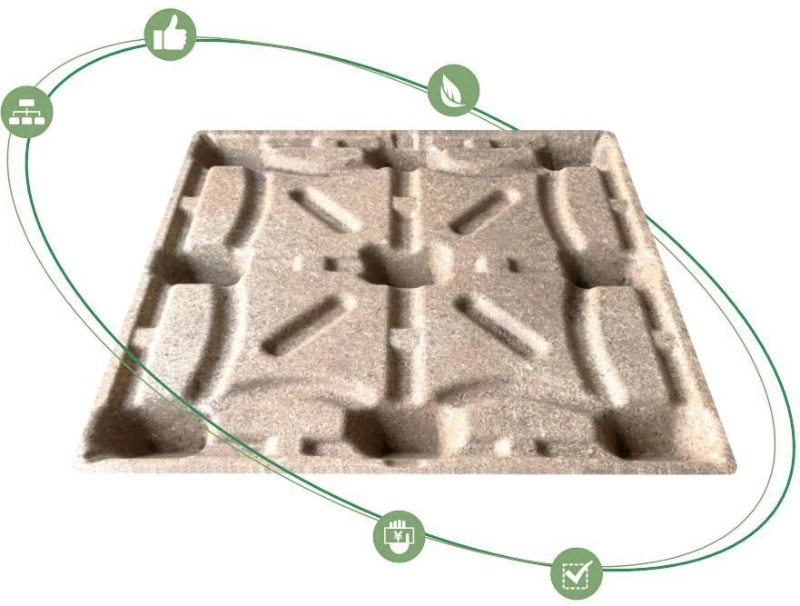
Ampallet’s MDI technology ensures compliance with the strictest global health standards.
Why “Formaldehyde-Free” is Critical for Your Cargo
In the high-stakes world of chemical and food logistics, “contamination” is a dirty word. Standard wooden pallets act as sponges for moisture and can harbor mold spores. When you wrap a pallet in stretch film, you create a micro-climate. If that pallet off-gasses formaldehyde or releases moisture, your bagged goods (like milk powder or resin) absorb it.
Our molded wood pallets solve this via high-pressure sterilization:
- CARB-NAF Certified: Meets the “No Added Formaldehyde” standard required for entry into the California and EU markets.
- Odor Neutral: No chemical smell to taint sensitive ingredients like cocoa butter or pharmaceutical excipients.
- Moisture Resistance: The MDI bond is waterproof. Unlike cheap sawdust pallets that crumble when wet, Ampallet maintains structural integrity even in high-humidity shipping lanes (e.g., Vietnam to Europe).
Beyond Chemistry: Protecting Soft Packaging
Chemicals and food additives are often shipped in 25kg Kraft paper bags or FIBC bulk bags. The enemy here is the “nail pop” found in traditional timber pallets. A single protruding nail head can rip a bottom bag, causing leakage that leads to rejected shipments and messy cleanups in your warehouse.
Because our fiber pallets are molded in one piece under 1600 tons of pressure, there are zero nails, screws, or staples. The surface is smooth and the corners are rounded, ensuring your soft packaging arrives intact.
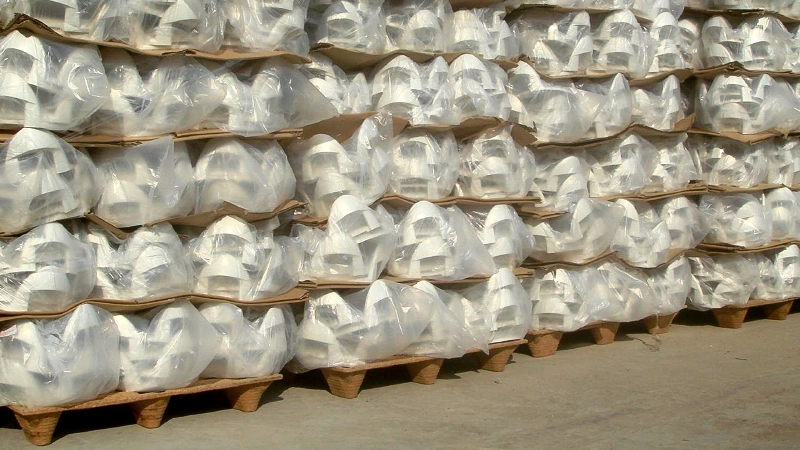
Perfect for bagged goods: No nails means no tears and no product leakage.
ISPM 15 Compliance Without the Fumigation Headache
If you are an exporter, you know the anxiety of waiting for fumigation certificates. Delays at the port due to improper stamping can cost thousands in demurrage fees.
Ampallet products are classified as “Processed Wood.” This means they are exempt from ISPM 15 regulations. The high heat (220°C) used during manufacturing kills all pests and larvae instantly. You don’t need a heat treatment stamp or a fumigation certificate. Your export pallets fly through customs, reducing your lead time and administrative burden.
Optimizing Your Warehouse Space
Finally, let’s talk about the operational reality on your factory floor. In a pharmaceutical or food processing facility, space is premium real estate. Traditional pallets clutter loading docks and harbor dust.
Our nestable design allows for a 4:1 space saving ratio. You can stack 50 empty pallets in a stable 2.1-meter column, whereas traditional pallets would require significantly more floor space. This keeps your “clean” zones actually clean and organized.

Reclaim your warehouse: Nestable design saves up to 70% of storage space compared to traditional wood.
Frequently Asked Questions (Pharma & Food Logistics)
1. Are your pallets FDA approved for direct food contact?
While our pallets are formaldehyde-free and safe for food facilities, they are designed as secondary packaging. For bagged ingredients or sealed drums, they are the ideal hygienic solution. Direct contact with unpackaged food usually requires specific plastic grades.
2. Can these pallets handle heavy chemical drums?
Absolutely. Our heavy-duty models are engineered for chemical tanks storage. They have a dynamic load capacity of up to 2.5 tons and a static load of 7+ tons, making them suitable for stacking 208L drums or heavy bulk bags.
3. How do MDI pallets perform in high-humidity shipping containers?
Unlike Urea-Formaldehyde pallets that swell and crumble, MDI adhesive creates a waterproof bond. We have successfully shipped to high-humidity regions like Southeast Asia and South America with zero structural failure.
4. Do I need to provide a fumigation certificate for these pallets in Europe?
No. Ampallet molded pallets are considered “processed wood” and are fully exempt from ISPM 15. No stamps, no certificates, and no quarantine risks at EU ports.
5. Are these pallets compatible with automated packaging lines?
Yes. Our molding process ensures high dimensional consistency (±2mm tolerance). This precision prevents jamming in automated palletizers and wrapping machines, which is a common issue with warped wooden pallets.